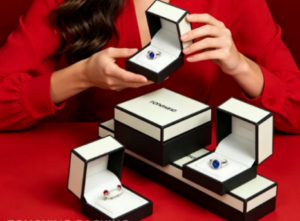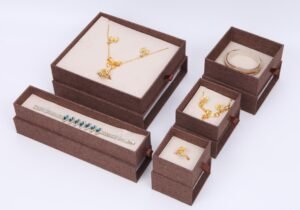
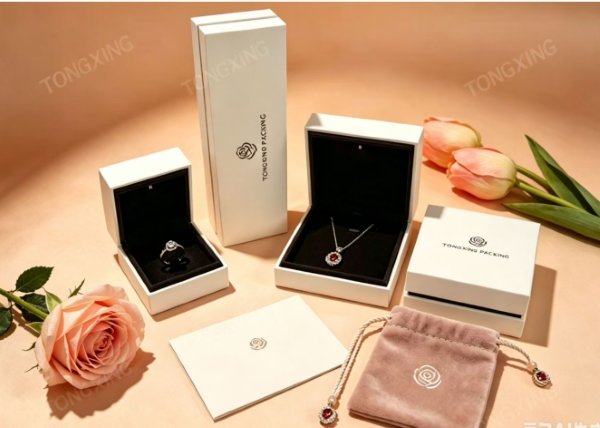
Most OEM customized engraved jewelry box samples take about 5–10 business days. Shenzhen Tongxing Packaging Co., Ltd. usually delivers samples within 5–7 business days. Complex designs can take 15–20 business days.
Four things affect that range: engraving complexity, material availability, artwork readiness, and supplier workload. Each one changes the schedule in predictable ways. Buyers who track these factors set realistic launch dates and avoid rushed approvals.
A stage-by-stage breakdown shows where the days go. A comparison of customization levels shows how simple logos and detailed artwork differ. Practical tips help buyers speed up sampling and plan buffer time before mass production begins.
Puntos clave
Most engraved jewelry box samples take 5–10 business days. Simple designs can be done faster.
Engraving complexity and the material you pick change the sample timeline. Simple logos on standard materials are the fastest.
Get clear vector artwork ready and pick standard materials early. This makes the sample process faster.
Plan for extra time before mass production. Mass production takes 15–30 days after the sample is approved.
Begin your sample early to keep your launch date safe. Starting early keeps your project on track.
Sample Lead Times by Stage
A sample goes through four stages. Each stage has a usual time range. The table below shows the normal windows.
Escenario | Typical Duration |
|---|---|
Design and artwork approval | 1–3 business days |
Material procurement | 2–5 business days |
Engraving production | 3–7 business days |
Quality control and shipping | 1–3 business days |
Shenzhen Tongxing Packaging Co., Ltd. speeds up these stages with fast sampling and prototyping. The company delivers samples in 5–7 business days. Its engraved jewelry boxes, paper boxes, velvet boxes, and wooden boxes all use this same sampling flow. Buyers can look at the full range on the company’s jewelry boxes page and the engraved jewelry boxes page before they send in artwork.
Design and Artwork Approval
This stage takes 1–3 business days. The supplier checks the logo file, confirms the dimensions, and checks where the engraving goes. A clean vector file cuts the review down to one day. A low-resolution image means redraws and adds days. Approval also covers color matching and finish selection. Tongxing’s team sends back a digital proof for sign-off. How fast the buyer approves directly sets when production starts.
Production, Quality Control, and Shipping
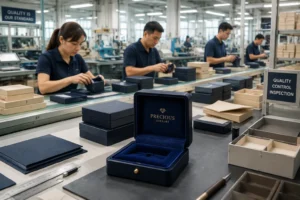
Material procurement takes 2–5 business days. Standard paper, velvet, and plastic stock moves the fastest. Engraving production then takes 3–7 business days, depending on how detailed the design is. Quality control and shipping add 1–3 business days. Inspectors check engraving depth, alignment, and finish uniformity before the order ships out.
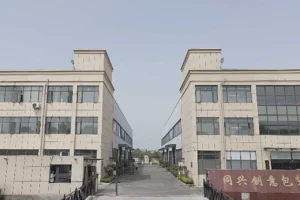
Industry practice splits sample types in a similar way. Plain samples take 3–5 business days. Printed or engraved samples take 7–10 business days. The extra days cover setup, test engraving, and finish checks. Tongxing’s 5–7 business day window sits at the fast end of this range. The company’s three factories in Shenzhen, Dongguan, and Hubei take in workload spikes and keep the schedule steady.
Buyers should use these windows as planning anchors. A simple logo sample may clear in five days. A detailed crest with multiple engraving passes needs the longer end. The next sections explain which factors push a sample toward either edge of the range.
Factors That Affect Engraved Jewelry Box Sample Lead Times
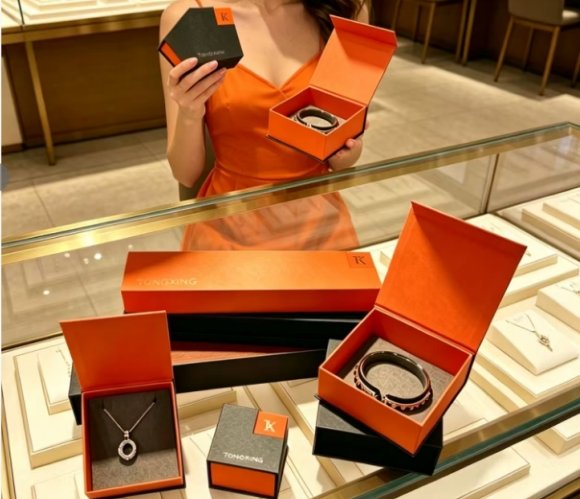
Two groups of factors change a sample timeline. The first group covers the design itself and the number of pieces. The second group covers materials and the supplier’s capacity. Buyers who understand both groups can predict how long their engraved jewelry box sample will take.
Engraving Complexity and Order Quantity
A simple logo takes less time to engrave than an intricate design. A single-line monogram needs one setup and one pass. A detailed crest with fine lines, multiple depth levels, or small text needs more setup time, test runs, and inspection. Each extra element adds steps to the production schedule. The sample stage makes this effect bigger because the supplier must dial in the settings before running the full batch. A laser engraving job with a shallow mark moves faster than a deep engraving that removes material. A design that wraps around a curved lid needs a rotating fixture and extra alignment checks. A design with multiple engraving areas—lid, base, and insert—needs separate setups for each area. Each setup adds time. Buyers should share a vector file with clear line weights and depth notes. This step helps the supplier judge the job correctly and quote a realistic window.
Order quantity also changes the timeline. A single sample piece moves through production quickly. A larger sample run—say, several units for a sales team or a trade show—adds days. Each unit needs the same engraving, finishing, and quality checks. The supplier must schedule the run around other jobs and inspect every piece. A run of ten pieces takes longer than a run of one, even when the design is simple. Buyers who need multiple samples should request them early and expect a longer window than a one-piece proof.
Material Availability and Supplier Workload
Standard materials move fastest. Paper, velvet, and plastic stock sit in common supply and need little lead time. Specialty wood and custom inserts take longer. Wood needs selection, cutting, and finishing before engraving begins. Custom inserts need design, tooling, and a test fit. A buyer who chooses a standard paper box with a velvet lining will see a shorter sample lead time than one who requests a walnut box with a foam insert cut to a watch shape.
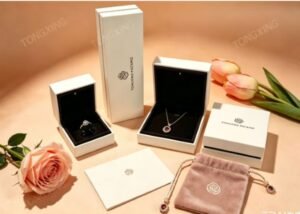
Shenzhen Tongxing Packaging Co., Ltd. offers broad customization across engraving techniques, materials, and sizes. The company engraves logos on paper, velvet, plastic, and wooden boxes. It builds inserts to hold rings, necklaces, watches, and full jewelry sets. Buyers can specify box dimensions, lid styles, and finish options. This range means the factory can match most design requests without outsourcing, which keeps the sample stage under one roof.
Supplier workload and peak seasons also affect timing. A factory with a full schedule adds days to every stage. Tongxing’s three factories in Shenzhen, Dongguan, and Hubei help absorb workload spikes. When one facility fills up, production can shift to another site. This structure keeps sample lead times steadier during busy seasons. A buyer who needs a specialty wood sample during a peak season should expect the longest window. The factory must source the wood and fit the job into a full schedule. Buyers should ask about the current queue before they set a launch date. A quick question about workload saves a week of guesswork later.
Lead Time Comparison by Customization Level
The level of customization sets the sample schedule. The table below shows three common levels and their usual sample windows. Each range is based on the stage timings and sample-type norms covered above.
Customization Level | Typical Sample Lead Time | What It Covers |
|---|---|---|
Simple logo | 5–7 business days | One-color logo, single engraving area, standard box |
Moderate custom | 7–10 business days | Multi-line logo, custom insert, two finishes |
Intricate engraved design | 15–20 business days | Fine detail, multiple engraving areas, specialty materials |
Simple Logo vs. Intricate Design
A simple logo works for brands that need a fast proof before a launch. One engraving pass and a standard box keep the schedule short. This option fits startups, seasonal promotions, and buyers who want to confirm look and feel quickly. Shenzhen Tongxing Packaging Co., Ltd. delivers this type of engraved jewelry box sample within 5–7 business days, so a buyer can review the proof and move to bulk production without a long wait.
Moderate custom work fits brands that want a distinct look without a long sampling cycle. A custom insert, a second finish, or a two-color logo adds a few days. The 7–10 business day window matches common industry practice for printed or engraved samples. This level works well for brands refreshing a product line or testing a new insert layout.
Intricate designs fit premium lines and gift sets where detail carries the brand. Fine lines, deep engraving, and multiple engraved areas need extra setup and inspection. The 15–20 business day window gives the factory room to test settings and check alignment on every piece. Buyers with a fixed launch date should start this sample early. Each level serves a clear purpose. The right choice depends on the design goal and the calendar, not on one option being better than another.
How to Speed Up Your Engraved Jewelry Box Sample
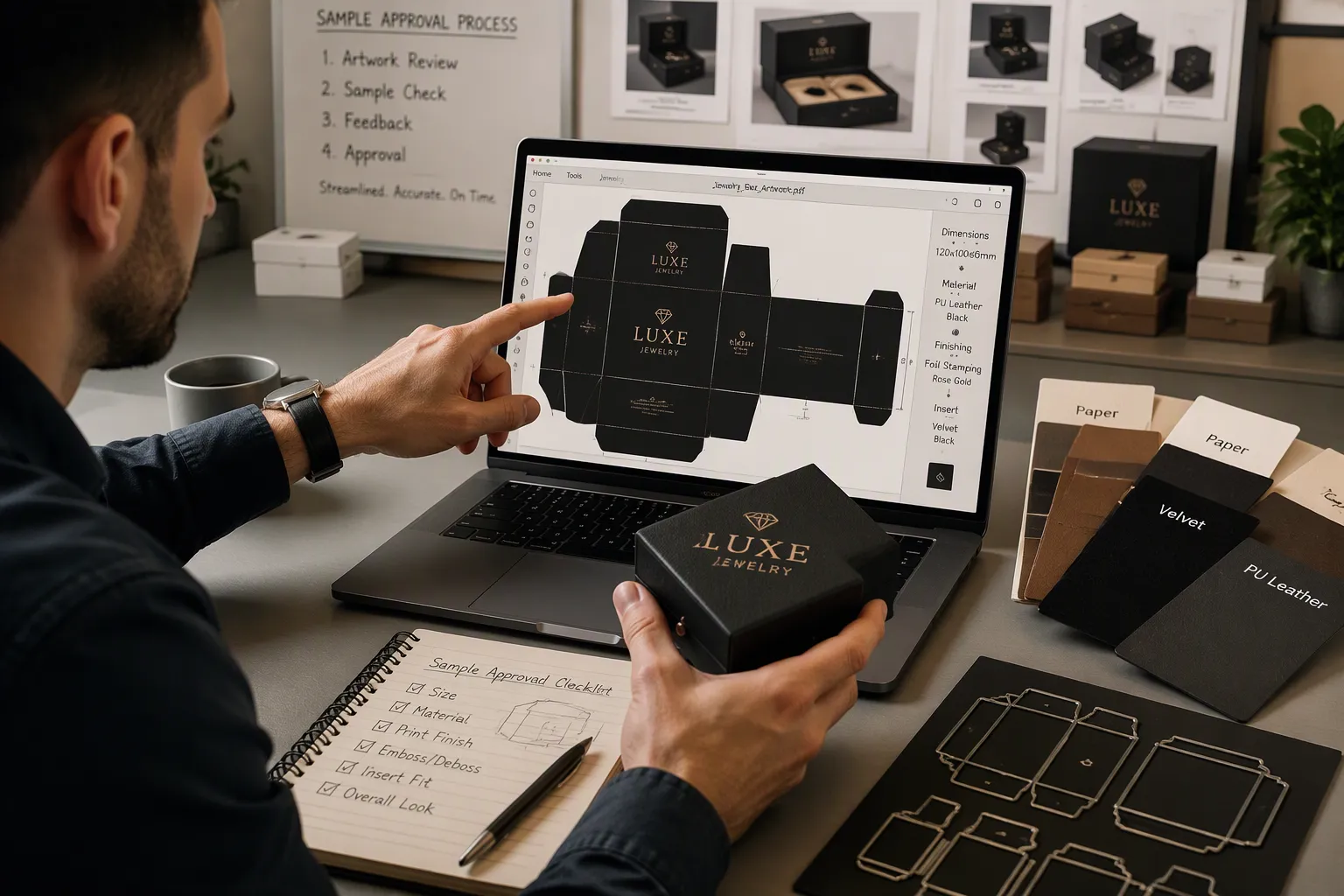
Speed comes from being ready, not from pushing. A buyer who sends all the details on day one cuts out most of the wait. The tips below focus on the two stages that slow down most often: artwork review and finding materials.
Prepare Clear Specs and Artwork
The quality of your artwork decides how fast the design stage ends. The factory takes PNG, PDF, JPG, and JPEG files, and the largest file size is 5MB. A vector PDF gives the cleanest engraving. Buyers should confirm the box size, lid style, engraving placement, and finish choice in one message. One complete submission works better than five partial ones.
A common problem is a logo sent as a screenshot. The supplier then redraws it, and the buyer checks the redraw, which makes the schedule longer. One client avoided this delay by sending a print-ready PDF with line weights noted. The proof came back correct the first time, and the engraved jewelry box sample went straight to production. Fast approval matters just as much. Production starts only after the customer approves the sample, so each extra revision day pushes the whole project back.
Choose Standard Materials Early
Standard materials keep a rush order moving fast. Paper, velvet-like fabrics, and PU materials are already in stock, so there is no wait to source them. A library of more than 3,000 ready-made cutting dies can run right away instead of building custom molds. Rush orders are limited to standard materials and finishes, and simpler designs are the most likely to be accepted.
To keep a rush order moving, prepare accurate dimensions, order quantities, delivery details, and production-ready artwork before you submit the order.
Complex options like multi-color foil stamping, special velvet, intricate die-cuts, or custom inserts may not be available for rush runs. Buyers should lock in standard choices early and save specialty finishes for the bulk order. Shenzhen Tongxing Packaging Co., Ltd. also offers rush production and shipping options for personalized and engraved boxes.
Last, buyers should plan buffer time before bulk production. Tongxing’s mass production lead time runs 15–30 days after sample approval. Starting the sample well before a launch date keeps every later stage on schedule.
Most OEM customized engraved jewelry box samples take 5–10 business days. Shenzhen Tongxing Packaging Co., Ltd. usually delivers in 5–7 business days. How complex the engraving is and which material you pick cause the difference. A simple logo on standard stock moves fastest, and an intricate design on specialty wood takes longest.
Buyers should plan extra time before bulk production. Tongxing’s mass production window runs 15–30 days after sample approval. So starting the sample early protects your launch date. Buyers can send design files to Tongxing Packaging to get a precise sample quote and timeline.
PREGUNTAS FRECUENTES
How long does a sample take with Shenzhen Tongxing Packaging Co., Ltd.?
Tongxing Packaging usually delivers engraved jewelry box samples in 5–7 business days. Complicated designs can take 15–20 business days. The company does fast sampling and prototyping for its paper, velvet, plastic, and wooden box lines.
Do plain samples arrive faster than engraved samples?
Yes. Plain samples usually take 3–5 business days. Printed or engraved samples take 7–10 business days. The extra time covers setup, test engraving, and finish checks. Buyers should plan for the longer window when their design includes engraving.
Which file formats does the factory accept for artwork?
The factory accepts PNG, PDF, JPG, and JPEG files. The largest file size is 5MB. A vector PDF gives the cleanest engraving result. Buyers should confirm box size, lid style, engraving placement, and finish in one complete submission.
Can a buyer rush an engraved sample order?
Rush orders are limited to standard materials and finishes. Simpler designs are the most likely to be accepted. Buyers should prepare accurate dimensions, order quantities, delivery details, and production-ready artwork before submitting. Complex foil stamping or custom inserts may not qualify for rush runs.
How much buffer time should a buyer plan before mass production?
Tongxing’s mass production lead time runs 15–30 days after sample approval. Buyers should start the sample well before a launch date. Early sampling keeps every later stage on schedule and protects the delivery date.