A monthly jewelry box maintenance guide helps owners protect their collections. People should clean their jewelry box to remove dust and debris before residue spreads to jewelry. An anti-tarnish jewelry box keeps jewelry safe when owners store clean, dry jewelry inside. A velvet jewelry box with proper storage limits moisture. This jewelry box routine includes refreshing anti-tarnish strips every two to three months. An anti tarnish jewelry box, or anti-tarnish box, uses linings that slow tarnish. Individuelle Schmuckkästchen und Schmuckverpackung from a Hersteller von Schmuckverpackungen offer options. A Schmuck Display oder Schmucketui adds care and cleaning value. Jewelry requires attention. Jewelry stays tarnish-free.
Understanding Tarnish and Prevention
Tarnish is a surface-level chemical reaction. It occurs when metal is exposed to air, moisture, or certain substances such as sulfur, acids, or everyday skin products. This reaction is especially common in sterling silver, copper, brass, gold-filled, gold-plated, and silver-plated jewelry. A solid understanding of what causes tarnish helps owners build better habits. This knowledge also supports effective tarnish prevention at home.
What Causes Tarnish?
Tarnish develops when metals react with air, humidity, sulfur compounds, skin oils, or product buildup. Several factors work together to speed up this process. Two major categories stand out: moisture and air exposure, and chemical contact from personal care products.
Moisture and Air Exposure
Humidity and airborne sulfur compounds are primary drivers of tarnish. Sulfur-containing gases in the air react with silver to form silver sulfide, especially on sterling silver. Copper and copper-containing alloys form surface oxides or patina when exposed to air and moisture. Even a person’s unique skin chemistry, particularly if more acidic, can accelerate tarnishing. Damp environments make every one of these reactions worse.
Acids, Perfumes, and Lotions
Personal care products leave residues that contribute to tarnishing. Lotions, perfumes, hairspray, and sunscreen are common culprits. Household cleaners, bleach, and chlorine can dull metal finishes and affect plated surfaces. The table below summarizes how common household chemicals drive tarnishing.
| Household Chemical / Product | Tarnishing Mechanism |
|---|---|
| Lotions, perfumes, hairsprays, shampoos | Contain sulfates; airborne particulates or residue on hands react with silver to cause tarnish |
| Cleaning agents / harsh chemicals | Dull metal finishes, affect plated surfaces, leave residues that contribute to tarnishing |
| Chlorine (pools, hot tubs) | Causes damage and discoloration to jewelry metals |
| Sulfur compounds (in air, beauty products, rubber, leather, paper) | React with silver to form silver sulfide; also react with copper and brass |
| Acids (in some skin products, dyes, leather tanning) | Accelerate tarnishing on reactive metals like sterling silver, copper, brass |
Owners should remove jewelry before applying lotions, perfumes, or hair products. They should never wear jewelry while swimming, bathing, or cleaning. Chlorine and other chemicals cause damage and discoloration that no polishing cloth can fully reverse.
How an Anti-Tarnish Jewelry Box Works
An anti-tarnish jewelry box slows the chemical reactions that cause tarnish. These boxes combine treated materials and moisture-absorbing agents. Together, they create a micro-environment that protects reactive metals.
Anti-Tarnish Linings and Cloths
Anti-tarnish linings use treated fabrics that absorb sulfur compounds and other reactive gases. These materials block the airborne chemicals that attack silver and copper. A quality anti-tarnish box features these linings in every compartment and drawer. Anti-tarnish cloths work the same way inside pouches and travel cases. The fabric captures sulfur before it reaches the metal surface.
Activated Charcoal and Silica Gel
Activated charcoal and silica gel packets absorb moisture and airborne contaminants. Silica gel controls humidity inside the box. Charcoal captures sulfur and other gases. Owners should replace these agents every two to three months. This simple step maintains continuous protection. An anti tarnish jewelry box relies on these consumable components to stay effective over time.
Daily Habits That Slow Tarnish
Daily habits matter as much as the box itself. Professional jewelers recommend consistent routines that limit exposure to moisture, chemicals, and air. These habits extend the time between cleanings and keep pieces looking new.
Store Jewelry Clean and Dry
Owners should wipe daily-wear pieces with a soft cloth before storing them. This step removes skin oils and residue that would otherwise accelerate tarnishing. Jewelry should always go into the box clean and completely dry. Moisture trapped inside a closed box creates ideal conditions for tarnish. A regular cleaning routine with warm water and mild dish soap keeps pieces free of buildup. Owners should rinse and dry each piece fully before returning it to storage.
Minimize Airflow and Light Exposure
Air exposure and ultraviolet light both speed oxidation. Owners should store pieces separately in individual compartments, pouches, or zip-seal bags. This practice prevents micro-scratches from pieces rubbing together. It also limits air contact. Anti-tarnish zip-lock bags, treated pouches, lined boxes, and silica gel packets all reduce air exposure and keep moisture levels low. Owners should avoid storing jewelry near rubber, wool, direct sunlight, open-air trays, or mixed metals. Rubber and wool contain sulfur. UV light speeds oxidation. Open air exposes pieces to humidity and chemicals. Mixed metals cause galvanic reactions. The following steps summarize the daily storage habits that professional jewelers recommend.
- Store each piece separately in a lined jewelry box, soft pouch, or zip-seal bag to limit exposure to moisture and everyday chemicals; use anti-tarnish pouches, anti-tarnish strips, and polishing cloths.
- Keep jewelry away from chemicals — put jewelry on last after perfume, hairspray, lotion, and sunscreen have fully dried (the “last on, first off” habit).
- Clean pieces regularly with warm water and mild dish soap, using a soft-bristle toothbrush, then rinse and dry completely before returning to storage.
- Polish with a dedicated jewelry polishing cloth to restore shine, avoiding paper towels and abrasive fabrics.
- Keep jewelry dry — remove before contact with water, sweat, lotion, or aerosol sprays; wipe and dry fully if it gets wet.
- Remove jewelry before swimming, showering, exercising, sleeping, and gardening.
- Wear sterling silver pieces often and wipe clean after each wear — gentle friction buffs away light oxidation before it darkens.
- Match care to the metal: store sterling silver in an airtight pouch or lined box with anti-tarnish strips; keep 14k/18k gold clean and dry (gold itself resists tarnish, but alloy metals can react); protect gold-plated pieces from soaking and frequent polishing.
These habits form the foundation of any jewelry box maintenance guide. They also reduce the burden on the box’s protective features. A consistent routine delivers better results than any single product.
Key Features of a Good Jewelry Box
Jewelry designer Isabel Herrero and organizer Caroline Solomon both recommend soft natural linings and separate compartments. Solomon specifically highlights velvet for its cushioning. Diamonds rank highest on the Mohs hardness scale, so they can scratch softer stones; individual spaces prevent that contact.
Protective Interior Linings
Soft Fabric vs. Anti-Tarnish Fabric
Standard velvet or felt offers cushioning but no chemical protection. Some standard fabrics contain sulfur-based dyes that actually accelerate tarnish. Anti-tarnish linings use fabric embedded with microscopic silver or zinc particles. These compounds absorb and neutralize airborne sulfide gases before they reach metal surfaces. The table below shows the difference.
| Lining Type | Protection Mechanism | Effectiveness |
|---|---|---|
| Soft untreated fabric (standard velvet/felt) | Cushions surfaces only; no gas absorption | No tarnish protection; may worsen tarnishing |
| Anti-tarnish treated lining | Absorbs hydrogen sulfide and other corrosive gases | Significantly extends brightness of sterling silver and copper |
A professional anti-tarnish jewelry box lines every compartment with this treated material. Consumers should confirm an explicit anti-tarnish label; otherwise, a velvet jewelry box only cushions.
Lid Lining and Cushioning
The lid lining matters as much as the base. A padded lid protects the tops of rings and earrings when the box closes. Cushioning also holds pieces steady during movement.
Compartments and Drawers
Dividing Necklaces and Chains
Separate compartments stop necklaces from tangling and rubbing. Long chains need dedicated slots where they can lay flat. This prevents knots and minimizes air exposure between links.
Ring Rolls and Earring Trays
Ring rolls cradle individual bands and prevent side-by-side scratching. Earring trays with small slots keep pairs together and stop posts from piercing other pieces. Tailored compartments keep each piece clean and secure.
Exterior Materials and Construction
Wood, Leather, and Metal Frames
Solid wood provides superior insulation against temperature shifts and blocks UV light. A maintained walnut box can serve several generations. Metal offers modern durability, but humid climates risk rust. Stainless steel, coated aluminum, or powder-coated finishes prevent corrosion. Moisture remains the primary threat:
The main long-term risk with metal is rust or corrosion, especially in humid areas. Better metal jewelry boxes use stainless steel, coated aluminum, or protective finishes such as powder coating. Those finishes act as a barrier between air, moisture, and the metal, which stretches the life of the box with very little care.
Quality jewelry boxes often combine wood and leather for both elegance and resilience. A sturdy, structured build also protects against household accidents such as slamming drawers or falling objects.
Hinges, Clasps, and Lids
Durable hinges prevent lids from sagging. Magnetic closures close gently and keep contents contained. A soft-close lid prevents sudden impacts. An anti-tarnish box should also have a tight-fitting seal. Owners should close the anti tarnish jewelry box fully after each use. Quality hardware ensures that this anti-tarnish box remains sealed against air. Even the best wood case fails when hinges loosen, so owners should check joints and clasps during monthly maintenance.
Organizing Jewelry by Type
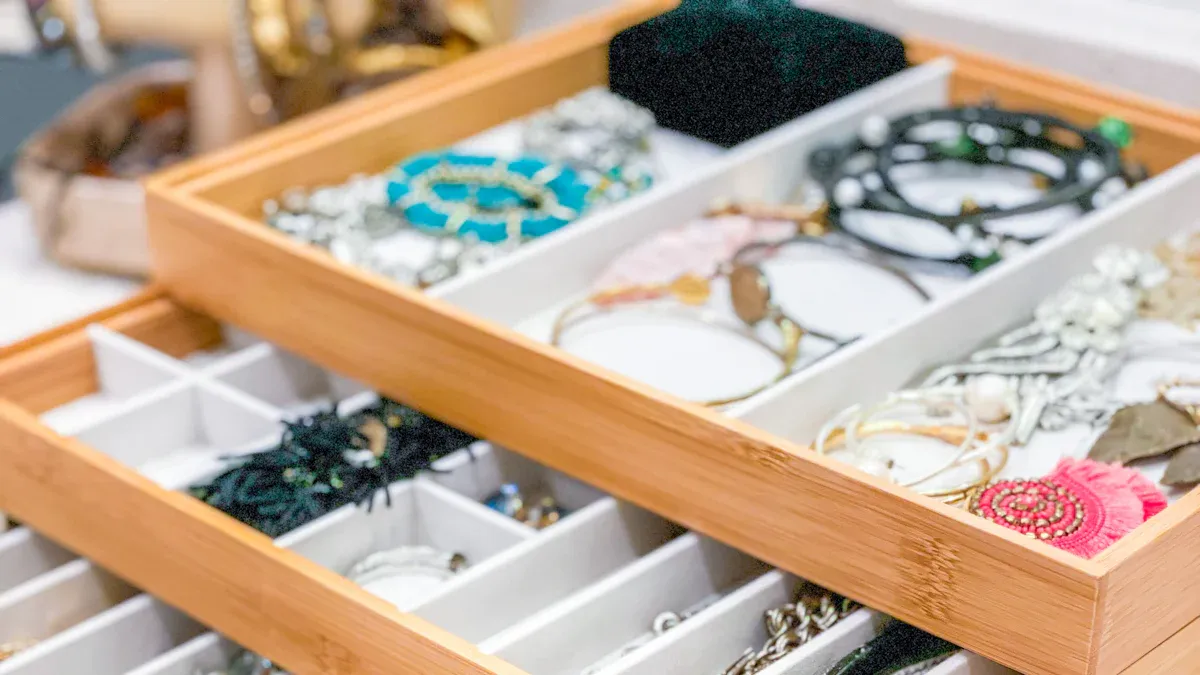
A logical layout protects each piece and speeds up daily selection. Owners who organize by category reduce wear. Professional organizers recommend soft linings and dedicated compartments. The goal is preventing scratches and tangling before damage occurs. A quality jewelry box provides the foundation for this system. Soft fabric liners such as velveteen, satin, or silk cushion delicate metal. Plastic and bare wood remain too rough for fine surfaces. Anti-tarnish fabrics add protection.
Necklaces and Chains
Hang or Lay Flat to Prevent Knots
Fine chains need careful handling. Professional organizer Schiffman recommends laying each chain flat in a separate fabric-lined compartment. This method prevents kinks and tangles. Hanging each necklace on an individual hook works only when vertical space exists. For a jewelry box, flat storage remains the safest option. Owners should fasten clasps before placing chains into any compartment.
Use Separate Compartments or Slots
Separate slots keep chains from looping together. A jewelry box organizer with adjustable dividers accommodates different lengths. Acid-free tissue, velvet, and silk linings protect delicate metal. Cardboard, treated wood, and rubber surfaces accelerate tarnishing. Tray depth should match the necklace length; shallow trays do not hold long chains. This approach avoids knots and surface wear.
Rings and Earrings
Ring Rolls and Soft Trays
Cushioned ring rolls or slot trays maintain the circular shape of bands. They prevent distortion during storage. Hard trays scratch metal, and cheap black foam traps moisture. Ring rolls separate each piece so stones do not rub together. Owners should place rings into padded slots after cleaning. This simple step preserves prongs and finishes.
Earring Strips and Screw-Back Holders
Earrings need paired storage. Cards or slotted inserts keep pairs together and prevent bent posts. A tray with small compartments protects delicate studs and drop earrings. Screw-back holders secure posts firmly and keep matching backs close. These systems help prevent tangling and scratching around other pieces. Pairs stay intact and ready to wear.
Bracelets, Watches, and Brooches
Bracelet Bars and Watch Pillows
Bracelets benefit from dedicated bars or padded wraps. A bracelet bar keeps bangles upright and stops them from tangling. Watch pillows hold each timepiece separately, preventing case-to-case scratching. Owners should store watches away from other pieces. Delicate gemstones need their own soft pouches. Hard stones like diamonds can scratch softer gems.
Brooch Pads and Pin Keepers
Brooches require pin keepers or padded brooch pads. A pin keeper secures the clasp and prevents the sharp pin from damaging nearby items. Owners can organize brooches by size or frequency of wear. The same principle applies to jewelry box organizers with divided sections. To organize your jewelry effectively, assign one home for each category and return pieces after wearing. Clean every item with a soft cloth before storage. This final habit keeps both jewelry and box in excellent condition.
Choosing the Right Jewelry Box
Selecting the right jewelry box requires careful thought about collection size, daily habits, and personal style. A well-chosen box protects valuables and simplifies daily routines. Consumers should evaluate three key factors before making a purchase.
Assess Your Collection Size
Count Categories and Daily Wear Items
Owners should count every piece by category: necklaces, rings, earrings, bracelets, watches, and brooches. They should note which jewelry they wear daily. Daily-wear items need easy-access compartments. A velvet jewelry box with a dedicated top tray works well for frequently worn pieces. Delicate or rarely worn jewelry can go into deeper drawers.
Plan for Future Growth
Collections grow over time. Consumers should choose a jewelry box with room for expansion. Adjustable dividers and stackable trays accommodate new acquisitions. A box that is too small forces overcrowding, which causes scratches and tangles. Buying slightly larger than current needs prevents premature replacement.
Match Box Features to Your Habits
Travel Cases vs. Home Storage
Frequent travelers need portable options. Product reviews recommend soft-sided or leather cases with zippered closures and internal pouches for delicate items. The Cuyana Large Jewelry Case serves both travel and home storage. Home storage users benefit from rigid jewelry boxes with compartments and pull-out drawers. Popular models include the Wolf Sophia, West Elm Mid-Century, and Pottery Barn Stella. Stackable drawer trays from brands like Stackers help organize surface-free spaces.
Open Display vs. Locked Storage
Open display boxes with glass lids offer visibility and quick access. Owners must keep these boxes out of direct sunlight to prevent UV damage. Locked storage suits valuable collections or homes with children and pets. A secure clasp or keyed lock provides peace of mind.
Consider Material and Aesthetic
Wood Finishes and Leather Exteriors
Solid wood exteriors resist temperature shifts and block UV light. Walnut and cherry finishes offer timeless appeal. Leather exteriors provide a luxurious look and durable protection. Both materials suit long-term use.
Interior Color and Visibility
Interior color affects visibility. Light linings such as cream or gray make jewelry easy to see. Dark linings hide tarnish and dust but reduce contrast. A velvet jewelry box with a light interior helps owners spot missing earrings quickly. Anti-tarnish linings come in various colors, so consumers can match protection with preference.
Care and Maintenance
A jewelry box needs regular attention to keep protecting the pieces inside it. Dust, moisture, and everyday use slowly wear down linings, hardware, and exterior finishes. Owners who follow a simple maintenance schedule extend the life of both the box and their jewelry. This section covers cleaning methods, tarnish protection strategies, and the signs that signal it is time for a replacement.
Cleaning Your Velvet Jewelry Box
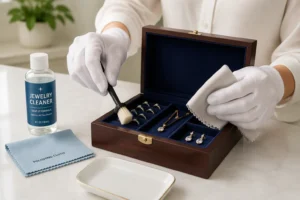
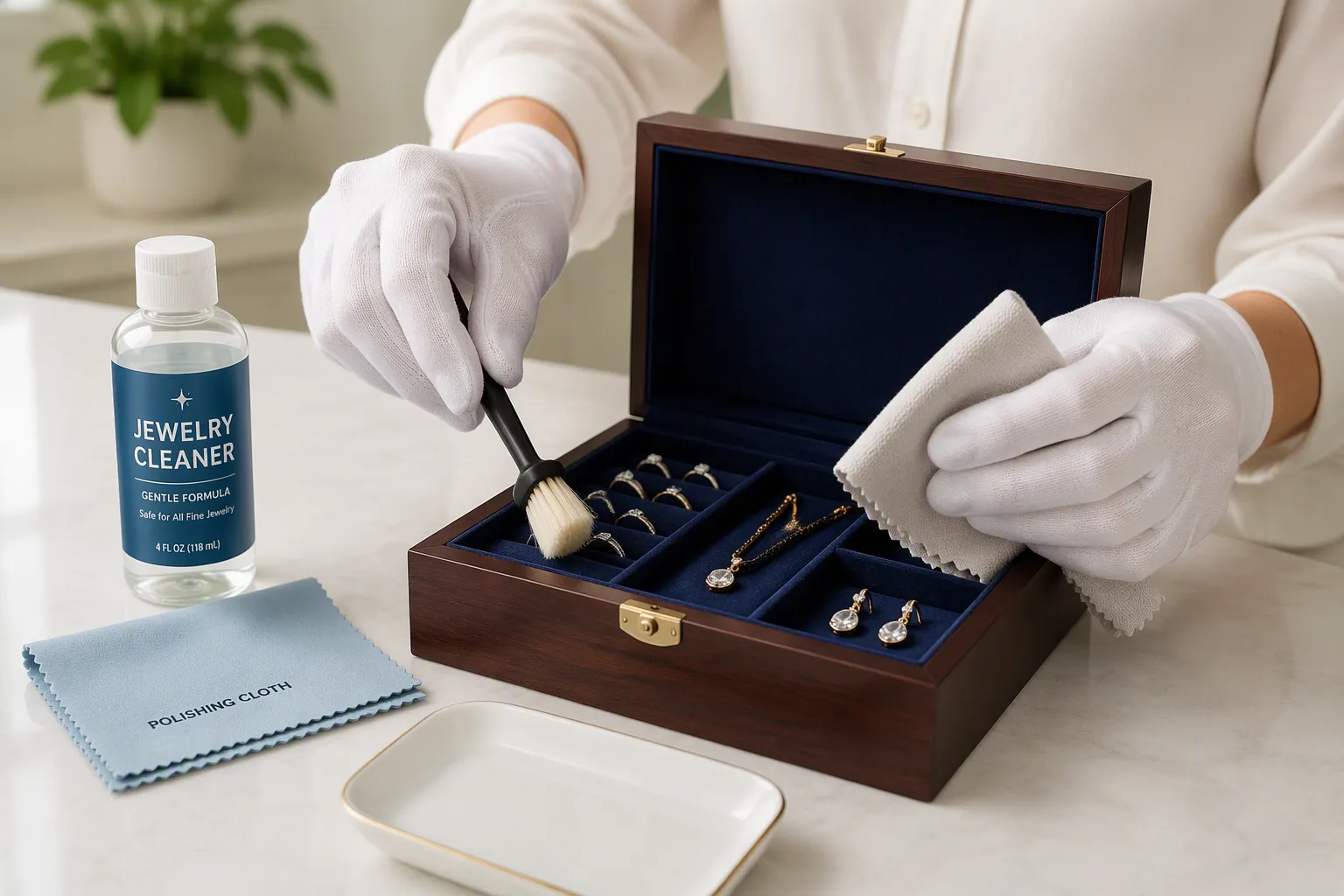
Velvet and fabric-lined boxes require gentle handling. Harsh chemicals and vigorous scrubbing damage delicate fibers and loosen adhesives. A careful approach preserves the soft texture and protective qualities of the lining. The cleaning routine below works for most velvet jewelry box interiors and exteriors.
Use a Soft Brush or Cloth
Owners should begin by removing all jewelry and accessories from the box. This step prevents scratches and avoids exposing pieces to moisture during the cleaning process. A soft-bristled brush works well for removing dust and debris from velvet surfaces. Users should sweep the brush in one direction to lift particles without pushing them deeper into the fabric. A vacuum with a soft upholstery attachment offers another option for larger surfaces. For delicate velvet linings, a nylon screen placed over the vacuum nozzle protects the fabric while the lowest suction setting lifts dust away. A dabbing motion works better than sliding, which can stretch or distort the nap. A crevice tool reaches corners of ring slots and narrow compartments. Compressed air helps clear hinges and deep corners; users should hold the nozzle at least six inches away and use short bursts directed outward.
Spot-Clean Gently Without Scrubbing
Stains require immediate attention, but aggressive rubbing causes permanent damage. Owners should mix mild detergent with warm distilled water and dampen a soft cloth or cotton swab. The cloth should be damp, not wet; wring it until no drops fall. Gentle blotting lifts the stain without spreading it. Users should work in small sections of about two square inches and follow each pass with a dry microfiber buff. Harsh chemicals such as chlorine bleach, acetone, and abrasive household cleaners damage both fabrics and metal hardware. Testing any cleaner on an inconspicuous area first prevents accidental discoloration. For stubborn interior stains, a dampened cotton swab with mild detergent solution works well, but users must avoid oversaturating the padding. A dry-cleaning sponge handles light surface marks without introducing moisture. If liquid is necessary, a specialized upholstery foam that dries quickly without saturating the fibers offers the safest option. After cleaning, owners should air-dry the box in a well-ventilated area away from direct sunlight. Hairdryers and heaters damage velvet fibers and warp wooden frames. Once dry, a gentle brushing restores the velvet’s nap. To reshape the box, owners can fill it with crumpled tissue paper or soft fabric to push out dents or wrinkles. Allowing the reshaped box to sit for a few hours helps it set in its new form.
For wood exteriors, owners should wipe with a cloth barely dampened with distilled water and mild soap, always following the wood grain direction. Immediate drying with a dry cloth removes residual moisture. A pea-sized amount of beeswax applied bi-annually protects the wood surface from humidity and restores luster. Leather accents benefit from a dedicated leather conditioner free from silicones or heavy oils. Applying the conditioner in a circular motion, allowing it to absorb, and then buffing with a clean cloth keeps leather supple. This treatment should be done annually to prevent cracking and peeling. Owners should never submerge any part of the box in water or cleaning solution, as this causes wood expansion, veneer peeling, and structural collapse. Storing the box in a climate-controlled environment with 45-55% relative humidity, away from direct sunlight and extreme temperatures, allows natural materials to breathe. Sealing the box in plastic bags traps moisture and causes damage.
Maximizing Tarnish Protection
Tarnish prevention requires ongoing attention to the consumable components inside an anti-tarnish jewelry box. Anti-tarnish strips, charcoal packets, and silica gel lose effectiveness over time. Replacing them on schedule maintains continuous protection for reactive metals like sterling silver and copper.
Refresh Anti-Tarnish Strips and Charcoal
Anti-tarnish strips and activated charcoal absorb sulfur compounds and other corrosive gases. These materials become saturated after two to three months of normal use. Owners should mark their calendars and replace these aids on a regular schedule. Skipping this step reduces protective performance and allows tarnish to develop unnoticed. A simple cleaning and care tips approach includes checking these components during the monthly jewelry box maintenance guide routine. Fresh strips and charcoal keep the micro-environment inside the anti-tarnish box stable and effective.
Use Silica Packets in Humid Climates
Humidity accelerates oxidation and creates ideal conditions for tarnish. Silica gel packets absorb excess moisture and keep the interior dry. Owners in humid climates should use multiple packets and replace them more frequently. Ignoring humidity control leads to rapid oxidation and moisture absorption. A clean velvet jewelry box in a humid environment requires extra attention to moisture management. Placing silica packets in each drawer and compartment provides comprehensive protection. Owners should also store the box in a low-humidity area away from bathrooms, kitchens, and other damp spaces.
The table below summarizes common maintenance mistakes and their impact on jewelry protection.
| Maintenance Mistake | Impact on Jewelry Protection |
|---|---|
| Skipping regular inspections | Tarnish and corrosion develop unnoticed |
| Not replacing anti-tarnish aids | Reduced protective performance |
| Ignoring humidity control | Accelerated oxidation |
| Overcrowding storage containers | Tangling, scratching, and trapped humidity |
| Using low-quality plastics or fabrics | Release of tarnish-causing chemicals |
| Using harsh cleaning agents | Damage to metals and gemstones |
| Storing in high-humidity areas | Rapid oxidation and moisture absorption |
| Exposing to direct sunlight or heat | Fading of gemstones and warping of materials |
When to Replace Your Jewelry Box
Even well-maintained boxes eventually reach the end of their useful life. Recognizing the signs of wear helps owners decide when repair is no longer practical. A damaged box fails to protect the jewelry inside it.
Signs of Wear: Torn Linings, Broken Hinges, Odors
Torn or worn linings expose jewelry to untreated surfaces that may accelerate tarnishing. Broken hinges prevent the lid from sealing properly, allowing air and moisture to enter. Loose clasps fail to keep the box closed during movement. Persistent odors indicate trapped moisture or mold growth inside the padding. Baking soda sprinkled in a light layer and left for hours or overnight absorbs many odors. Activated charcoal takes about one week to eliminate deep-seated damp smells. Cedar chips provide a natural scent and act as a moth deterrent. Dried coffee grounds absorb chemical and perfume smells. If odors persist after treatment, the box may harbor mold that requires replacement. Owners should inspect hinges, clasps, and linings during every cleaning routine. Catching small problems early prevents them from becoming major failures.
Upgrading as Your Collection Changes
Collections grow and change over time. A box that once held a small collection may become overcrowded. Overcrowding causes tangling, scratching, and trapped humidity. Owners should reassess their storage needs annually. A larger anti tarnish jewelry box with adjustable compartments accommodates new acquisitions. Upgrading to a box with better anti-tarnish features improves protection for valuable pieces. The care and maintenance of a growing collection requires adequate space and proper materials. When a box no longer meets the collection’s needs, upgrading protects both the jewelry and the owner’s investment.
Shopping Guide
A thoughtful buyer researches before purchasing. Care begins with selection. Material, lining, and hardware determine performance. The guide below outlines trusted retail channels, quality checks, and price benchmarks.
Where to Buy Quality Jewelry Boxes
Consumers have many purchasing channels. Specialty retailers provide expert guidance. Online options offer wide selections. Antique shops and craft makers supply unique pieces.
Specialty Jewelry Stores and Online Retailers
Amazon stocks thousands of anti-tarnish jewelry box options across every price level. Wayfair offers frequent sales and free shipping. Curated sites feature velvet jewelry box choices with treated lining and solid return policies. Etsy connects buyers with artisans creating eco-friendly storage. Department stores carry dependable brands at discounted prices. Customer reviews show strong satisfaction, with one model reaching 4.8 stars across 4,300 evaluations. Buyers should still inspect zippers and closures before finalizing.
Antique Shops and Craft Makers
Antique shops allow hands-on inspection. A buyer tests hinges, linings, and dimensions immediately. Craft makers build custom storage pieces with premium materials and tailored compartments. These sources often deliver superior craftsmanship.
What to Look For Before Purchase
A discerning shopper examines construction details before committing. Each component affects long-term protection.
Verify Anti-Tarnish Lining
Consumers should confirm the lining uses treated fabric. Premium brands use LusterLoc™ or equivalent materials. Basic felt traps moisture and accelerates tarnish. Buyers can press dark tape onto the lining to detect loose fibers. Rubbing the surface reveals pilling. The box should include dedicated space for anti-tarnish paper or silica packets.
Check Compartment Flexibility and Durable Hardware
A reliable anti-tarnish box includes adjustable dividers and sturdy closures. The table below lists critical inspection points.
| Check Area | What Buyers Should Examine |
|---|---|
| Lock and closure | Close with one hand; lid should shut firmly without looseness. |
| Hinge alignment | Lid should open smoothly; both sides provide equal resistance. |
| Magnetic suction | Magnet holds the lid level and clicks cleanly. |
| Hardware finish | Inspect for pits, scratches, or uneven plating. |
| Edge protection | Examine leather near hardware for dents or exposed base material. |
| After-sales service | Confirm locks or magnetic plates are replaceable. |
Buyers should open and close the box quickly thirty times. The mechanism should remain smooth. Adjustable dividers accommodate necklaces, rings, and earrings without crowding.
Budget and Value
Price correlates with protection and durability. Buyers should match the storage solution to their collection value and expected usage.
Price Ranges and Long-Term Investment
The table below compares features across price bands.
| Merkmal | Inexpensive ($20-$50) | Mid-Range ($50-$150) | Luxury ($150+) |
|---|---|---|---|
| Exterior | MDF, plastic, faux leather | Wood veneer, quality faux leather | Solid walnut, mahogany, genuine leather |
| Lining | Thin velvet; traps moisture | Better velvet; minor anti-tarnish | Premium anti-tarnish treated fabric |
| Hardware | Plated metal, flimsy | Sturdier metal with locks | Solid brass or stainless steel |
| Lifespan | 1-3 years | 5-10 years | Lifetime, heirloom quality |
The superior materials, protective anti-tarnish linings, and thoughtful craftsmanship are not just luxury features; they are functional necessities for long-term preservation.
A mid-range anti tarnish jewelry box offers sufficient protection for most collections. A solid wood piece becomes a family heirloom. Cheap boxes fail within a few years and require complete replacement.
Warranties and Return Policies
Buyers should identify the manufacturer’s warranty before payment. A clear return policy guards against initial manufacturing flaws. Compare after-sales support for locks, hinges, and linings. Some retailers extend lifetime guarantees on hardware. These terms reduce the long-term cost of ownership.
Owners should set a regular maintenance routine to empty, wipe, refresh, and reorganize the jewelry box each month. They must place clean, dry jewelry inside and keep the box in a stable, low-humidity environment. A quality anti-tarnish jewelry box with enough compartments protects a collection. Owners should replace the box when linings no longer protect, compartments break, or hardware fails. These consistent steps preserve both jewelry and the box for years.
FAQ
How Often Should a Jewelry Box Be Cleaned?
Owners should clean the jewelry box once a month. They empty all compartments, brush interior surfaces, and wipe hardware. This routine removes dust, moisture, and residue before tarnish spreads to jewelry. Monthly cleaning also reveals early wear in linings and hinges.
What Causes Tarnish Inside a Jewelry Box?
Air, moisture, and sulfur compounds cause tarnish. Humidity accelerates the reaction. Perfume and lotion residues also contribute. Owners who store damp jewelry create ideal conditions. A sealed box with anti-tarnish lining reduces these triggers by absorbing gases and controlling moisture.
How Do Anti-Tarnish Linings Protect Jewelry?
Anti-tarnish linings contain microscopic silver or zinc particles. These particles absorb airborne sulfide gases before they reach metal surfaces. The treated fabric neutralizes corrosive compounds inside each compartment. This chemical barrier keeps sterling silver and copper bright significantly longer than untreated velvet.
Can Different Metals Be Stored Together?
Storing different metals together risks galvanic reaction. Moisture and air cause one metal to corrode another. Owners should use separate compartments or anti-tarnish pouches. This separation prevents scratches and limits chemical contact. Matching metals can share a compartment safely.
How Should Someone Clean a Velvet Jewelry Box?
Owners should remove all jewelry first. A soft-bristled brush lifts dust without damaging velvet. Mild detergent in distilled water works for stains. Users should blot gently, not scrub. Dry cloth buffing finishes the area. Harsh chemicals damage linings and hardware.
When Should Anti-Tarnish Strips Be Replaced?
Owners should replace anti-tarnish strips every two to three months. Activated charcoal and silica packets lose effectiveness once saturated. Regular replacement maintains continuous protection. A monthly maintenance calendar helps owners track the schedule without guessing.
What Humidity Level Is Best for Jewelry Storage?
Relative humidity between 45 and 55 percent offers optimal protection. High humidity accelerates tarnish. Low humidity can dry leather and wood. Owners should place silica packets inside drawers and store the box away from bathrooms and kitchens.
Should Jewelry Be Stored Clean or Dirty?
Owners should store jewelry clean and completely dry. Skin oils, lotion, and perfume residue accelerate tarnishing inside closed compartments. Wiping each piece with a soft cloth before storage removes these contaminants. Moisture trapped in a sealed box creates tarnish-prone conditions.
See Also
How to Personalize Your Jewelry Drawer Box Step by Step
Complete Guide to Choosing Jewelry Box Inserts and Dividers
How to Select Optimal Jewelry Packaging for Your Brand
Essential Handbook for Designing and Prototyping Custom Jewelry Boxes
Exploring Premium Jewelry Box Finishes: Lacquer, Matte, and Fabric Options