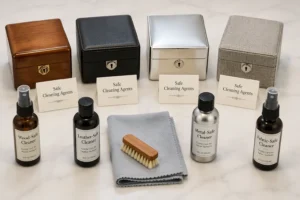
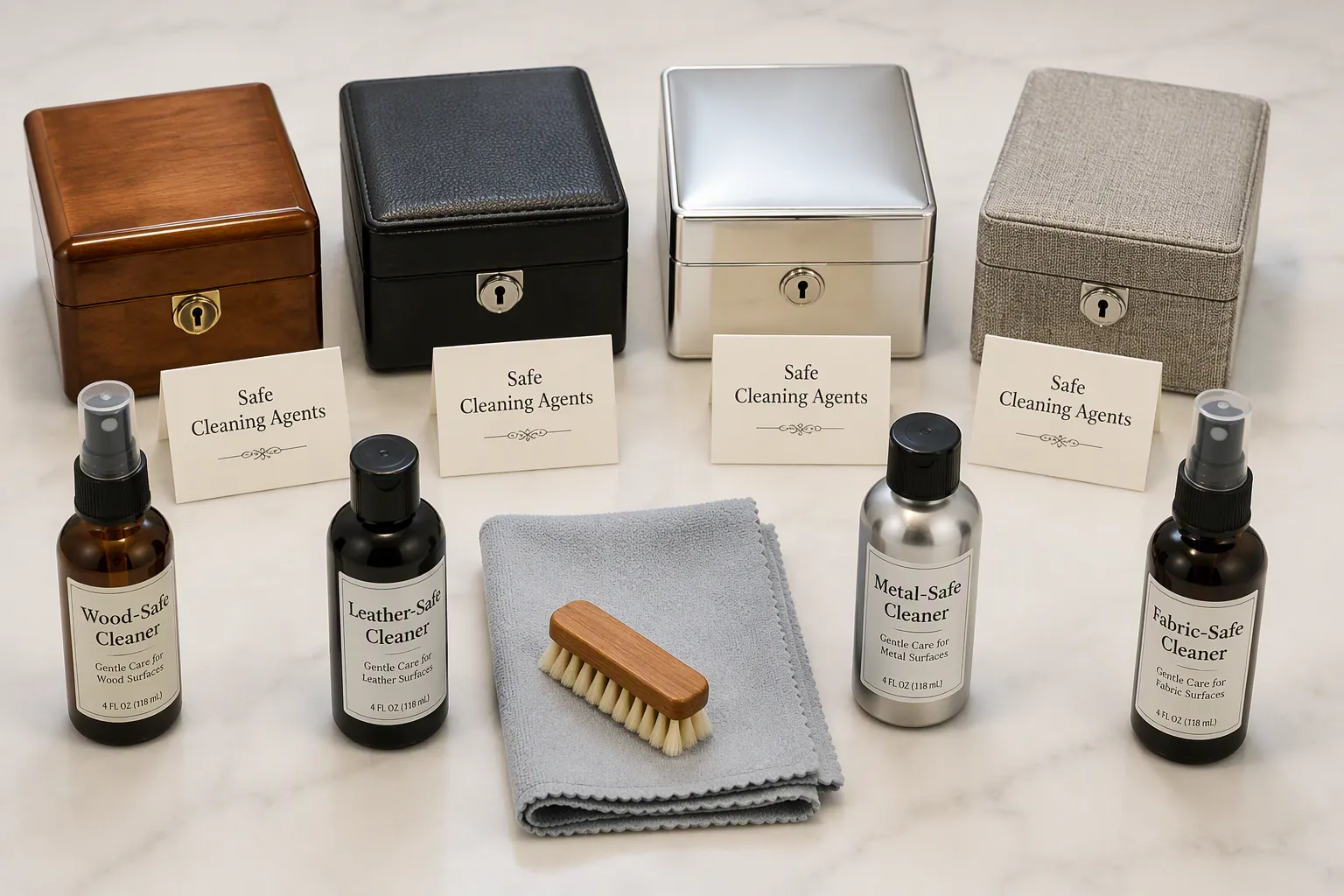
Safe cleaning agents for wood jewelry box exteriors include mild dish soap, distilled water, olive oil, and beeswax-based wood conditioner. Leather surfaces tolerate saddle soap, distilled water, mild dish soap, and leather conditioner. Metal exteriors accept distilled water, white vinegar, and specialized metal polish. Glass surfaces handle white vinegar, distilled water, mild glass cleaner, and mild dish soap. Painted or fabric exteriors need distilled water and a soft brush. A produttore di imballaggi per gioielli advises against ammonia, bleach, acetone, alcohol, abrasive scrubbers, and toothpaste on any confezioni di gioielli. These cleaners damage finishes on scatole per gioielli personalizzate, jewelry pouches, and jewelry display items. Proper cleaning protects every jewelry piece and its housing.
Essential Cleaning Agents for Jewelry Box Exteriors
Safe Cleaning Agents to Keep on Hand
A well-stocked cleaning kit protects every jewelry box surface. These essential cleaning agents handle wood, leather, metal, glass, fabric, and painted exteriors. Each item serves a specific purpose. Together, they form a complete arsenal for routine maintenance.
Mild Dish Soap
Mild dish soap removes dust, oil, and light grime from most jewelry box surfaces. A few drops mixed with warm water create an effective mild dish soap solution. This mixture lifts dirt without stripping finishes. Users should choose a fragrance-free and dye-free formula. Harsh additives can damage delicate materials. A gentle soap keeps the cleaning solution safe for repeated use.
Distilled Water
Distilled water contains no minerals or impurities. Tap water leaves behind calcium deposits and water spots. These marks dull the appearance of any jewelry box. Distilled water prevents spotting on glass and metal. It also protects wood and leather from mineral buildup. A spray bottle filled with distilled water handles light dusting tasks. This simple liquid pairs well with other safe cleaning agents.
White Vinegar
White vinegar offers a natural DIY cleaning solution for tough spots. Its acidic nature breaks down tarnish on metal and hard water stains on glass. A diluted mixture of equal parts vinegar and distilled water works well. Users should apply the solution with a soft cloth. Vinegar also disinfects surfaces without harsh chemicals. The smell fades quickly after drying. This household staple replaces many commercial cleaning products.
Microfiber Cloths and Soft-Bristle Brushes
Microfiber cloths trap dust and dirt without scratching surfaces. Their fine fibers reach into small crevices. Soft-bristle brushes dislodge debris from textured areas and corners. These tools work alongside liquid cleaners. A microfiber cloth also buffs surfaces to a streak-free shine. Soft brushes handle delicate fabric and painted exteriors. Both tools prevent abrasion damage during routine cleaning.
Quality tools and gentle solutions protect every jewelry box. Owners should avoid abrasive cleaning products and harsh chemicals. Proper supplies extend the life of any jewelry storage piece. A small investment in these basics yields lasting results.
Cleaning Wood Jewelry Box Exteriors
Safe Cleaning Agents for Wood
Wood demands gentle treatment. Harsh chemicals ruin its protective finish. Owners should stock the right supplies for proper care.
Mild Dish Soap Solution
A few drops of mild dish soap mixed with distilled water create an effective cleaning solution. This mixture lifts dirt without stripping the finish. Fragrance-free formulas work best on delicate surfaces.
Distilled Water
Distilled water contains no minerals. Tap water leaves deposits that dull wood over time. Using distilled water prevents spotting and buildup.
Olive Oil for Polishing
Olive oil adds a natural sheen to wood exteriors. A tiny amount on a soft cloth nourishes the surface. This household staple revives dried wood without harsh additives.
Beeswax-Based Wood Conditioner
Beeswax-based conditioners protect wood from humidity. A pea-sized amount creates a moisture barrier. Owners should apply this product twice a year for lasting protection.
Safe Cleaning Methods for Wood
Following specific cleaning methods keeps wood jewelry boxes in excellent condition. Proper technique matters as much as the right products.
Damp Cloth Wiping Technique
Owners should dust the exterior weekly with a clean microfiber cloth. This step follows the wood grain patterns. Owners should perform deeper cleaning monthly. Use a barely damp cloth with warm water and a drop of soap. Wipe along the grain direction.
Drying Immediately After Cleaning
Immediate drying prevents water damage. A dry cloth removes leftover moisture after cleaning. This practice stops warping and swelling. Owners should never allow the wood to air dry.
Applying Conditioner with a Soft Cloth
A soft cloth serves as the best tool for conditioner application. Owners should apply a small amount of wood polish or wax every two to three months. Buff gently for restored luster. This barrier also protects against moisture and scratches.
Unsafe Cleaning Agents for Wood
Some cleaning products cause irreversible damage to wood surfaces. Owners must avoid these dangerous substances.
Ammonia-Based Cleaners
Ammonia strips the protective finish from wood. This chemical leaves the surface vulnerable. Commercial window cleaners often contain ammonia. These products belong nowhere near jewelry boxes.
Alcohol and Solvents
Alcohol dissolves the wood’s protective coating. Solvents penetrate the surface and cause permanent dullness. Rubbing alcohol and nail polish remover damage finishes quickly.
Abrasive Sponges and Scrubbers
Abrasive scrubbers leave tiny scratches on wood surfaces. These marks collect dirt and grime over time. Gentle cloths and soft brushes offer the only safe options.
Excess Water and Soaking
Water causes wood swelling and veneer lifting. Owners must never submerge any part of a jewelry box. Even a soaked cloth transfers too much moisture. Damp cloths provide the safest route. Saturation leads to structural damage that ordinary cleaners cannot fix.
Wood requires attentive care. The right safe cleaning agents and techniques help the box retain its beauty for generations. Owners who avoid unsafe cleaning products protect their investment.
Cleaning Leather Jewelry Box Exteriors
Leather jewelry box exteriors require gentle care. This material develops a rich patina over time. Proper maintenance preserves that beauty for years.
Safe Cleaning Agents for Leather
Leather has a natural pH between 4.5 and 5.5. Alkaline products make it brittle. Owners should select pH-balanced options for routine care.
Saddle Soap
Saddle soap removes dirt from leather surfaces. Users apply a small amount with a damp soft cloth. This product works well on sturdy leather. Some experts consider saddle soap too strong for delicate finishes. Owners should test it in a hidden area first.
Distilled Water
Distilled water prevents mineral buildup in leather pores. A damp wipe with distilled water handles routine dust and light grime. This simple liquid pairs well with other safe cleaning agents.
Leather Conditioner
Neatsfoot oil and mink-oil-based products restore flexibility. Owners should avoid silicone and petroleum distillates. A glycerin-based leather conditioner prevents cracking. Beeswax balm creates a moisture-locking barrier.
Mild Dish Soap Solution
A few drops of mild dish soap in warm water create a gentle cleaning solution. Unscented Castile soap offers another mild option. A 50/50 mix of white vinegar and water removes grime and restores suppleness. Users apply these cleaners with a damp cloth, never soaked.
Safe Cleaning Methods for Leather
Proper technique protects leather from water damage and cracking. These steps keep the material supple.
Foam Application with a Soft Cloth
Owners should dust the exterior gently first. A soft cloth dipped in the cleaning solution creates a light foam. This method lifts dirt without saturating the leather.
Gentle Circular Wiping
Circular motions distribute the foam evenly. Users should avoid scrubbing aggressively. For oil-based stains, cornstarch or talcum powder applied overnight draws out the oil.
Buffing Dry with a Microfiber Cloth
A dry microfiber cloth removes leftover moisture. For water spots, blot with a lint-free cloth and air-dry at room temperature. Owners should never rub or use a hairdryer.
Conditioning After Cleaning
Conditioning restores essential oils after every cleaning session. A small amount of conditioner on a soft cloth buffs into the surface. This step prevents cracking and maintains flexibility.
Unsafe Cleaning Agents for Leather
Certain products cause permanent damage to leather jewelry box exteriors. Owners must avoid these substances.
Alcohol and Solvents
Alcohol-based wipes strip natural oils from leather. Solvents cause discoloration and brittleness. These cleaning products belong nowhere near fine leather.
Bleach and Ammonia
Bleach and ammonia destroy leather fibers. These harsh chemicals leave permanent stains. Even diluted solutions cause irreversible harm.
Abrasive Cleaners
Abrasive scrubbers scratch the leather surface. These marks collect dirt and accelerate wear. Only soft cloths and gentle brushes are safe.
Excess Water and Soaking
Water causes leather to swell and crack when it dries. Owners must never submerge any part of a jewelry box. A damp cloth provides the safest approach.
Cleaning Metal Jewelry Box Exteriors
Metal jewelry box exteriors need careful attention. Different metals react differently to various substances. Owners should understand which safe cleaning agents work best for their specific metal type.
Safe Cleaning Agents for Metal
Mild Dish Soap Solution
A few drops of mild dish soap mixed with warm water create an effective solution for most metal surfaces. This mixture removes dust and fingerprints without harming finishes. Users should apply the solution with a soft cloth.
Distilled Water
Distilled water prevents mineral spots on polished metal. Tap water leaves calcium deposits that dull the surface. A spray bottle of distilled water handles light dusting tasks.
Specialized Metal Polish
Commercial metal polishes restore shine to brass and silver. Owners should select products formulated for their specific metal type. The following table shows recommended practices for common decorative metals.
| Metallo | Recommended cleaning practice | Source note |
|---|---|---|
| Brass | Determine if solid, plated, or lacquered. For lacquered or plated brass, use mild soap, warm water, and a soft cloth. For solid unlacquered brass with tarnish, use gentle brass polish after testing. | Source addresses antique metal. |
| Silver plate | Use a damp soft cloth with mild soap, wipe with clean water, and dry thoroughly. Avoid vinegar baths and abrasive pastes. | Silver plate follows plated hardware guidance. |
| Stainless steel | Follow the safest general method: soft cloth, mild dish soap, warm water, and complete drying. | Source does not address steel specifically. |
White Vinegar for Tarnish
White vinegar removes tarnish from certain metals. A diluted solution of equal parts vinegar and distilled water works well. Users should test this remedy in a hidden area first. Vinegar effectively addresses tarnish on brass and copper.
Safe Cleaning Methods for Metal
Soft Cloth Wiping Technique
Owners should wipe metal surfaces with a soft cloth after handling. This practice removes oils that cause tarnish. Gentle wiping preserves the protective coating.
Polishing with a Microfiber Cloth
A microfiber cloth buffs metal to a streak-free shine. Circular motions distribute polish evenly. This step follows any cleaning session.
Rinsing and Drying Immediately
Metal requires immediate drying after cleaning. Water left on the surface promotes tarnish. A dry cloth removes all moisture quickly.
Using a Soft-Bristle Brush for Crevices
Soft-bristle brushes reach into decorative grooves. These tools dislodge dust without scratching. Owners should use gentle pressure.
Unsafe Cleaning Agents for Metal
Ammonia-Based Cleaners
Ammonia damages protective coatings on plated metals. These cleaners accelerate tarnish formation. Owners should avoid all ammonia products.
Abrasive Cleaners and Steel Wool
Abrasive cleaners scratch metal surfaces permanently. Steel wool removes protective lacquer. These cleaning products expose the base metal underneath.
Chlorine and Bleach
Chlorine and bleach corrode metal finishes. These harsh chemicals cause pitting and discoloration. Even diluted solutions cause damage.
Acidic Cleaners on Certain Metals
Strong acids break down protective coatings. The following table summarizes cleaner types to avoid on coated metal jewelry box exteriors.
| Cleaner category | Examples | Effect on protective coating |
|---|---|---|
| Rough or abrasive | Cerium oxide, scouring cleaners | Scratches and removes coating |
| Highly acidic | Acidic stainless steel cleaners | Damages or breaks down coating |
| Highly alkaline | Caustic solutions | Weakens protective coating |
Plated and lacquered finishes require extra care. The table below shows recommended products for these surfaces.
| Finish Type | Recommended Products | Products to Avoid |
|---|---|---|
| Plated hardware | Mild soap and water, applied lightly | Heavy polishing products |
| Lacquered metal | Soft cloth, mild soap, minimal water | Polish and abrasives |
Proper metal care preserves beauty for years. Owners who follow these guidelines protect their jewelry storage investment.
Cleaning Glass Jewelry Box Exteriors
Vetro jewelry box exteriors showcase the items inside. This material requires gentle care to maintain clarity. Scratches and streaks ruin the display quality. Owners should understand which agents work safely on glass surfaces.
Safe Cleaning Agents for Glass
White Vinegar Solution
A diluted white vinegar solution removes hard water stains and grime. Users mix equal parts vinegar and distilled water in a spray bottle. This natural option replaces many commercial cleaning products. The acidic nature cuts through residue without leaving film.
Distilled Water
Distilled water prevents mineral spots on glass surfaces. Tap water contains calcium and magnesium that leave streaks. A spray bottle of distilled water handles light dusting tasks. This liquid pairs well with other safe agents.
Mild Glass Cleaner
Commercial glass cleaners formulated without ammonia work safely. Products like Invisible Glass or Brillianize offer streak-free results. Owners should select cleaners made specifically for glass. These specialized products prevent hazing and yellowing over time.
Mild Dish Soap Solution
A few drops of mild dish soap in warm water create an effective solution. This mixture lifts fingerprints and light grime. Users apply the solution with a soft cloth. The gentle formula protects glass from etching.
Safe Cleaning Methods for Glass
Spray and Wipe with a Microfiber Cloth
Owners should spray cleaner onto the cloth, not directly onto the surface. This technique prevents overspray and controls moisture. A clean microfiber cloth wipes in circular motions. Users then buff with the dry side for a streak-free finish.
Using a Squeegee for Streak-Free Finish
A squeegee removes cleaning solution efficiently. Users pull the tool in overlapping strokes from top to bottom. This method prevents water marks and streaks. Owners should wipe the blade between passes.
Cleaning Edges and Corners with a Soft Brush
Soft-bristled brushes reach into decorative grooves and corners. These tools dislodge dust without scratching. Cotton swabs dipped in cleaner detail tight spaces. Gentle pressure protects delicate edges.
Drying Immediately to Avoid Water Spots
Immediate drying prevents mineral deposits on glass. A second dry microfiber cloth removes all moisture. Owners should inspect from multiple angles. Touch-up wiping eliminates remaining streaks.
Unsafe Cleaning Agents for Glass
Ammonia-Based Cleaners
Ammonia causes yellowing and hazing on glass over time. These cleaners damage protective coatings. Owners should avoid all ammonia products on jewelry box exteriors.
Abrasive Cleaners and Scrubbers
Abrasive sponges and paper towels scratch glass surfaces. These marks collect dirt and accelerate wear. Only soft microfiber cloths and non-abrasive cleaners are safe.
Acidic Cleaners on Framed Glass
Strong acids damage metal frames around glass panels. These substances cause tarnish and corrosion. Owners should use gentle solutions near framed edges.
Excess Water and Soaking
Water seeps into frames and causes damage. Owners must never submerge glass panels. A damp cloth provides the safest approach.
Cleaning Painted and Fabric Jewelry Box Exteriors
Painted and fabric jewelry box exteriors demand gentle care. These materials trap dust and absorb liquids easily. Owners should select mild agents for routine maintenance.
Safe Cleaning Agents for Painted Surfaces
Mild Dish Soap Solution
A few drops of mild dish soap mixed with warm water create a safe solution for painted surfaces. This mixture lifts fingerprints and light grime. Users should choose a fragrance-free formula to avoid damaging the paint.
Distilled Water
Distilled water prevents mineral spots on painted finishes. Tap water leaves calcium deposits that dull colors. A spray bottle of distilled water handles light dusting tasks.
Soft Brush for Dusting
A soft-bristle brush removes dust from textured painted areas. These tools reach into decorative grooves without scratching. Owners should use gentle strokes.
Microfiber Cloth for Wiping
A microfiber cloth traps dust and dirt effectively. Its fine fibers prevent abrasion damage. This tool works alongside liquid cleaners for best results.
Safe Cleaning Agents for Fabric Surfaces
Mild Dish Soap Solution
A diluted mild dish soap solution removes stains from fabric exteriors. Users apply a small amount with a soft cloth. The gentle formula protects delicate weaves.
Distilled Water
Distilled water prevents water spots on fabric surfaces. This liquid pairs well with other safe cleaning products. Owners should dampen the cloth, not soak it.
Soft Brush for Gentle Scrubbing
A soft brush dislodges dirt from fabric fibers. Users should scrub gently in circular motions. Aggressive scrubbing damages the material.
Vacuum with Brush Attachment
A vacuum with a brush attachment removes loose dust and debris. This tool reaches into crevices effectively. Owners should use low suction to protect the fabric.
Safe Cleaning Methods for Painted and Fabric Surfaces
Damp Cloth Wiping for Painted Surfaces
Owners should wipe painted surfaces with a barely damp cloth. This technique removes dust without saturating the paint. A dry soft cloth follows to remove leftover moisture.
Foam Application for Fabric Surfaces
Users should apply foam from a mild soap solution to fabric surfaces. A soft cloth distributes the foam evenly. This method lifts dirt without soaking the material.
Air Drying Completely
Air drying prevents moisture damage to painted and fabric jewelry box exteriors. Owners should place the box in a well-ventilated area. Direct sunlight causes fading and warping.
Avoiding Excess Moisture
Excess moisture ruins painted finishes and fabric weaves. Owners must never submerge these surfaces in water. Damp cloths provide the safest approach for routine cleaning.
Proper care preserves the beauty of painted and fabric jewelry boxes. Owners who follow these guidelines protect their jewelry storage investment for years.
Unsafe Cleaning Agents for Painted and Fabric Surfaces
Painted and fabric jewelry box exteriors react poorly to harsh substances. Owners must identify dangerous products before any cleaning session. Certain chemicals cause permanent damage that no repair can reverse.
Alcohol and Solvents
Alcohol dissolves paint and dulls fabric dyes. Rubbing alcohol, nail polish remover, and paint thinner strip protective coatings instantly. These solvents penetrate fabric weaves and leave discolored patches. A jewelry box exterior treated with alcohol loses its finish within seconds. Owners should check product labels for hidden alcohol content. Many commercial cleaning products contain solvents that damage delicate surfaces.
Bleach and Ammonia
Bleach and ammonia destroy painted finishes and fabric fibers. These harsh chemicals cause fading, yellowing, and brittleness. Even diluted solutions leave permanent stains on colored surfaces. Ammonia-based cleaners also emit fumes that harm indoor air quality. Owners should avoid these substances on any jewelry storage piece. A single exposure can ruin a painted jewelry box exterior beyond repair.
Abrasive Cleaners
Abrasive cleaners scratch painted surfaces and fray fabric threads. Scouring powders, steel wool, and rough sponges remove protective layers. These cleaners expose the base material underneath. Fabric surfaces suffer snags and pulls from abrasive contact. Owners should select only soft cloths and gentle brushes for routine maintenance. The damage from abrasive cleaners often appears after the surface dries.
Excess Water and Soaking
Water ruins painted and fabric jewelry box exteriors through saturation. Paint blisters and peels when moisture seeps beneath the surface. Fabric grows mold and develops water rings that never fade. Owners must never submerge these materials in water. A damp cloth provides the only safe approach for cleaning. Excess moisture also weakens adhesives and causes structural warping.
Proper care requires attention to product labels and material compatibility. Owners who avoid these dangerous substances protect their jewelry boxes for years. Gentle cleaning methods preserve beauty and function alike.
General Tips for Cleaning Any Jewelry Box Exterior
Every jewelry box exterior benefits from careful handling regardless of its material. These universal guidelines protect finishes and extend the life of any storage piece.
Test Cleaning Agents in a Hidden Area
Why Testing Matters
A patch test reveals how a product reacts with a specific surface. Some cleaners cause discoloration, fading, or finish removal. Testing prevents permanent damage to visible areas. This simple precaution saves owners from costly mistakes.
How to Test Safely
Owners should follow these steps before applying any product to the full exterior:
- Test the cleaning product on a concealed part of the jewelry box exterior first, such as the bottom or the inside of a flap.
- Verify that the product is safe for the specific velvet type: silk, cotton, or synthetic.
- Avoid solvent-based cleaners.
- Check colorfastness before applying the product to the visible surface.
- Follow the product’s rinse instructions after the patch test.
A small test area reveals potential problems within minutes. Owners should wait at least 24 hours before proceeding with full application.
Use Soft Cloths and Brushes
Microfiber Cloths
Microfiber cloths trap dust and dirt without scratching delicate surfaces. Their fine fibers reach into small crevices. A soft cloth also buffs surfaces to a streak-free shine. Owners should keep several cloths on hand for different tasks.
Soft-Bristle Brushes
Soft-bristle brushes dislodge debris from textured areas and corners. These tools work well on fabric, painted, and carved surfaces. Gentle pressure prevents abrasion damage. A clean makeup brush or baby toothbrush serves as an effective alternative.
Avoid Excess Moisture
Damp Not Wet
A damp cloth removes dust and light grime effectively. A wet cloth transfers too much liquid to the surface. Excess moisture causes wood swelling, leather cracking, and fabric mold. Owners should wring cloths thoroughly before use.
Drying Immediately
Immediate drying prevents water spots and material damage. A dry soft cloth removes all leftover moisture after cleaning. Owners should never allow any jewelry box exterior to air dry. This step-by-step guide ensures proper protection for every surface.
Store Jewelry Boxes Properly
Proper storage protects every jewelry box exterior from environmental damage. Owners should consider location, humidity, and temperature before placing any storage piece. These factors affect wood, leather, metal, glass, and fabric surfaces over time. A thoughtful storage strategy extends the life of any jewelry collection and its housing.
Away from Direct Sunlight
Direct sunlight damages jewelry box exteriors through ultraviolet radiation. This light fades painted surfaces and dries out leather. Wood develops cracks and warping under constant sun exposure. Metal finishes tarnish faster in bright, hot conditions. Owners should place jewelry boxes in shaded areas away from windows. A closet shelf or interior cabinet offers ideal protection. Rooms with indirect lighting provide safer environments for long-term storage. Owners who display jewelry boxes should rotate them away from direct rays. This simple habit prevents irreversible fading and material degradation.
In a Dry Environment
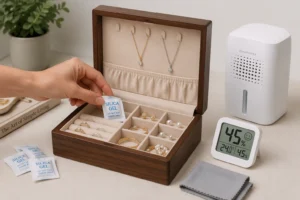
Moisture ranks among the greatest threats to jewelry box exteriors. High humidity causes wood to swell and leather to develop mold. Metal surfaces tarnish rapidly in damp conditions. Fabric exteriors absorb moisture and develop mildew odors. Owners should maintain consistent humidity levels in storage areas. The following table shows recommended conditions for preserving jewelry box materials.
| Condition | Recommended Level |
|---|---|
| Relative humidity | 40–50% |
| Temperature | 68°F to 72°F |
| Additional humidity guidance | Keep indoor humidity below 50% |
Maintain indoor humidity below 50% to prevent tarnish and corrosion, using silica gel packets or dehumidifiers for optimal storage conditions.
Silica gel packets absorb excess moisture in enclosed spaces. Dehumidifiers help in rooms with consistently high humidity. Owners should check these devices regularly and replace them as needed. Proper ventilation also prevents moisture buildup around storage pieces. Basements and bathrooms make poor storage locations for any jewelry box. These areas trap moisture and promote material damage. Bedrooms and living spaces with climate control offer better options. Owners should avoid placing jewelry boxes near humidifiers or plants. Water sources release vapor that damages delicate exteriors. A stable, dry environment protects every jewelry piece and its container. Routine cleaning becomes easier when boxes stay dry and free of mold. Owners who control humidity enjoy lasting beauty from their storage investments.
Safe Cleaning Agents for Silver Jewelry and Metal Jewelry Box Exteriors
Owners can clean a chain necklace at home using supplies already available in the kitchen. A gentle routine keeps silver jewelry bright and prevents damage. The methods below protect delicate chains, clasps, and metal surfaces.
Clean a Chain Necklace at Home
Use Mild Dish Soap and Warm Water
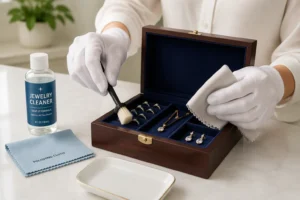
The soap and water method offers a dependable approach for routine maintenance. This technique relies on dish soap and warm water to break down skin oils and dust. It suits silver chains, gold-plated jewelry, and stainless steel necklaces without damaging finishes.
- Combine a few drops of mild dish soap with water in a small bowl.
- Let the silver chain necklace soak for about 15–20 minutes.
- Use a soft-bristle toothbrush to gently scrub crevices and links.
- Rinse the necklace with clean water.
- Dry it thoroughly by patting with a lint-free or microfiber cloth.
Frequent soaking of sterling silver may encourage tarnish, so this method should be used with care for routine cleaning.
Rinse and Dry with a Soft Cloth
Rinsing removes soap residue that dulls the finish. Owners should use clean water for this step. Drying with a soft cloth prevents water spots and mineral buildup. A soft cloth also works well for absorbing moisture after rinsing. This final step protects the metal and maintains its luster. Proper drying reduces the risk of tarnish.
Easy Ways to Clean a Chain Necklace at Home
Several easy ways to clean a chain necklace at home exist without harsh products. Owners have safe and effective DIY methods to restore shine. These options rely on household items and avoid chemicals. The table below summarizes non-abrasive techniques.
| Method | Materiali | Note |
|---|---|---|
| Baking soda paste | Bicarbonate of soda, water, damp soft cloth | Non-abrasive; roll chains gently in palm |
| Aluminum foil bath | Aluminum foil, hot water, baking soda | Lifts heavy residue; avoid heat-sensitive stones |
| Dishwashing soap wash | Dishwashing soap, soft hair brush | Simple, safe, and non-abrasive |
| Polishing cloth | Rouge-impregnated polish cloth | Removes fingerprints and creates a barrier |
Soak in a Mild Soap Solution
Soaking remains one of the easiest methods for removing everyday buildup. Owners place the piece in a bowl of mild soap solution and wait. This technique works well for silver jewelry that needs gentle care. The soak softens dirt in hard-to-reach areas. After soaking, a soft toothbrush completes the removal.
Gently Brush with a Soft Toothbrush
Brushing with a soft toothbrush targets grime that soaking misses. Owners should use light pressure and circular motions. This practice cleans between links without scratching the surface. It also works on decorative metal surfaces. Gentle brushing prevents abrasive damage that dulls the finish.
Avoid Harsh Jewelry Cleaners
Skip Silver Dips and Ultrasonic Cleaners
Silver dips remove tarnish but strip protective layers. These products can damage gemstones and delicate finishes. Ultrasonic cleaners agitate particles away but may loosen stones. Owners should avoid these harsh methods for fine accessories. Routine cleaning with mild soap protects the surface better.
Do Not Use Toothpaste or Baking Soda Scrubs
Toothpaste contains abrasives that scratch metal surfaces. Baking soda scrubs also wear down delicate plating. These DIY remedies cause more harm than good. The table above mentions a baking soda paste, but that method requires careful use. In general, owners should stick to non-abrasive cleaners. Frequent use of abrasive pastes increases tarnish and dulls the finish. Regular cleaning with a gentle cloth offers a safer alternative.
Owners must match safe cleaning agents to each jewelry box exterior material. Mild dish soap and distilled water serve as safe starting points for most surfaces. People should avoid harsh agents like ammonia, bleach, alcohol, acetone, and abrasive scrubbers on all materials. Testing any cleaning product in a hidden area first prevents damage. Immediate drying after cleaning stops moisture damage. For silver jewelry, gentle methods work best. Anyone can clean a chain necklace at home with dish soap and warm water. They can also explore easy ways to clean a chain necklace at home without harsh chemicals. These techniques protect gold-plated jewelry, stainless steel necklaces, and every soft cloth used during the process.
FAQ
What is the safest cleaning agent for most jewelry box exteriors?
Mild dish soap and distilled water serve as the safest starting point for most materials. This combination effectively removes dust and grime without stripping finishes. Owners should use a few drops of soap mixed with warm water. A soft cloth completes the process.
Why should ammonia be avoided?
Ammonia strips protective finishes from wood, leather, and metal surfaces. This chemical causes yellowing on glass. It also fades fabric dyes. Commercial window cleaners often contain ammonia. Owners should read labels carefully. Ammonia-free alternatives exist for every jewelry box material.
Can white vinegar clean metal jewelry boxes?
A diluted solution of white vinegar and distilled water removes tarnish from brass and copper. Users should test the mixture on a hidden area first. This natural agent works well on uncoated metals. Plated surfaces require gentler options like mild dish soap.
Should someone use olive oil on wood jewelry boxes?
A tiny amount of olive oil nourishes dried wood surfaces. Owners apply a few drops on a soft cloth. They buff gently. Too much oil attracts dust. It leaves residue. Beeswax-based conditioner offers a protective alternative. Olive oil works well for occasional polishing sessions.
How often should someone clean a jewelry box?
Routine dusting removes surface debris weekly. A deeper wipe-down should occur monthly for most materials. Leather and wood benefit from conditioning every two to three months. Owners should adjust frequency based on the environment. Homes with high dust levels require more frequent attention.
What should someone do before using a new cleaning product?
Owners should always test the product on a hidden area first. A small patch on the bottom or inside flap reveals potential damage. Users should wait 24 hours before proceeding. This simple precaution prevents permanent discoloration and finish loss.
How can someone dry a jewelry box exterior?
Immediate drying prevents water damage. A dry microfiber cloth removes all leftover moisture. Owners should never allow the exterior to air dry. This practice stops warping, cracking, and water spots. Attention to drying preserves every material’s appearance.
Which mistakes cause the most damage?
Excess moisture and abrasive tools rank among the worst offenders. Soaking leads to wood swelling, leather cracking, and fabric mold. Scouring pads scratch finishes permanently. Owners should always use damp cloths and soft brushes. Gentle methods protect all jewelry box exteriors.
See Also
Cleaning And Caring For Retail Jewelry Display Stands And Props
Exploring Luxury Jewelry Box Finishes: Lacquer, Matte, And Fabric Options
Top Materials For Preventing Tarnish In Jewelry Storage Containers
Selecting The Best Interior Lining For Premium Jewelry Packaging Boxes
Advantages Of Using FSC Certified Paper In Jewelry Box Production