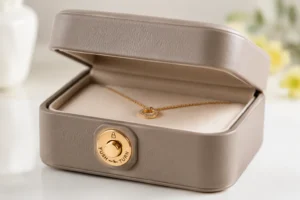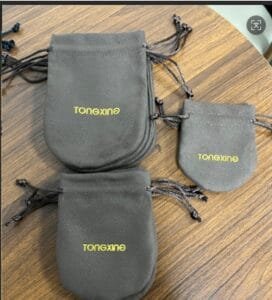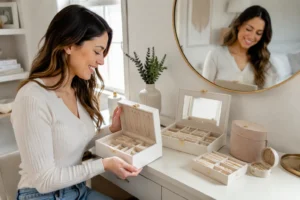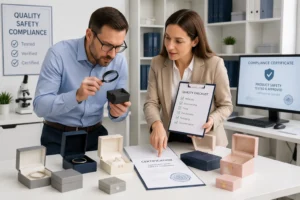
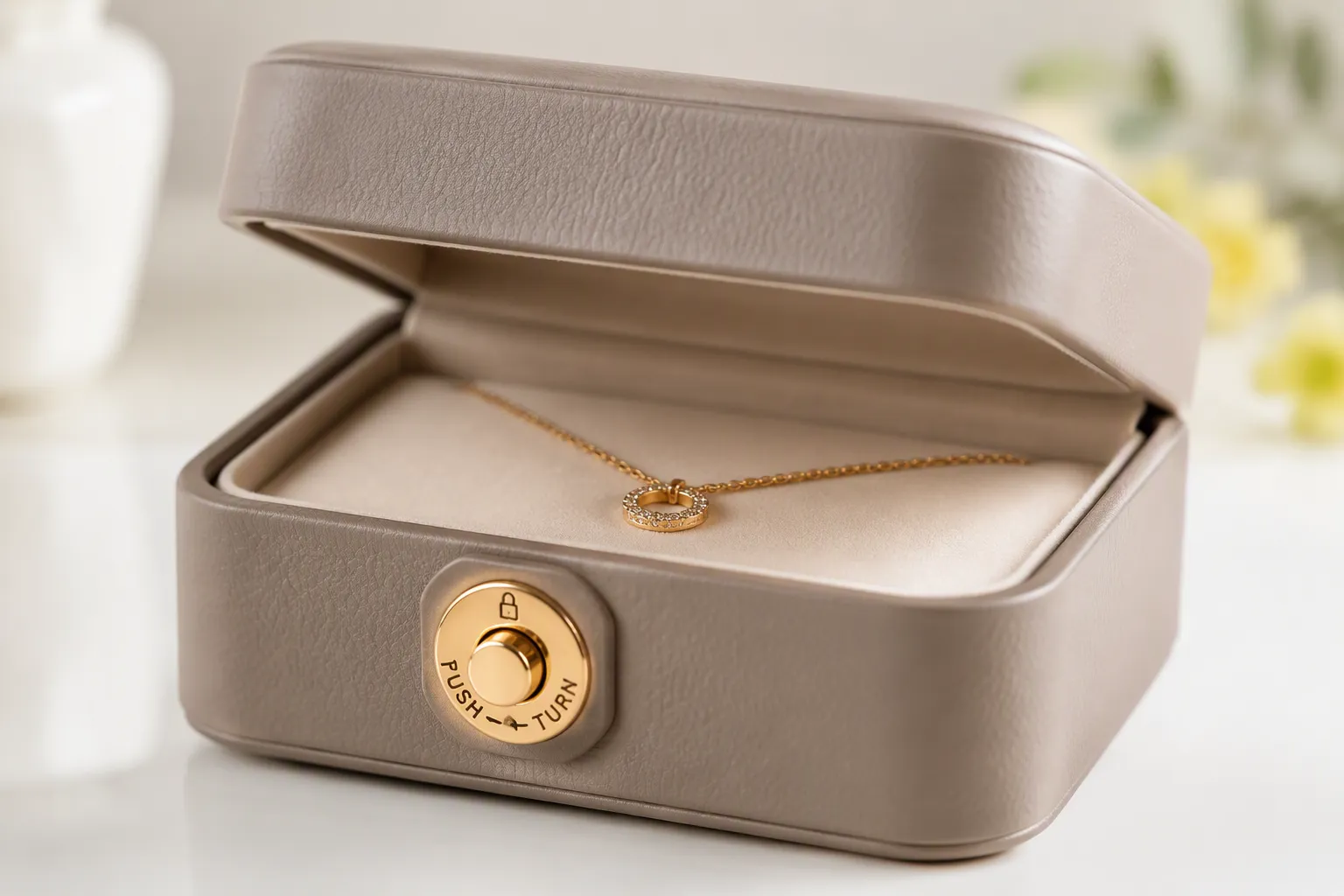
Child-Resistant Features protect toddlers from small items. These mechanisms prevent children from accessing small parts that could cause swallowing, suffocation, or choking. According to children’s jewelry safety standards, effective closures must resist opening in 85% of attempts by children under 5. However, a study revealed 65% of containers failed, emphasizing the need for careful choosing jewelry for a child. Safety includes avoiding sharp points or edges and using secure emballage de bijoux from a reputable fabricant d'emballages pour bijoux. Custom jewelry boxes and a Pochette à bijoux add extra layers of protection, while thoughtful Présentoir à bijoux can help keep items organized and out of reach.
Locking Clasps for Jewelry Safety
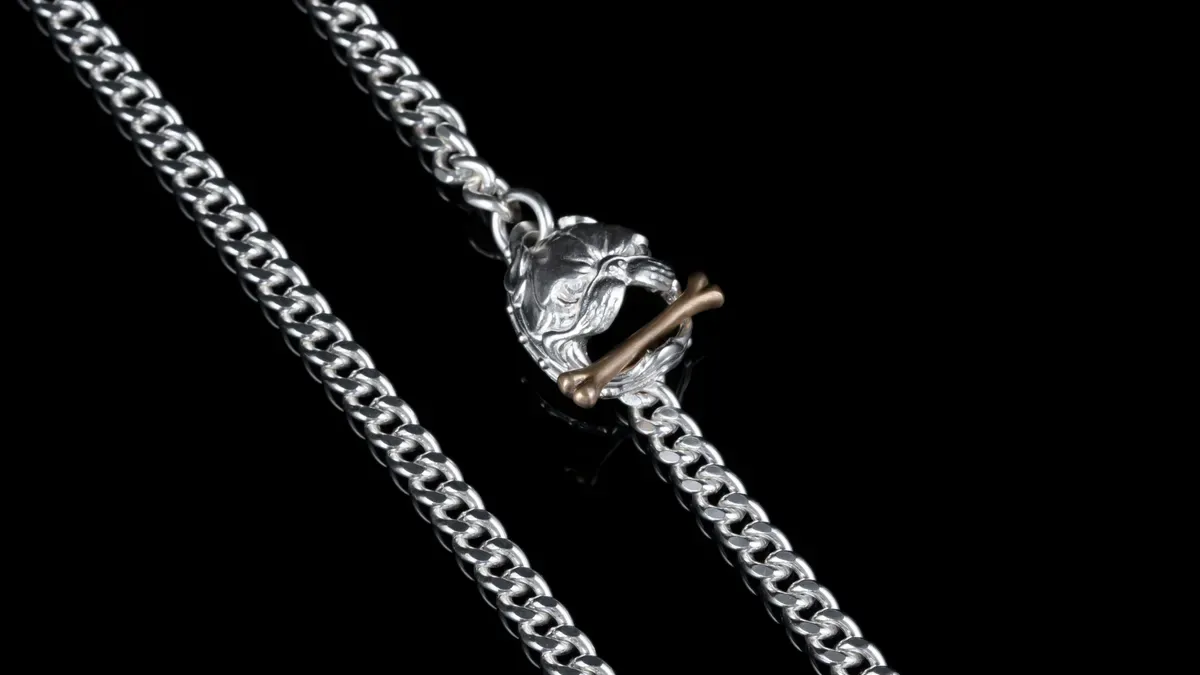
Locking clasps represent one of the most effective child-resistant features for small jewelry items. These mechanisms provide a physical barrier that stops young children from accessing dangerous small parts. Designers create these clasps specifically to thwart the fine motor skills of toddlers while remaining easy for adults to open.
How Locking Clasps Work
The Basic Mechanism
A locking clasp uses a two-step process to prevent small hands. The user must first press a button or slide a lever. Then the user pulls the clasp apart. This dual-action requirement proves difficult for children under five. Their hands lack the coordination to perform both steps in sequence. The mechanism stays locked during normal wear. It resists casual tugging from curious hands.
Types of Locking Clasps
Several locking clasp designs exist for different types of jewelry. Barrel clasps twist to lock and provide a smooth surface. Lobster claw clasps include a small spring-loaded hinge with a locking bar. Trigger clasps feature a ring that the user pulls to release the mechanism. Each design offers varying levels of security for the wearer.
Why Locking Clasps Are Effective
Preventing Accidental Opening
Locking clasps prevent jewelry from falling off during everyday activities. Small hands often grab at necklaces or bracelets while playing. A standard clasp might open under this pressure. A locking clasp stays closed. This feature keeps the jewelry on the wearer and away from small hands. Secure clasps reduce the chances of small charms or pendants becoming loose. Parents who choose children’s jewelry should look for these secure closures.
Reducing Choking Risk
Small jewelry pieces pose a serious choking hazard to young children. A child who removes a necklace gains access to beads, pendants, and chain links. Locking clasps block this access. The child cannot remove the jewelry without adult help. This simple barrier dramatically lowers the risk. Adults who buy children’s jewelry should prioritize items with locking clasps.
Tips for Using Locking Clasps
Choosing the Right Clasp
Adults should match the clasp type to the specific jewelry item. Heavy necklaces require stronger clasps with thicker metal. Delicate chains benefit from smaller, unobtrusive designs. The clasp should feel secure when closed. It should require deliberate force to open. Testing the clasp before purchase helps ensure ease of use for the adult and difficulty for the child. Quality secure clasps provide long-term jewelry safety.
Teaching Adults to Operate Them
Locking clasps require practice for proper use. Adults should demonstrate the opening sequence to other family members. Caregivers, grandparents, and older siblings all need to know the correct operation. Practicing with the clasp several times builds muscle memory. This preparation prevents frustration when time is limited. Adults responsible for children’s jewelry must master the clasp operation.
Magnetic Closures as Child-Resistant Features
Magnetic closures offer another strong option for keeping small jewelry away from curious hands. These fasteners use hidden magnets to hold pieces together. Adults can separate the ends with a firm pull. Young children lack the strength and dexterity to do the same. This design makes magnetic closures a valuable addition to any set of child-resistant features.
How Magnetic Closures Work
The Magnetic Locking System
A magnetic closure relies on two matching magnets. One magnet sits in each end of the jewelry piece. The magnets attract each other and snap the ends together. The connection stays firm during normal wear. A deliberate pull separates the two ends. This system works well for necklaces, bracelets, and anklets.
Strength and Design Variations
Magnetic closures come in several strength levels. Stronger magnets suit heavier pieces. Lighter magnets work for delicate chains. Some designs use a single magnet pair. Others use multiple magnets for extra holding power. The shape also varies. Round, rectangular, and custom shapes all exist. Each design affects how well the closure resists opening.
Why Magnetic Closures Are Effective
Keeping Small Pieces Contained
A secure magnetic closure keeps jewelry on the wearer. The piece stays in place during play and daily activities. Small beads, charms, and pendants remain attached to the main item. This containment reduces the chance of losing small parts. It also limits access for children who might put those parts in their mouths.
Deterring Small Hands
Small hands often lack the grip strength to pull magnetic ends apart. The magnets hold firm against casual tugging. A child must apply steady, focused force to separate the ends. Most children under five cannot manage this action. This natural barrier protects children’s jewelry from unwanted removal.
Tips for Using Magnetic Closures
Testing Magnet Strength
Adults should test the magnet strength before each use. A simple pull test reveals whether the closure holds securely. The two ends should stay together under moderate tension. If the ends separate too easily, the magnet may have weakened. Replacing the closure restores jewelry safety.
Safe Storage Practices
Proper storage extends the life of magnetic closures. Adults should keep jewelry in a dry place. Moisture can rust the metal components. Strong heat can weaken the magnets over time. A dedicated jewelry box or pouch offers the best protection. Adults should also store pieces away from credit cards and other magnetic items.
Tamper-Proof Packaging for Safe Jewelry Storage
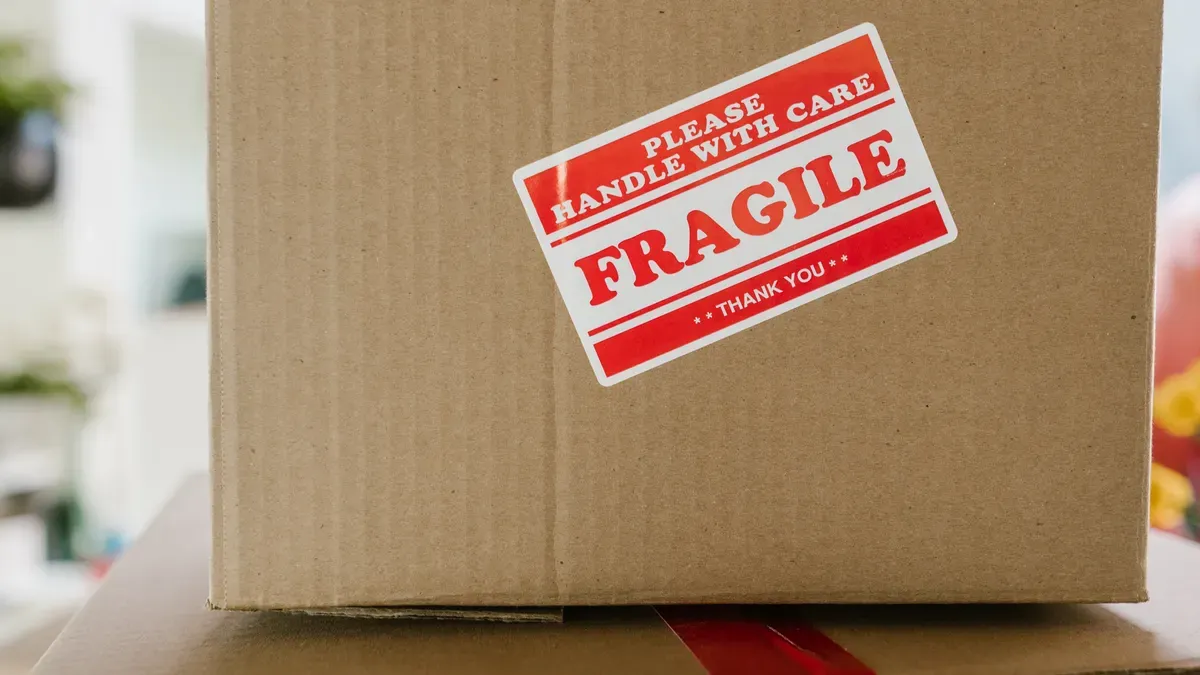
Tamper-proof packaging adds a critical layer of protection for small jewelry items. These packaging solutions prevent children from accessing dangerous pieces without adult supervision. Parents and caregivers should understand how these systems work and why they matter for jewelry safety.
How Tamper-Proof Packaging Works
Blister Packs and Sealed Cases
Blister packs seal jewelry between a clear plastic bubble and a sturdy backing card. The user must peel or cut through the backing to reach the item inside. Sealed cases use similar principles with rigid plastic shells. These designs require tools or deliberate force to open. Children cannot easily penetrate these barriers with their hands alone.
Child-Resistant Containers
Child-resistant containers use locking mechanisms that challenge young users. Push-and-turn caps, squeeze-and-lift lids, and similar designs require two simultaneous actions. Most children under five lack the cognitive and physical skills to complete these sequences. The containers meet strict testing standards for child-resistant features.
Why Tamper-Proof Packaging Is Effective
Blocking Easy Access
Tamper-proof packaging creates a physical barrier between children and small jewelry pieces. A child cannot simply open a blister pack or pop open a locked container. This delay gives adults time to intervene. The packaging also signals when someone has opened the product. Parents can monitor access to children’s jewelry more effectively.
Preventing Accidental Ingestion
The risk of ingestion drops significantly with proper packaging. Statistics demonstrate the power of child-resistant design. Over 700 children’s lives have been saved since the Poison Prevention Packaging Act passed. Poison control centers still receive one million calls annually about ingestions. Hospital emergency rooms treat 130,000 poisonings each year. Roughly 50 poisoning deaths to young children occur per year. These numbers show ongoing progress in reducing harm through better packaging.
Tips for Using Tamper-Proof Packaging
Reusing Safe Containers
Adults should keep original packaging for long-term storage. Child-resistant containers work well for storing loose earrings, rings, and small pendants. The locking mechanisms continue to function after the first opening. Reusing these containers saves money and maintains protection. Adults should check the closures periodically for wear.
Labeling and Storing Jewelry
Clear labeling helps adults identify contents without opening containers. A simple label on the outside prevents unnecessary handling. Adults should store packaged jewelry in locked drawers or high shelves. This placement adds another barrier for curious children. Proper storage habits protect both the jewelry and the children who might find it.
Screw-Back Earring Findings for Jewelry Safety
Screw-back earring findings provide exceptional security for small jewelry items. These specialized backings use a threaded mechanism that prevents earrings from falling off unexpectedly. Parents and caregivers who prioritize jewelry safety should understand how this design protects children from potential hazards.
How Screw-Back Findings Work
The Threaded Post Design
A screw-back earring relies on a threaded post paired with a matching nut. The nut twists along the threads instead of sliding onto the post. This mechanical connection creates a secure hold that friction alone cannot match. The design typically features a thread pitch of 0.5 to 0.7 mm for smooth operation. A minimum of five threads ensures secure retention. Some manufacturers offer self-locking thread options to prevent loosening over time.
Securing Earrings in Place
The backing advances along the threads until it rests gently against the earlobe. This creates a soft stopping point for the wearer. The earring stays securely attached during normal daily activities. Unlike friction backs that rely on pressure alone, screw backs create a mechanical lock. The wearer must deliberately unscrew the backing to remove the earring.
Why Screw-Back Findings Are Effective
Preventing Earring Loss
Screw-back findings dramatically reduce the risk of earring loss. The table below compares security ratings between backing types.
| Back Type | Security Rating | Qualitative Assessment |
|---|---|---|
| Screw Backs | 5/5 | Virtually impossible to fall off without deliberate unscrewing; mechanical lock via helical threading; gold standard for children’s jewelry |
| Butterfly Backs | 2/5 | Loosen over time; slide off during vigorous activity; grip through friction alone; replace every 6–12 months |
Reducing Choking Hazards
Loose earrings pose serious choking risks for young children. Secure clasps on earrings eliminate this danger. The source emphasizes that selecting first earrings for babies requires eliminating the fear of loose components. Locking backs specifically address this concern.
For children: Screw backs provide essential security so kids won’t lose earrings. Large disc backs work if screw backs aren’t available. Avoid small pieces that present choking hazards if lost.
Tips for Using Screw-Back Findings
Checking Tightness Regularly
Routine inspections keep screw-back earrings functioning properly. Safety experts recommend specific checking schedules.
Safety experts advise performing a weekly tightness check on screw-back earrings. For example, one source recommends checking every Sunday evening while packing the school bag, gently testing with clean fingers to ensure the backings remain snug.
Choosing Quality Findings
Quality materials extend the life of screw-back findings. Stainless steel and gold-filled options resist corrosion and wear. Adults should examine the threads for damage before purchase. earrings with secure clasps protect both the wearer and curious children in the household.
Safety Clasp Chains for Safe Jewelry
Safety clasp chains provide reliable protection for valuable jewelry items. These specialized chains keep pendants, charms, and other small pieces securely attached to the main necklace or bracelet. Parents and caregivers who prioritize jewelry safety should understand how these mechanisms work and why they matter.
How Safety Clasp Chains Work
The Double-Lock Design
A double-locking mechanism requires two separate actions to open the clasp. This design makes accidental opening nearly impossible during normal wear. Luxury jewelry brands favor this approach for their high-end pieces. The key features include:
- Hidden safety clasp with dual locking systems
- Internal latch with backup safety mechanism
- Concealed design minimizes snags and friction
- High security, favored by luxury brands
If maximum security is the goal, double-locking mechanism clasps offer the best solution. Some luxury jewelry pieces have such clasps that require two separate actions to open, thus making accidental opening impossible.
Chain and Clasp Integration
The chain and clasp work together as one integrated system. Manufacturers attach the clasp directly to the chain ends through soldered connections. This integration prevents weak points where the chain might separate from the clasp. The unified design ensures the entire assembly stays intact during daily activities.
Why Safety Clasp Chains Are Effective
Preventing Breakage
Safety clasp chains resist breakage better than standard chains. The reinforced connections handle tension from pulling and tugging. Children who grab at jewelry cannot easily snap the chain. This durability keeps small detachable charms from falling to the floor where children might find them.
Keeping Charms Secure
Small detachable charms pose choking risks for young children. Safety clasp chains keep these items securely attached to the main piece. The double-lock design ensures that even vigorous movement cannot release the charms. This protection benefits households with curious children who explore everything with their mouths.
Tips for Using Safety Clasp Chains
Inspecting for Wear
Regular inspections help adults identify weak points before failure occurs. Professional jewelers recommend specific inspection schedules based on wear patterns.
| Wear Category | Recommended Professional Inspection Interval |
|---|---|
| General jewelry (including clasps and chains) | Twice a year (semi-annual, e.g., spring and fall) |
| Daily-wear pieces (e.g., engagement rings) | Quarterly visits |
| High-wear pieces (engagement rings, wedding bands, everyday necklaces) | Every 6 months |
| Moderate-wear pieces (work jewelry, frequently worn bracelets) | Annually |
| Occasional-wear pieces (special event jewelry, heirlooms) | Annually |
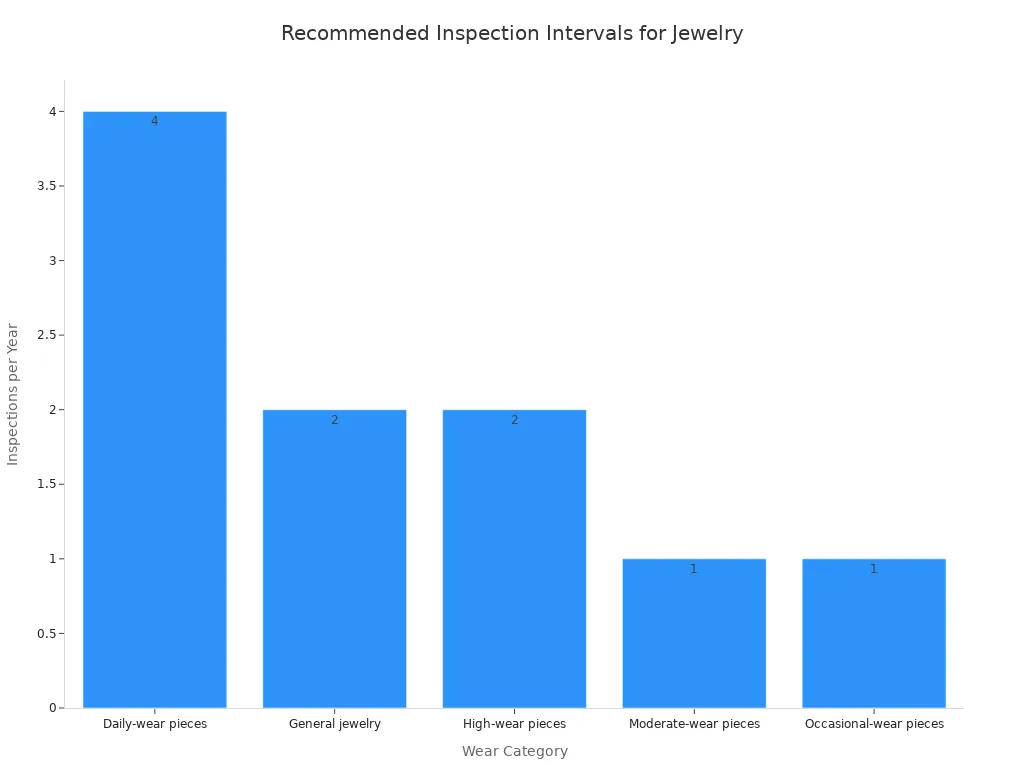
Professional inspections include clasp and chain evaluation to identify weak points. Jewelers also test clasp closures, including spring tension in lobster clasps and security of box clasps.
Proper Sizing for Adults
The chain length should fit the adult wearer properly. A chain that hangs too low invites grabbing from small hands. A chain that sits too tight causes discomfort and increases breakage risk. Adults should measure their neck or wrist before purchasing safety clasp chains. Proper sizing keeps children’s jewelry positioned safely away from curious fingers.
Locking Jewelry Boxes and Child-Resistant Features
Locking jewelry boxes provide a secure storage solution for small items. These containers add a physical barrier between children and valuable pieces. Parents and caregivers should understand how these boxes work and why they matter for jewelry safety.
How Locking Jewelry Boxes Work
Key and Combination Locks
A key lock requires a physical key to open the box. The owner keeps the key in a separate location. A combination lock uses a series of numbers or letters. The user enters the correct sequence to release the latch. Both designs prevent unauthorized access. Children cannot open these boxes without the proper code or key.
Child-Resistant Latches
Child-resistant latches use dual-action mechanisms. The user must press a tab and lift the lid simultaneously. Some latches require squeezing two sides together. These actions challenge small hands. Most children under five lack the strength and coordination to operate these latches.
Why Locking Jewelry Boxes Are Effective
Limiting Access to Small Items
A locked box keeps small jewelry pieces out of reach. Earrings, rings, and pendants stay contained inside. Children cannot grab these items for exploration. This barrier reduces the risk of choking and ingestion. The box also protects jewelry from loss or damage.
Creating a Safe Storage Habit
Locking boxes encourage consistent storage practices. Adults develop a routine of returning jewelry to the box after wearing. This habit keeps items organized and secure. Children learn that certain items have designated places. The practice builds long-term safety awareness for the whole household.
Tips for Using Locking Jewelry Boxes
Choisir la bonne taille
The box should fit the collection without crowding. A box that is too small causes scratches and tangles. A box that is too large wastes space. Adults should measure their jewelry collection before purchase. Adjustable dividers offer flexibility for changing needs.
Placing Boxes Out of Reach
Location matters as much as the lock itself. Adults should store the box on a high shelf or in a locked drawer. Children cannot reach these elevated spots. The placement adds another layer of protection. Even if a child finds the box, the lock and height work together to prevent access.
Breakaway Safety Clasps for Jewelry Safety
Breakaway safety clasps provide a critical layer of protection for children’s jewelry. These specialized closures release under tension to prevent serious injuries. Parents and caregivers should understand how these mechanisms work and why they matter for jewelry safety.
How Breakaway Safety Clasps Work
The Release Mechanism
A breakaway clasp separates when force exceeds a predetermined threshold. The clasp opens automatically during pulling or snagging incidents. This release happens without any action from the wearer. The mechanism uses a friction-fit design or magnetic connection that yields under stress. Once the force subsides, the user can reconnect the two ends easily.
Tension-Based Design
Manufacturers calibrate breakaway clasps to release within specific tension ranges. The clasp must hold securely during normal wear. It must also separate before causing harm during an emergency. This balance requires precise engineering. The tension threshold typically ranges from 1 to 5 pounds of force. This range protects children while preventing accidental releases during everyday activities.
Why Breakaway Safety Clasps Are Effective
Preventing Strangulation Risks
Traditional clasps can trap a necklace around a child’s neck. The risk of strangulation or suffocation increases when jewelry catches on objects. Breakaway clasps eliminate this danger. The clasp releases immediately when pulled or snagged. This instant separation removes pressure from the neck. The design directly addresses the most serious safety concern with children’s jewelry.
Reducing Choking Opportunities
A broken necklace can scatter small beads and charms across the floor. These loose pieces create choking hazards for young children. Breakaway clasps keep the jewelry intact during normal use. When the clasp releases, the wearer retains the full piece. This design prevents small components from separating and falling within reach of curious hands.
Tips for Using Breakaway Safety Clasps
Testing Release Tension
Adults should test the clasp tension before each wear. A gentle pull should separate the ends without excessive force. The clasp should not release during light movement or casual contact. If the clasp opens too easily, it may fail during normal activities. If it requires too much force, it may not protect the wearer during an emergency. Regular testing ensures proper function.
When to Replace Them
Breakaway clasps wear out over time. The release mechanism may weaken with repeated use. Adults should inspect the clasp for cracks, deformation, or loose connections. A clasp that releases too easily or fails to hold securely needs replacement. Manufacturers recommend replacing breakaway clasps every six to twelve months for children’s jewelry. This schedule maintains reliable protection for active children.
Child-Resistant Jewelry Pouches for Safe Jewelry
Child-resistant jewelry pouches provide a portable storage solution for small jewelry items. These pouches combine secure mechanisms with durable materials. Parents rely on them to keep children’s jewelry safe from curious hands. The design prevents young children from accessing small components. Child-resistant pouches offer an excellent option for safe jewelry storage at home or during travel.
How Child-Resistant Pouches Work
Zipper Locks and Snap Closures
Child-resistant pouches use specialized closures that challenge small fingers. Zipper locks require pressing a button while pulling the tab. Snap fasteners demand squeezing two sides simultaneously. These dual-action mechanisms exceed the fine motor skills of most young children. Adults appreciate the quick access these designs provide while maintaining protection.
Durable Fabric Construction
Manufacturers construct these pouches from sturdy materials. Nylon, canvas, and reinforced cotton resist tearing and stretching. Strong seams prevent the pouch from splitting open under pressure. The fabric itself adds a barrier that small hands cannot easily breach. Quality construction keeps the jewelry secure for years of regular use.
Why Child-Resistant Pouches Are Effective
Keeping Small Items Together
A pouch contains all jewelry pieces in one location. Earrings, rings, and small pendants stay together inside the sealed compartment. This organization prevents loose items from falling onto floors where children might find them. Parents can quickly verify that all pieces remain accounted for after each use.
Adding a Layer of Protection
Child-resistant pouches work alongside other safety measures. A pouch inside a locking box creates two barriers between children and the contents. This layering approach provides redundancy if one system fails. Travel situations benefit particularly from this extra protection. The pouch keeps jewelry secure even when the main storage container remains closed.
Tips for Using Child-Resistant Pouches
Storing Pouches Properly
Adults should place pouches in elevated locations away from child reach. A high shelf or locked drawer provides an appropriate spot. Designating a consistent storage location builds good habits for the whole household. Family members always know where to find children’s jewelry.
Cleaning and Maintenance
Proper care extends the life of child-resistant pouches. Adults should wipe fabric surfaces with a damp cloth as needed. Harsh chemicals can damage the closure mechanisms and fabric integrity. Inspecting zippers and snaps regularly ensures continued function. Replacing worn pouches maintains the protective barrier around valuable items. Regular safety checks protect children from accessing weakened pouches.
A single child-resistant pouch cannot guarantee complete protection. The best approach combines pouches with other child-resistant features for maximum security.
Combining Child-Resistant Features for Maximum Safety
A single protective measure rarely provides complete protection. The strongest approach combines multiple child-resistant features into one unified system. This layered strategy creates redundant barriers that work together. Each feature covers potential weaknesses in the others. Parents and caregivers who understand this principle can build effective protection for any jewelry collection.
Layering Child-Resistant Features
Clasps Plus Packaging
Locking clasps keep jewelry attached to the wearer during use. Tamper-proof packaging protects the same items during storage. Together, these two features create protection at every stage. A necklace with a locking clasp stays secure on the wearer. The same necklace inside sealed packaging stays protected when not in use. This combination addresses both active wear and storage periods.
Boxes Plus Pouches
A locking jewelry box provides the outer layer of defense. A child-resistant pouch inside adds a second barrier. Even if a child opens the box, the pouch still blocks access. This redundancy proves valuable when one mechanism fails. Adults should place each piece inside a pouch before returning it to the locked box.
Matching Features to Jewelry Types
Earrings and Studs
Earrings require specific safety features for effective protection. Screw-back findings prevent earrings from falling off unexpectedly. Large disc backs offer an alternative when screw backs are unavailable. Adults should avoid small detachable parts that could loosen and become choking hazards. Storage in a locked container adds another layer of children’s jewelry safety.
Colliers et bracelets
Necklaces and bracelets benefit from breakaway clasps and safety clasp chains. Breakaway clasps release under tension to prevent strangulation. Safety clasp chains keep small detachable charms securely attached. Adults should inspect these features regularly for wear. Replacing worn components maintains reliable protection for children’s jewelry.
Creating a Safe Environment
Supervising Jewelry Use
Adult supervision remains essential even with the best safety features. Adults should watch children during jewelry wear. They should also monitor jewelry storage routines. A supervised environment reduces the chance of accidents. No safety feature replaces attentive caregiving.
Educating Older Children
Older children can learn to respect jewelry safety rules. Adults should teach them about sharp points or edges on certain pieces. They should explain why small detachable charms pose risks to younger siblings. Education builds awareness that lasts a lifetime. Children who understand safety features become responsible jewelry wearers.
Locking clasps, magnetic closures, and tamper-proof packaging deliver the strongest protection for small jewelry. Screw-back findings, safety clasp chains, and locking boxes add extra defense. Breakaway clasps and child-resistant pouches complete a full safety strategy. Combining these features offers the best defense against choking hazards for children. Adults should inspect and maintain every feature on a regular schedule. Children’s jewelry safety and accessibility can work together with the right choices. Parents who prioritize safety protect both their jewelry and their children. Thoughtful children’s jewelry design keeps small pieces secure. These features give adults confidence around curious children.
FAQ
What are the best child-resistant features for small items?
Locking clasps, magnetic closures, and tamper-proof packaging provide strong protection for small jewelry pieces. Adults should choose features based on the jewelry type and child age.
How do screw-back earring findings improve safety?
Screw-back findings use a threaded post to secure earrings. This design prevents loss and reduces choking risks. Jewelry with screw-backs offers high security.
Are magnetic closures safe for children’s jewelry?
Magnetic closures are safe for children’s jewelry when adults choose proper strength. They keep small pieces contained.
How often should adults inspect locking clasps?
Adults should inspect locking clasps every six months. This schedule maintains reliable protection for jewelry.
Can tamper-proof packaging protect items during storage?
Tamper-proof packaging seals items securely. It blocks young hands from accessing dangerous pieces.
Do breakaway safety clasps work for all necklace types?
Breakaway safety clasps release under tension to prevent strangulation. They protect children during play and daily wear.
How should adults store children’s jewelry at home?
Adults should store children’s jewelry in locked containers out of reach. This habit reduces choking risks.
See Also
Secure Transit Packaging with Tamper Indicators for Precious Jewelry
Optimal Protective Packaging Methods for Delicate Pearl Jewelry
Premium Materials for Preventing Tarnish in Jewelry Storage
Importance of Adhesives in Building Safe Jewelry Boxes
Custom Cutouts for Securing Irregularly Shaped Jewelry Items