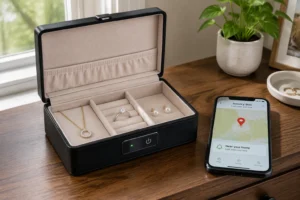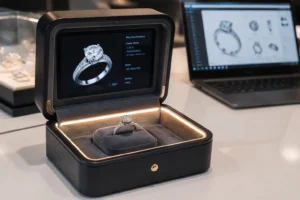

What if your jewelry could be found instantly? That question drives the growing interest in smart jewelry boxes. Can a jewelry box really prevent loss or theft? Yes, within limits. Tracking technology reduces risk, yet it does not guarantee recovery. A Hersteller von Schmuckverpackungen now builds sensors and alerts into Individuelle Schmuckkästchen, changing how people store valuables. Unlike a simple Schmucketui or static Schmuck Display, these systems watch over each piece. Still, every Schmuckverpackung solution has boundaries. Buyers should understand both the promise and the reality.
What Makes Smart Jewelry Boxes Smart
Smart jewelry boxes combine storage with embedded electronics. They connect to a smartphone app through wireless methods. Each component performs one role. Together, these components locate and protect stored items.
Tracking Technologies Explained
GPS Tracking for Location
A GPS module determines the box’s coordinates anywhere on Earth. The module receives satellite signals and calculates position. Consumer devices typically deliver accuracy between 5 and 10 meters. Basic GPS reports roughly 7 meters of accuracy 95% of the time, according to the U.S. Federal Aviation Administration. The global GPS program cites better than 2 meters in most conditions. Tractive, a consumer device maker, reports 5–10 meters for typical products. The table below compares these numbers.
| Source | Reported GPS Accuracy |
|---|---|
| U.S. Federal Aviation Administration (basic GPS) | ~7 meters (23 feet), 95% of the time |
| U.S. GPS program (global average) | better than 2 meters (~6.6 feet), 95% of the time |
| Tractive (typical consumer devices) | 5–10 meters (16–32 feet) |
Most modern GPS tracking devices are highly accurate, often pinpointing a location within a few meters, depending on satellite coverage and app quality.
This tracking technology works best outdoors. GPS signals weaken inside buildings. Therefore, a box in a high-rise may report a less precise location.
Bluetooth for Close-Range Finding
Bluetooth fills the indoor gap. The box emits a low-energy signal. A phone detects that signal when within range. Users follow the signal strength to find a misplaced box. Bluetooth often finds a unit under a bed or behind a closet wall. Bluetooth tracking requires physical proximity. This tracking method lacks the global reach of GPS.
RFID and NFC Technologies in Jewelry Packaging
RFID and NFC technologies in jewelry packaging provide two distinct ways to identify stored pieces. RFID tags store unique identifiers. NFC chips communicate when a smartphone comes near. Both systems offer wireless data transfer. RFID tracking identifies each item without opening drawers. NFC technology lets a phone interact with the box by tapping it. App developers integrate NFC technology for quick pairing. Many owners find RFID and NFC solutions work in tandem. Retailers choose RFID and NFC solutions based on range and cost. The value of RFID and NFC technologies in jewelry packaging lies in their complementary roles.
Custom jewelry packaging hides antennas inside the lining. Luxury brands also ship items in RFID-enabled packaging. RFID packaging simplifies stock audits. RFID packaging options vary from sticker tags to embedded chips. RFID-enabled packages allow the box itself to read contents.
Sensors and Tamper Detection
Motion and Open-Close Sensors
These smart packaging technologies move beyond simple storage. Motion sensors detect sudden movement. Accelerometers record shifts in three axes. Open-close sensors register every lid action. A microswitch triggers when someone opens the box. This switch sends a signal to the connected app. Users receive an instant alert if a drawer moves. Sensors rely on smart packaging technology to detect intrusion. Smart packaging adds value through connected sensors. This form of smart packaging depends on a stable power supply. These tech-enhanced storage solutions appeal to security-minded owners.
Weight and Removal Detection
Weight sensors measure total mass inside. Each jewelry item adds a known load. Removing a piece changes the measured value. The system compares the new reading with the stored baseline. A mismatch triggers an alert. This method detects a missing jewelry piece from a compartment.
App Integration and Alerts
Real-Time Notifications
The companion app delivers real-time alerts. A push notification appears when the box opens. Users also receive alerts when the box leaves a designated zone. Geo-fencing creates virtual boundaries. Exceeding those boundaries activates the alarm. Users tap an NFC tag on the box to silence an alert. NFC readers inside the box identify each closed compartment. An NFC scanner verifies the box’s status. This immediate alert helps a jewelry owner respond quickly.
Remote Monitoring and History Logs
The app stores event history. Users see timestamps and locations. Each open event appears in a log. This feature helps spot patterns. Remote monitoring allows access from anywhere. A user traveling in another city can check the box at home. The system records each jewelry collection change. Owners can review activity from the previous week. This technology eliminates manual logbooks. The app also flags any missing jewelry. Families often share access to a jewelry box.
How Smart Jewelry Packaging Systems Prevent Loss and Theft
Smart jewelry packaging systems combine location technology with sensor alerts. These systems help owners prevent loss and respond to theft. The sections below explain how each protection layer works in daily life.
Loss Protection in Practice
Finding a Misplaced Box at Home
A misplaced box at home creates immediate stress. Smart jewelry boxes solve this problem through Bluetooth and NFC signals. The owner opens the companion app and triggers a locate command. The box emits a sound or flashes a light. Bluetooth range typically reaches 30 to 100 feet indoors. The owner walks through each room and watches the signal strength. A stronger signal means the box sits nearby. NFC technology adds another layer. The owner taps a phone against likely surfaces. An NFC tag inside the box responds when the phone comes close. This method works well for boxes tucked inside drawers or closets. A jewelry box with NFC technology eliminates hours of searching. The app also records the last known location. This history helps narrow the search area. Most misplaced boxes turn up within minutes using these tools.
Recovery During Travel
Travel introduces new risks for jewelry packaging. Hotels, airports, and rental cars create opportunities for loss. A smart jewelry box with GPS tracking provides global coverage. The owner checks the box location from any city. If a box goes missing in a hotel room, the app shows its last position. Airport security checks sometimes separate travelers from their belongings. A GPS-enabled box reports its location inside the terminal. The owner can direct security staff to the exact area. Bluetooth tracking helps inside a hotel room or a car. The owner walks through the space and follows the signal. RFID inventory management adds a second benefit during travel. The owner scans the box contents before leaving each location. A quick scan confirms every piece remains inside. This routine prevents accidental loss during packing and unpacking. Travelers who use tracking report greater peace of mind.
Theft Alerts and Response
Instant Tamper Notifications
Theft often happens fast. Smart jewelry boxes respond faster. Motion sensors detect sudden movement. Open-close sensors register any lid action. The system sends a push notification within seconds. The owner sees the alert on a phone screen. Geo-fencing adds another trigger. The owner sets a virtual boundary around the box location. Any movement beyond that boundary activates an alarm. NFC readers inside the box verify each compartment status. An unauthorized opening triggers an immediate warning. The app logs the exact time and location of the event. This instant notification gives the owner a chance to act. They can call hotel security or contact local police. A quick response improves recovery odds.
Limits of Real-Time Recovery
Real-time tracking has boundaries. GPS signals weaken inside buildings and underground spaces. A thief who enters a parking garage may disappear from the map. Bluetooth range covers only a short distance. Once the box leaves that range, the signal drops. Battery life also limits recovery. A dead battery means no tracking at all. Law enforcement response times vary by location. Police may not treat a jewelry theft as an emergency. Insurance companies require police reports for claims. The owner must document everything quickly. Smart jewelry packaging reduces risk but cannot guarantee recovery. A determined thief with tools can disable some tracking devices. Owners should pair tracking with safe storage and insurance.
Tracking technology deters many thieves and speeds recovery in some cases. It does not replace a safe, an alarm system, or an insurance policy.
Inventory Management Benefits
Cataloging Your Collection
Inventory management through apps changes how owners organize jewelry. The app creates a digital catalog of every piece. Each item receives a photo and a description. The owner enters purchase date, value, and provenance. RFID tags link each physical piece to its digital record. A quick scan updates the entire catalog. NFC technology allows tap-to-view access for any item. The owner taps a phone against the box and sees the full record. This system replaces paper lists and spreadsheets. Inventory management becomes a simple routine. The app sorts items by category, value, or date. Owners can search for a specific piece in seconds. This feature helps when preparing for an appraisal or a sale. A well-organized catalog also supports insurance claims.
Spotting Missing Pieces Early
Missing pieces often go unnoticed for weeks. Smart jewelry boxes catch problems early. Weight sensors measure the total mass inside the box. Each piece adds a known load to the baseline. Removing a piece changes the reading. The system compares the new value with the stored data. A mismatch triggers an alert. The owner checks the app and reviews the event log. They see exactly when the piece left the box. This early warning prevents small losses from becoming permanent. RFID inventory management scans each item during a routine check. The system flags any tag that fails to respond. A missing tag means a missing piece. The owner investigates immediately. Real-time inventory tracking keeps the catalog accurate at all times. This constant monitoring gives owners confidence. They know the status of every piece without opening the box.
Insurance and Documentation Support
Insurance companies require proof when a policyholder files a claim. Smart jewelry packaging systems simplify this process. These systems create digital records that satisfy most insurers. The sections below explain how photo records, value tracking, and ownership proof work together.
Photo and Value Records
A smart jewelry box captures photos of each stored piece. The owner places a ring or necklace inside the box. An internal camera or a smartphone app photographs the item. The app stores the image alongside key details. The owner enters the purchase price, appraisal value, and purchase date. This record creates a complete digital profile for every piece.
RFID tags link each physical item to its digital record. The owner scans the box contents with an RFID reader. Each tag responds with a unique identifier. The app matches that identifier to the stored photo and value. This process takes seconds for an entire collection. Manual data entry becomes unnecessary. The system updates records automatically when the owner adds or removes a piece.
NFC technology adds another layer of convenience. The owner taps a phone against the box. An NFC chip inside the box transmits the stored records. The phone displays photos and values instantly. This tap-to-view feature helps during insurance audits. An adjuster can verify each piece without opening every compartment.
Value tracking extends beyond purchase price. Jewelry values change over time. Gold and diamond prices fluctuate. The app allows the owner to update values after each appraisal. Some apps pull current market data for precious metals. This feature keeps the documented value accurate. An accurate value record prevents underinsurance. Many policies require updated appraisals every two to three years. A smart jewelry box stores these updates in one place.
The photo record also captures condition. Scratches, loose stones, and wear patterns appear in the images. The owner photographs each piece from multiple angles. These images serve as evidence during a claim. An insurer can compare the pre-loss condition with the post-loss report. This comparison reduces disputes.
Inventory management features organize these records by category. The owner sorts items by type, value, or purchase date. A search function locates any piece in seconds. This organization saves time during a claim. The owner exports a full report with one tap. The report includes photos, values, and purchase dates. Insurers accept these digital reports as supporting documentation.
RFID packaging enhances this process further. RFID packaging embeds tags directly into the jewelry box lining. The box reads its own contents without external scanning. This self-reading capability means the inventory stays current. The owner never forgets to scan a new piece. The box detects the addition automatically. RFID packaging also supports bulk scanning. A single pass reads every tagged item inside. This speed matters for large collections.
Claims and Proof of Ownership
Proof of ownership presents the biggest challenge during a jewelry claim. Insurers deny claims without clear evidence. A police report alone does not prove ownership. Receipts help, but owners often lose them. Smart jewelry packaging solves this problem through continuous documentation.
The app maintains a timestamped history of every piece. Each entry shows when the owner added the item. The system records every open and close event. This history creates a chain of evidence. An insurer can see that the owner possessed the piece before the loss. The owner can also show that the piece remained in the box until a specific date.
NFC technology strengthens this proof. The owner taps a phone against the box before travel. The NFC chip logs the scan with a timestamp. This log proves the piece was inside the box at that moment. If a theft occurs later, the owner has documented evidence. The app stores these logs in the cloud. Cloud storage prevents tampering or accidental deletion.
RFID inventory management provides another layer of proof. Each RFID tag carries a unique serial number. The owner registers these numbers with the insurance company. The insurer links each serial number to a specific piece. During a claim, the owner provides the serial numbers. The insurer verifies them against the policy records. This verification process speeds up claim approval.
The app also stores purchase receipts and appraisal documents. The owner photographs paper receipts and uploads them. The app links each receipt to the corresponding piece. Digital storage prevents loss from fire, flood, or misplacement. The owner accesses these documents from any device.
Claims often require a police report. The app generates a theft report with key details. This report includes the time of the alert, the last known location, and the list of missing pieces. The owner submits this report to local police. The police report number goes back into the app. This closed-loop system keeps all documents together.
Smart packaging technology supports the claims process from start to finish. The system detects the theft, logs the event, and generates the report. The owner submits the claim with complete documentation. The insurer processes the claim faster with fewer questions.
Jewelry packaging manufacturers now design boxes with insurance workflows in mind. These manufacturers understand what insurers require. They build apps that export data in standard formats. Some apps connect directly to insurance company portals. The owner submits a claim without printing a single page.
A smart jewelry box does not replace an insurance policy. It makes the policy work better. The owner pays premiums for protection. The documentation system ensures the insurer pays when needed. This combination of jewelry packaging and digital records protects the owner’s financial interest.
Owners should review their documentation every six months. They update values, add new pieces, and remove sold items. This routine keeps the records accurate. An accurate record prevents claim denials. It also helps the owner understand the true value of the collection. Many owners discover they carry too little insurance. Others find they pay for coverage they no longer need. Regular reviews solve both problems.
The table below summarizes how each technology supports insurance documentation.
| Technology | Documentation Role |
|---|---|
| RFID | Links each piece to a unique digital record |
| NFC | Enables tap-to-view access for photos and values |
| GPS | Provides location data during theft recovery |
| Bluetooth | Confirms the box remains within a known area |
| Weight sensors | Detects missing pieces and triggers alerts |
Insurance companies increasingly recognize these records. Some insurers offer premium discounts for policyholders who use tracking systems. The discount reflects reduced risk. A documented collection is harder to steal and easier to recover. This benefit appeals to both the insurer and the owner.
Who Benefits Most from Smart Jewelry Boxes
Frequent Travelers
Hotel and Airport Security
Travelers face constant risk of losing valuables. A smart jewelry box with GPS tracking provides global coverage. The owner checks the box location from any city. If a box goes missing in a hotel room, the app shows its last position. Airport security checks sometimes separate travelers from their belongings. A GPS-enabled box reports its location inside the terminal. The owner directs security staff to the exact area.
Portable Tracking Options
Portable tracking options suit travelers who move frequently. Bluetooth tracking helps inside a hotel room or a car. The owner walks through the space and follows the signal. RFID inventory management adds a second benefit during travel. The owner scans the box contents before leaving each location. A quick scan confirms every piece remains inside. This routine prevents accidental loss during packing and unpacking.
Collectors and Investors
High-Value Piece Monitoring
Collectors own pieces with significant market value. These owners need constant monitoring. Weight sensors measure the total mass inside the box. Each piece adds a known load to the baseline. Removing a piece changes the reading. The system compares the new value with the stored data. A mismatch triggers an alert. The owner checks the app and reviews the event log.
Collection Organization
Organization matters for large collections. The app creates a digital catalog of every piece. Each item receives a photo and a description. The owner enters purchase date, value, and provenance. RFID tags link each physical piece to its digital record. A quick scan updates the entire catalog. NFC technology allows tap-to-view access for any item. The owner taps a phone against the box and sees the full record.
Families with Heirlooms
Protecting Sentimental Value
Heirlooms carry emotional weight beyond market price. Families protect these pieces with extra care. A smart jewelry box captures photos of each stored piece. The owner places a ring or necklace inside the box. An internal camera or a smartphone app photographs the item. The app stores the image alongside key details. This record preserves the memory of each piece.
Shared Access for Family Members
Multiple family members often need access to heirlooms. The app supports shared access for family members. Each user receives a unique login. The system records every open and close event. This history creates a chain of evidence. Families review activity from the previous week. This transparency builds trust among relatives.
High-Value Jewelry Owners
Everyday Security at Home
Owners of high-value jewelry need daily protection, not occasional monitoring. A smart jewelry box provides this protection through constant sensors and alerts. The box stays closed during normal daily routines. Motion sensors detect any unexpected movement. Open-close sensors register every lid action. The owner receives a push notification within seconds of an unauthorized opening. This immediate alert allows a quick response. The owner can check the app and verify the situation. A false alarm takes seconds to dismiss. A real threat triggers a fast call to security or police.
Weight sensors add another layer of everyday security. Each jewelry piece adds a known load to the box baseline. Removing a piece changes the measured value. The system compares the new reading with the stored data. A mismatch triggers an alert. The owner checks the app and reviews the event log. This feature catches internal theft by household staff or visitors. A missing jewelry piece appears in the log with a timestamp. The owner knows exactly when the item left the box. This constant monitoring gives owners confidence throughout the day.
Integration with Home Security
Smart jewelry boxes work best as part of a complete home security system. These boxes connect to existing smart home platforms. The owner links the jewelry box to a central security hub. This integration creates a unified protection network. An open-close sensor on the box triggers the same alert system as door and window sensors. A motion event inside the box activates connected cameras. The camera records video of the area around the jewelry box. This footage provides visual evidence during a theft investigation.
Geo-fencing adds another integration layer. The owner sets a virtual boundary around the home. Any movement of the jewelry box beyond that boundary activates an alarm. The system sends alerts to multiple devices. Family members receive notifications on their phones. A monitoring service can also receive the alert. This integration ensures no single point of failure. The jewelry box becomes one node in a larger security network. Owners with existing alarm systems appreciate this compatibility. They avoid managing separate apps for each device. A unified system simplifies daily security routines. The owner arms the entire system with one command. The jewelry box joins the protection network automatically. This seamless integration makes smart jewelry boxes a practical addition to any high-value home security setup.
What to Consider Before Buying Smart Jewelry Packaging
Buyers should evaluate several factors before purchasing smart jewelry packaging. Price, battery life, and connectivity all affect daily use. Each factor deserves careful thought.
Price and Value
Entry-Level vs. Premium Models
Entry-level models cost between $50 and $150. These boxes offer basic Bluetooth tracking and open-close sensors. Premium models range from $300 to over $1,000. They add GPS, RFID readers, weight sensors, and camera systems. A buyer should match the model to the collection value. A $50 box makes little sense for a $20,000 jewelry collection. Conversely, a $1,000 box may exceed the needs of a casual owner. Smart jewelry packaging systems vary widely in features. Buyers should compare specifications before choosing.
Subscription Costs to Expect
Many smart jewelry packaging products require monthly fees. GPS tracking often needs a cellular data plan. These plans cost $5 to $15 per month. Cloud storage for photos and logs may add another fee. Some brands include basic features for free. Advanced features like real-time alerts and history logs often sit behind a paywall. Buyers should calculate the total cost over three years. A $200 box with a $10 monthly fee costs $560 total.
Battery Life and Reliability
Charging Frequency
Battery life varies by feature set. Bluetooth-only boxes last three to six months per charge. GPS-enabled boxes drain faster. These models need charging every one to three weeks. RFID scanning and weight sensors also consume power. A buyer should check the stated battery life. Real-world performance often falls short of marketing claims.
What Happens When the Battery Dies
A dead battery disables all tracking. The box becomes a simple storage container. No alerts, no location data, no inventory logs. Some models send a low-battery warning first. Others simply stop working. Buyers should choose a model with a clear battery indicator. A backup power option adds reliability.
Connectivity Requirements
Wi-Fi and Bluetooth Dependence
Most smart packaging relies on Wi-Fi or Bluetooth. Wi-Fi provides remote access and cloud sync. Bluetooth handles close-range finding and setup. A stable home network is essential. Weak Wi-Fi causes dropped connections and missed alerts. Buyers should test their network coverage before purchasing.
Offline and No-Signal Scenarios
Travel and remote locations create connectivity gaps. A box without Wi-Fi cannot send remote alerts. GPS still works outdoors without Wi-Fi. Bluetooth still works within range. However, cloud features stop until the box reconnects. Buyers who travel often should prioritize GPS models. Those who keep jewelry at home can rely on Wi-Fi and Bluetooth.
Data Privacy and Security
How Your Data Is Stored
A smart jewelry box collects personal data. The system stores photos, values, and location history. Most brands use cloud storage. Cloud servers hold data on remote computers. Users access data from any device. Some brands offer local storage options for privacy-focused jewelry owners. Local storage keeps data on the phone or the box itself. Each approach has trade-offs. Cloud storage offers convenience and backup. Local storage offers more control. A user should read the privacy policy before purchase. Some policies allow data sharing with third parties. Others restrict access to the user alone. Data retention varies by brand. Some companies delete data after account cancellation. Others keep records for years. The user should understand these terms fully.
Encryption and Access Controls
Encryption protects stored data. Strong encryption scrambles information. Unauthorized users cannot read it. Most reputable brands use AES-256 encryption. This standard protects cloud and local data. Access controls add another layer. Each user receives a unique login. Passwords limit access to authorized people. Two-factor authentication adds extra security. A user enters a code from their phone. This code expires after a short time. Attackers cannot access the account without the code.
NFC technology enables physical access controls. The box opens its app only after a tap. This tap confirms the user’s presence. RFID tags control access to compartment data. Each tag responds only to authorized readers. The system logs every access attempt. Users see who opened the jewelry box and when. These logs reveal suspicious activity. Owners can revoke access remotely if needed.
Design and Aesthetics
Do They Look Like Real Jewelry Boxes
Many buyers worry about appearance. They want a stylish box for their home. Smart jewelry packaging now blends technology with beauty. Exterior designs match traditional jewelry packaging. Wood finishes, leather wraps, and velvet linings dominate. The electronics hide inside the lining. Sensors sit beneath the fabric. No visible wires or circuit boards interrupt the design. A casual observer sees a normal jewelry box. The smart features remain invisible until activated.
Materials, Sizes, and Interior Layouts
Material choices affect both style and function. Hardwood offers durability and classic appeal. Oak, walnut, and cherry appear in premium models. Leather covers add a softer aesthetic. Faux leather options reduce cost. Interior linings use velvet or suede. These materials protect delicate jewelry pieces from scratches.
Size ranges match traditional boxes. Small travel cases hold a few rings and earrings. Medium boxes measure roughly ten inches wide. Large armoires accommodate full jewelry collections. Interior layouts vary by model. Some boxes have multiple layers. Others feature modular compartments. Adjustable dividers allow customization. A user rearranges interior space for different jewelry pieces. Watch winders add space for timepieces. Mirror trays unfold to reveal hidden storage.
Design trade-offs exist. Larger boxes house more technology. They also occupy more space. Lighter boxes suit travel but offer fewer features. The user should match size to collection. A compact box suits daily essentials. A full jewelry collection needs a larger unit. Aesthetics no longer mean sacrificing security. The market offers options for every style. Buyers find smart boxes with heirloom looks.
The Future of Tracking in Smart Jewelry Storage

Digital Authentication
Certificates Stored On-Box
Smart jewelry boxes will soon store digital certificates directly inside the packaging. These certificates confirm an item’s authenticity and provenance. Buyers gain confidence about origin and quality. Unique digital IDs allow instant product authentication. They also support warranty registration and after-sales services. This protection guards against counterfeiting. MISSOMA launched Digital Product Passports in 2024. These passports log production locations, supplier certifications, materials, and packaging choices. NFC and RFID tags sit inside the packaging for security and traceability.
Verifying Authenticity Instantly
A smartphone scan verifies product authenticity in seconds. RFID tags provide tamper-evident product authentication. Each tag carries a unique identifier linked to a product database. Encrypted data and unique serial numbers form authentication frameworks. Counterfeiters cannot easily replicate these frameworks. Blockchain integration adds a progressive security layer. An NFC scan verifies basic authenticity. Deeper RFID interrogation confirms full product provenance. This layered approach strengthens product authentication across the supply chain.
| Authentication Element | Function |
|---|---|
| Digital certificates | Confirm authenticity and provenance |
| Unique digital IDs | Enable instant product authentication |
| Digital Product Passports | Log production and material details |
| NFC/RFID tags | Provide security and traceability |
Blockchain Provenance
Tracking Ownership History
Blockchain technology records every ownership transfer on an immutable ledger. Each supply chain participant appends data to the chain. Mining companies record geographic origin and extraction dates. Refiners log quality checks and issue certificates. Manufacturers document design specifications and artisan details. Retailers record sales prices and warranty terms. This history travels with the physical item. No one can alter or delete these records retroactively.
Resale and Appraisal Benefits
A complete ownership history simplifies resale and insurance. Buyers verify a piece’s origin before purchase. Appraisers access certified grading reports on-chain. A hybrid approach offers scalability and cost-effectiveness. Only essential data goes on-chain to prevent network congestion. Off-chain storage reduces replication costs. Cryptographic hashes on-chain ensure data integrity.
- Scalability: essential data on-chain prevents congestion
- Cost-effectiveness: off-chain storage reduces costs
- Data integrity: cryptographic hashes ensure authenticity
- Accessibility: distributed storage keeps data retrievable
- Flexibility: diverse data types supported without performance loss
AI-Assisted Inventory
Automatic Recognition of Pieces
AI-powered cameras will identify jewelry pieces automatically. A ring or necklace placed inside the box triggers instant recognition. The system matches the piece against stored records. Real-time inventory tracking updates the catalog without manual entry. Owners never forget to log a new item.
Smart Suggestions and Valuations
AI will suggest valuations based on current market data. Gold and diamond prices fluctuate daily. The system pulls live pricing and updates records. Owners receive alerts when values change significantly. Smart packaging technologies will integrate these features into everyday storage. The tracking capability of smart packaging will extend beyond location into complete collection management.
Smart jewelry boxes serve a specific audience well. Frequent travelers, collectors, and families with heirlooms gain meaningful security benefits. These owners protect high-value jewelry through tracking, alerts, and inventory logs.
The recommendation depends on collection value. A substantial jewelry collection justifies the investment. Casual owners may prefer traditional storage. No purchase guarantees recovery.
Smart jewelry packaging reduces risk, not eliminates it. Users should maintain insurance and safe storage. The box adds one layer to a complete protection strategy.
FAQ
How does a smart jewelry box track its contents?
Smart jewelry boxes use GPS for outdoor location. Bluetooth handles close-range finding. RFID and NFC identify individual pieces. GPS provides global coverage with 5-10 meter accuracy. RFID tags link each piece to a digital catalog. Bluetooth works indoors.
Can a smart jewelry box prevent theft completely?
No. These systems reduce risk. They cannot guarantee recovery. GPS signals weaken inside buildings. Bluetooth works only within limited range. A dead battery disables all tracking. Owners should pair these boxes with insurance plus safe storage.
What happens when the battery dies?
The box becomes a simple storage container. No alerts fire. No location data transmits. No inventory logs record activity. Some models send a low-battery warning first. Others stop working without notice. Buyers should choose models with clear battery indicators.
Do smart jewelry boxes require monthly fees?
Many models do. GPS tracking often needs a cellular data plan. These plans cost $5 to $15 per month. Cloud storage for photos and logs may add another fee. Some brands include basic features free. Advanced features sit behind a paywall.
How does RFID differ from NFC in jewelry packaging?
RFID tags store unique identifiers. They work at greater distances. Users scan an entire collection without opening drawers. NFC chips communicate when a smartphone comes near. They require a tap. Both technologies link physical pieces to digital records.
Are smart jewelry boxes worth the investment?
The answer depends on collection value. Frequent travelers gain significant security benefits. Collectors protect high-value pieces effectively. Families safeguard heirlooms with shared access. A substantial collection justifies the cost. Casual owners with few pieces may prefer traditional storage.
Do smart jewelry boxes look like regular jewelry boxes?
Yes. Exterior designs match traditional jewelry packaging. Wood finishes, leather wraps, and velvet linings dominate. Electronics hide inside the lining. No visible wires interrupt the design. A casual observer sees a normal jewelry box. The smart features remain invisible until activated.
Can these boxes help with insurance claims?
Yes. The app stores photos, values, and purchase dates for each piece. RFID tags link physical items to digital records. Timestamped history logs prove ownership. Insurers accept these digital reports as supporting documentation. Claims processing accelerates.
See Also
Secure Sealed Packaging Options For Shipping Expensive Jewelry
Bespoke Jewelry Packaging: Why Tailored Design Leads Tomorrow
Best Jewelry Display Trays For Gifting In The Year 2026