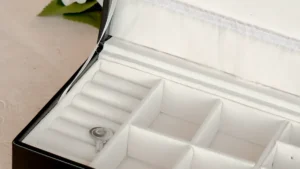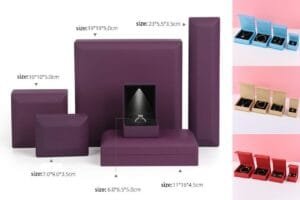
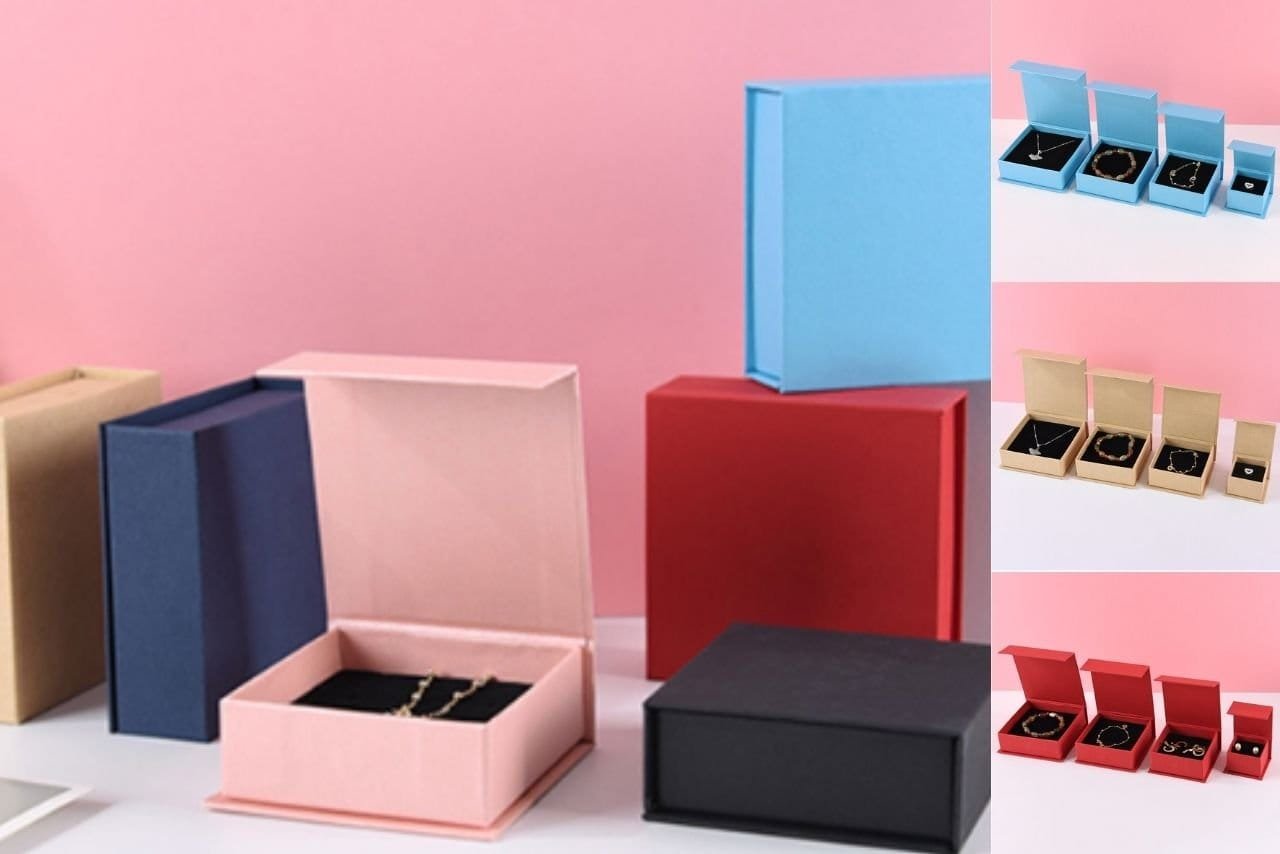
Velvet is the superior lining for protecting jewelry due to its unique structural pile, which minimizes mechanical friction and creates a chemically stable micro-environment for sensitive metals and gemstones. Unlike flat-weave fabrics or synthetic foams, high-grade velvet consists of dense, upright fibers that distribute the weight of an ornament across thousands of contact points, effectively neutralizing surface pressure. For any professional Jewelry Box manufacturer, the selection of velvet is a technical requirement based on its low-abrasion index and its ability to be treated with anti-tarnish polymers. In the global jewelry packaging sector, velvet remains the industry standard for preventing the micro-scratching of soft stones like opals and the sulfur-induced oxidation of sterling silver.
Technical Fabric Analysis
Mechanical Protection: Pile Density and Friction Reduction
The primary function of a Jewelry Box interior is to prevent physical displacement and surface wear. Velvet achieves this through its warp-pile construction. Unlike satin, which has a smooth but potentially abrasive surface if dust particles are present, velvet¡¯s “tufts” allow microscopic debris to sink below the contact surface of the jewelry.
In a Jewelry Box Factory, the “denier” of the velvet fibers is strictly controlled. High-denier velvet provides a cushioning effect that absorbs mechanical shocks during transit. This is particularly vital for prong-set diamonds; the velvet fibers interlock slightly with the setting, preventing the piece from sliding and loosening the prongs over time.
Chemical Stability: Acid-Free and Anti-Tarnish Integration
Technical-grade velvet used in jewelry packaging must be pH-neutral (acid-free). Cheap linings often contain residual dyes or sulfur-based processing chemicals that can actually accelerate the tarnishing of silver and low-karat gold.
[Image showing the fiber structure of velvet trapping tarnish-inducing gases]Leading manufacturers now integrate LusterLoc? or similar anti-tarnish technologies directly into the fabric fibers. These treatments work by absorbing the atmospheric gases (like hydrogen sulfide) before they can reach the metal surface. In a sealed environment, a velvet-lined box can keep sterling silver tarnish-free for up to 35 years, a feat unachievable with standard textile linings.
| Fabric Type | Friction Coefficient | Dust Entrapment | Longevity |
|---|---|---|---|
| Plush Velvet | Ultra-Low | High (Below Surface) | 20+ Years |
| Silk Satin | Low | None (Surface-stay) | 5-10 Years |
| Felt | Moderate | Medium | 5 Years |
Hygroscopic Balance: Moisture Regulation within the Frame
A critical but often overlooked aspect of velvet is its thermal and moisture regulation. Natural cotton-based or rayon-based velvets possess a high surface area that can absorb minor fluctuations in humidity. This acts as a secondary buffer, protecting the internal wood or leather frame from localized condensation.
For B2B clients sourcing from a Jewelry Box Factory, the bonding agent used to attach the velvet to the frame is equally important. Water-based, solvent-free adhesives are preferred to ensure no chemical off-gassing occurs, which could damage the luster of delicate pearls or organic materials like coral and turquoise.
Sterling Silver Tarnish Rate by Lining Type (3-Year Test)
*Lower bar represents superior protection and color retention.
Professional Lining & Maintenance FAQ
Q1: How do I clean dust out of a velvet-lined jewelry box?
A: Avoid wet cleaning. Use a low-suction hand vacuum or a piece of professional-grade masking tape to gently lift dust from the pile. For deeper cleaning, a soft-bristled brush can restore the direction of the nap.
Q2: Can velvet linings be customized for specific jewelry types?
A: Yes. A Jewelry Box manufacturer can engineer the velvet-wrapped inserts with specific density foams to create watch cushions, ring rolls, or earring slats that maintain high-tension grip without damaging the item.
Q3: Is crushed velvet as effective as plush velvet for protection?
A: While aesthetically pleasing, plush velvet with an upright pile is technically superior. Crushed velvet has flat areas that offer less weight distribution and a higher friction coefficient than uniform plush pile.
Article References & Industry Data:
- Textile Engineering and Friction Analysis – The New York Times Science
- Anti-Tarnish Fabric Longevity in Retail Environments – Business Insider Retail Insights
- Chemical Compatibility of Adhesives in Luxury Packaging – Home Depot Professional
- The Physics of Protective Micro-environments – WOLF 1834 Engineering Blog