
Eco-friendly marketing in the jewelry industry demands authenticity and transparency. Consumers value brands that embrace sustainability and show environmental stewardship. Real action enhances a jewelry brand’s image, aligning it with ethical responsibility. Green marketing builds trust and fosters loyalty by connecting with modern values. Companies that market your jewelry with custom jewelry boxes, Jewelry Display, Jewelry Pouch, and sustainable jewelry packaging from a reputable jewelry packaging manufacturer demonstrate commitment. Transparency in marketing establishes credibility and positions a jewelry brand as a leader in responsible practices.
Adopt Sustainable Practices to Position Your Brand as Eco-Friendly

Jewelry brands that want to position your brand as eco-friendly must adopt sustainable practices at every stage of their business. These practices not only demonstrate environmental responsibility but also build trust with consumers who value transparency and ethical standards. By focusing on responsible sourcing, eco-friendly production, and sustainable packaging, brands can set themselves apart in a competitive market and reinforce their marketing efforts.
Responsible Sourcing for Sustainability
Ethical Material Selection
Leading brands in the jewelry industry prioritize ethical material selection to ensure their products align with sustainability goals. They use recycled metals and lab-grown diamonds, which reduce the need for traditional mining. This shift minimizes environmental impact and supports fair labor practices. Brands like Amayra Jewellery, Tiffany & Co., and Chopard have enhanced their reputations by using recycled metals and transparent sourcing. Their commitment to ethical materials resonates with younger consumers who seek authenticity and value-driven purchases.
Traceable Supply Chains
Traceability in supply chains has become a cornerstone of responsible jewelry marketing. Brands that can trace the origin of their metals and gemstones provide assurance to customers about the ethical and eco-friendly nature of their products. Transparency in sourcing helps brands avoid greenwashing and builds long-term loyalty. Many leading brands now use advanced tracking systems to monitor every step, from mine to market, ensuring that each piece of jewelry meets strict sustainability standards.
Eco-Friendly Jewelry Production
Energy-Efficient Manufacturing
Eco-friendly jewelry production relies on energy-efficient manufacturing processes. Brands invest in technologies such as induction furnaces, solar panels, and heat recovery systems to reduce energy consumption. Manufacturing hubs like Jaipur have become leaders in sustainability by implementing recycling systems and water treatment facilities. These efforts lower greenhouse gas emissions and demonstrate a brand’s commitment to environmental responsibility. The adoption of energy-efficient methods also helps brands meet consumer demand for measurable sustainability credentials.
Waste Reduction Strategies
Waste reduction is a key aspect of sustainable jewelry production. Brands recycle precious metals like gold and silver, ensuring that no material goes to waste. Gemstone offcuts are repurposed into beads or micro-pavé settings, using advanced cutting technologies. These strategies not only reduce environmental impact but also lower operating costs. By minimizing waste, brands reinforce their eco-friendly marketing messages and appeal to consumers who prioritize sustainability.
Brands that embrace waste reduction and energy efficiency set a new standard for sustainable jewelry, making a positive impact on both the environment and their reputation.
Sustainable Packaging for Market Impact
Recyclable and Biodegradable Materials
Sustainable packaging plays a crucial role in jewelry marketing. Brands use recyclable boxes and biodegradable cards to reduce their environmental footprint. Eco-friendly packaging provides a straightforward way for brands to communicate their values and commitment to sustainability. Today’s jewelry buyers expect responsible packaging that reflects the brand’s dedication to eco-friendly practices.
Minimalist Packaging Design
Minimalist packaging design enhances the unboxing experience while minimizing waste. Brands focus on premium, simple designs that use fewer materials without sacrificing luxury. This approach appeals to eco-conscious consumers and strengthens brand loyalty. According to a 2023 survey, 73% of Gen Z consumers are willing to pay more for sustainable products, highlighting the importance of eco-friendly packaging in marketing strategies.
| Aspect | Description |
|---|---|
| Consumer Expectations | Modern consumers expect premium packaging that reflects the value of their jewelry purchase. |
| Unboxing Experience | High-end packaging enhances perceived value and solidifies brand loyalty. |
| Eco-Conscious Appeal | Personalized touches and sustainable materials cater to eco-conscious consumers, enhancing luxury feel. |
Brands that invest in sustainable packaging not only reduce their environmental impact but also create a memorable experience for their customers. This strategy supports marketing efforts and helps brands stand out in a crowded marketplace.
Internal Commitment to Sustainability
A jewelry brand’s eco-friendly reputation depends not only on external actions but also on strong internal commitment. Companies that prioritize sustainability within their operations create a culture that supports long-term environmental goals. This internal focus ensures that every team member understands the importance of sustainable practices and contributes to the brand’s overall mission.
Employee Training on Sustainability
Employee training forms the foundation of a successful sustainability strategy. Brands that invest in comprehensive education programs empower their teams to make informed decisions. Training sessions often cover topics such as energy conservation, waste management, and ethical sourcing. These programs help employees recognize the impact of their daily actions on the environment.
Many leading jewelry brands implement ongoing workshops and seminars. These sessions introduce the latest industry standards and highlight the importance of responsible business conduct. Employees learn about the Responsible Jewellery Council’s Code of Practices, which sets clear expectations for environmental, social, and governance (ESG) performance. By understanding these standards, staff can identify opportunities for improvement and ensure compliance with global sustainability benchmarks.
Well-trained employees become ambassadors for sustainability, inspiring others and strengthening the brand’s reputation.
Green Office Policies
Green office policies reinforce a company’s commitment to sustainability. Brands that adopt these policies reduce their environmental footprint and set an example for the industry. Effective measures include energy-efficient lighting, digital documentation, and recycling programs. Some companies focus on Scope 3 emissions, which cover indirect impacts such as business travel and supply chain activities.
A robust assurance system ensures that all policies align with sustainability standards. Independent audits, like those required by the Responsible Jewellery Council, verify compliance and encourage continuous improvement. Collaboration among industry stakeholders further enhances the effectiveness of green office initiatives. By sharing best practices, brands can address common challenges and drive collective progress toward sustainability.
A typical green office policy checklist includes:
- Switching to renewable energy sources for office operations
- Reducing single-use plastics in communal areas
- Encouraging remote work to lower transportation emissions
- Implementing waste separation and recycling bins
- Monitoring and reporting on sustainability performance
These actions demonstrate a brand’s dedication to sustainable practices and responsible leadership. They also create a positive work environment where employees feel motivated to support the company’s mission.
Brands that integrate sustainability into every aspect of their operations build trust with consumers and set new standards for the jewelry industry.
Communicate Your Eco-Friendly Commitment with Transparency
Transparent Messaging for Market Trust
Jewelry brands build trust by sharing clear and honest information about their eco-friendly initiatives. Consumers now demand transparency and want to know the origins of their jewelry, the makers, and the environmental impact. Brands that use social media to provide this information strengthen relationships with customers. The jewelry industry recognizes its environmental and ethical responsibilities, leading to more sustainability initiatives and transparent supply chains. Brands that consistently embed eco-friendly messaging across all customer touchpoints create a foundation for green marketing.
Sharing Real Data and Progress
Brands that market your jewelry with real data demonstrate accountability. They use technology to connect sustainability claims to actual supply chain information. Ananda Soul, for example, publishes transparency reports that empower customers to make informed decisions. These reports include progress on emission reductions, energy savings, and waste minimization. Brands run campaigns aligned with key environmental days to raise awareness and show measurable results. Sharing real data helps brands position your brand as eco-friendly and supports green marketing efforts.
Brands that share progress and real numbers build credibility and encourage customers to support their commitment to sustainability.
Explaining Your Sustainability Journey
Brands explain their sustainability journey by educating customers about the impact of their choices. They highlight milestones, challenges, and improvements in sustainable practices. Ananda Soul fosters a community that values ethical production and environmental responsibility. Brands use storytelling to describe how they adopted eco-friendly materials, improved manufacturing processes, and reduced waste. This approach creates emotional resonance and helps customers understand the brand’s dedication to sustainability.
Certifications to Validate Your Commitment to Sustainability
Certifications serve as credible indicators of a brand’s commitment to sustainability. They attract conscious consumers who prioritize ethical considerations in their purchasing decisions. Brands that obtain recognized eco labels enhance their green marketing strategies and differentiate themselves in the marketplace.
Recognized Eco Labels for Jewelry Brands
The most trusted certifications in the jewelry industry include:
| Certification Name | Description |
|---|---|
| Responsible Jewelry Council (RJC) | Focuses on ethical sourcing, waste minimization, and recycling materials. |
| Kimberley Process Certification Scheme (KPCS) | Prevents conflict diamonds from entering the market by certifying the origins of rough diamonds. |
| Fairtrade Gold Certification | Ensures gold is sourced from small-scale mining operations with fair wages and safe working conditions. |
These certifications set standards for responsible business practices, transparency, and sustainability. Brands that display these labels signal their commitment to environmental responsibility and ethical sourcing.
How to Obtain and Display Certifications
Brands obtain certifications by meeting strict criteria for sustainable jewelry production, ethical sourcing, and waste reduction. They undergo independent audits and provide documentation of their supply chain practices. Once certified, brands display eco labels on their websites, product packaging, and marketing materials. This visibility reassures customers and supports green marketing campaigns. Brands also use certifications to educate customers about their commitment to sustainability and the benefits of choosing eco-friendly jewelry.
Certifications like B Corp, Fairmined, and Fairtrade Gold enhance a brand’s reputation and marketability, attracting customers who value sustainable practices.
Storytelling to Market Your Jewelry Brand’s Sustainability
Storytelling creates emotional connections and helps brands communicate their sustainability journey. Effective storytelling techniques include sharing stories behind collections, educating buyers on lab-grown diamonds, and celebrating customer moments.
Customer Stories Highlighting Eco-Friendly Choices
Brands use customer stories to showcase the emotional significance of jewelry and turn buyers into advocates. They celebrate milestones and testimonials that highlight eco-friendly choices. This approach fosters a sense of community and encourages others to support sustainable practices. Brands define compelling narratives that reflect their identity and values, creating relatable stories that connect with clients’ experiences.
- Brands foster emotional resonance through stories that connect with customers.
- Customer testimonials highlight the impact of eco-friendly jewelry on their lives.
- Celebrating milestones turns buyers into advocates for sustainable practices.
Behind-the-Scenes Content on Sustainable Practices
Brands share behind-the-scenes content to show their dedication to sustainable jewelry production. They provide insights into ethical sourcing, energy-efficient manufacturing, and waste reduction strategies. This transparency helps customers understand the brand’s commitment to sustainability and builds trust. Brands use videos, blog posts, and social media to document their sustainable practices and engage their audience.
| Technique | Description |
|---|---|
| Share stories behind collections | Highlight inspiration and craftsmanship to create deeper connections with consumers. |
| Educate buyers on lab-grown diamonds | Inform customers about the benefits and sustainability of lab-grown options. |
| Speak to values like sustainability, ethics, and design purpose | Emphasize commitment to ethical practices and sustainable sourcing. |
| Celebrate customer moments, testimonials, and milestones | Use customer stories to showcase the emotional significance of jewelry. |
Brands that use storytelling and behind-the-scenes content strengthen their green marketing strategies and inspire customers to support eco-friendly initiatives.
Leverage Partnerships to Market Your Jewelry Brand’s Eco-Friendly Values
Collaborating with Eco-Friendly Influencers
Selecting Authentic Partners
Brands seeking to market their jewelry through green marketing strategies often collaborate with eco-friendly influencers. These partnerships enhance credibility among consumers who prioritize sustainable practices. Influencer marketing can reintroduce a brand’s image as socially responsible, which is crucial for building trust. Nano and micro influencers, who maintain highly engaged audiences, foster deeper authenticity. Brands select partners who share their commitment to sustainability and demonstrate genuine eco-friendly initiatives. This approach ensures that marketing efforts resonate with conscious buyers and reinforce responsible values.
Co-Creating Content for Sustainability
Brands co-create content with influencers to highlight eco-friendly jewelry collections and sustainable practices. Influencers share stories about ethical sourcing, responsible production, and green marketing campaigns. These collaborations generate engaging content that educates audiences and amplifies the brand’s commitment to sustainability. By showcasing real-life examples of eco-friendly initiatives, brands strengthen their marketing message and inspire consumers to make ethical choices.
Working with Sustainable Organizations
Joint Campaigns for Commitment to Sustainability
Brands often partner with sustainable organizations to launch joint campaigns that promote eco-friendly values. These collaborations create measurable outcomes that support green marketing objectives. The table below illustrates key results from such partnerships:
| Measurable Outcome | Description |
|---|---|
| Shared Foundation for Nature Action | Establishes a common vision for nature-positive transformation across the industry. |
| Nature Roadmap | Guides companies from strategy to implementation in sustainability. |
| Impact Action Journey Framework | Simplifies sustainability efforts with real-time updates and unified reporting standards. |
Joint campaigns demonstrate a brand’s commitment to sustainability and responsible business conduct. They also provide a platform for marketing eco-friendly jewelry to a wider audience.
Community Initiatives Promoting Eco-Friendly Actions
Brands participate in community initiatives that encourage eco-friendly actions. These programs engage local stakeholders and promote sustainable practices. Community involvement strengthens green marketing strategies and builds lasting relationships. Brands that support environmental conservation through ethical projects position themselves as leaders in responsible marketing.
Participating in Industry Events Focused on Sustainability
Green Expos and Trade Shows
Brands attend green expos and trade shows to showcase eco-friendly jewelry and sustainable practices. These events connect brands with consumers who value ethical craftsmanship. The demand for sustainable fine jewelry continues to rise as buyers seek eco-friendly options. Participation in industry events enhances marketing visibility and demonstrates a brand’s dedication to responsible production.
- Eco-friendly jewelry contributes to environmental conservation by using recycled or ethically sourced materials.
- Sustainable jewelry brands integrate eco-friendly methods in production, increasing market appeal.
- Industry events foster connections between brands and consumers who prioritize green marketing.
Applying for Sustainability Awards
Brands apply for sustainability awards to gain recognition for their eco-friendly initiatives. Awards validate a brand’s commitment to sustainability and reinforce green marketing efforts. Winning or being shortlisted for such honors elevates a brand’s reputation and attracts consumers seeking responsible jewelry options. Brands that consistently pursue industry accolades demonstrate leadership in ethical and eco-friendly marketing.
Partnerships with influencers, organizations, and industry events empower brands to market their jewelry with authenticity. These collaborations amplify green marketing strategies and reinforce a brand’s commitment to sustainability.
Educate and Engage Your Audience on Sustainability
Creating Informative Content About Eco-Friendly Jewelry
Blog Posts and Guides on Sustainability
Brands that market your jewelry with eco-friendly messaging must prioritize educational content. Blog posts and guides serve as powerful tools to educate your audience about sustainable choices. The jewelry industry has evolved, driven by consumer demand for ethical and eco-friendly initiatives. Brands now highlight responsible sourcing, recycled materials, and transparent production processes. These resources explain the environmental impact of jewelry and showcase sustainable jewelry options. Clear communication of impact, material sourcing information, and production process transparency help brands build trust and credibility.
| Strategy | Description |
|---|---|
| Clear communication of impact | Transparency about the environmental effects of jewelry. |
| Material sourcing information | Detailed insights into where and how materials are sourced. |
| Production process transparency | Open disclosure of the manufacturing processes involved. |
| Third-party certifications | Use of recognized certifications to validate eco-friendliness. |
| Material origin stories | Narratives that explain the origins of materials used. |
| Craftsmanship narratives | Stories that highlight the craftsmanship involved in creating the jewelry. |
| Environmental impact | Information on how the jewelry affects the environment. |
| Social responsibility | Commitment to ethical practices and community support. |
Social Media Education Campaigns
Brands use social media education campaigns to reach wider audiences and reinforce green marketing strategies. Interactive digital platforms and in-store education programs engage consumers and increase awareness. Sustainability reports and eco-friendly messaging on platforms like Instagram and TikTok help brands connect with younger buyers. Social media campaigns highlight ethical sourcing, eco-friendly production, and certifications, making sustainability accessible and relatable.
Brands that consistently educate their audience about sustainable choices create lasting impact and foster loyalty.
Interactive Campaigns to Promote Commitment to Sustainability
Sustainability Challenges for Customers
Brands launch sustainability challenges to encourage customer participation in eco-friendly initiatives. Pandora committed to using only recycled silver and gold by 2025, appealing to eco-conscious consumers. Tiffany & Co. introduced the ‘Love For Our Oceans’ campaign, creating bracelets from ocean-bound plastic and donating proceeds to conservation. These interactive campaigns inspire customers to support sustainability and reinforce green marketing efforts.
- Sustainability challenges motivate customers to adopt eco-friendly habits.
- Brands use contests and giveaways to promote responsible jewelry choices.
User-Generated Content Showcasing Eco-Friendly Actions
Brands invite customers to share photos or videos wearing their jewelry, often incentivized by discounts. Branded hashtags, such as Cartier’s #CartierTrinity, combine storytelling with customer engagement. Brands engage with followers by responding to comments and sharing customer stories. Giveaways and contests encourage customers to showcase their eco-friendly actions, amplifying green marketing and building community.
Customer Involvement in Your Eco-Friendly Journey
Gathering Feedback and Suggestions
Brands gather feedback and suggestions to improve sustainability practices. Engaging with customers through surveys and comment sections demonstrates a commitment to ethical values. Brands listen to customer concerns and adapt eco-friendly initiatives based on input. This approach strengthens green marketing and positions the brand as a leader in responsible practices.
Loyalty Programs for Sustainable Choices
Brands reward customers who make sustainable choices with loyalty programs. These programs offer incentives for purchasing eco-friendly jewelry or participating in sustainability challenges. Brands foster long-term relationships and encourage repeat purchases by recognizing and rewarding responsible actions.
Brands that involve customers in their eco-friendly journey build trust and drive positive change in the jewelry industry.
Avoid Greenwashing and Overclaiming in Eco-Friendly Marketing
Understanding Greenwashing Risks in the Jewelry Market
What Is Greenwashing?
Greenwashing occurs when brands exaggerate or misrepresent their environmental efforts. In the jewelry market, companies may use vague terms like “eco-friendly” or “sustainable” without providing proof. Some brands claim to use recycled materials but do not disclose the actual percentage. Others market their products as “responsibly sourced” without evidence. These practices mislead consumers and damage trust.
- Gold-plated jewelry often uses a thin layer of gold and chemical-heavy processes. This method creates waste and environmental hazards.
- Opaque supply chains make it difficult to verify the origin of materials. Some suppliers may not follow ethical standards.
- Hazardous chemicals from electroplating can harm the environment if not disposed of responsibly.
Greenwashing leads to consumer deception and environmental harm. The lack of accountability in the industry allows some brands to make claims without evidence.
How to Avoid Overclaiming Eco-Friendly Benefits
Brands can avoid overclaiming by using clear, specific language in their green marketing. They should only promote eco-friendly initiatives that they can verify. Brands must support their claims with data, certifications, or third-party audits. Avoiding vague statements and providing details about sourcing and production builds credibility. Brands that practice transparency earn consumer trust and set a higher standard for the industry.
Maintaining Consistency in Your Commitment to Sustainability
Aligning Actions with Messaging
Consistency between green marketing messages and actual practices is essential. Brands should embrace full transparency by sharing detailed information about material origins and sourcing conditions. Third-party certifications, such as the Responsible Jewellery Council or Fairtrade Gold, provide proof of ethical and environmental standards. Brands must avoid vague claims and instead offer specific details about their supply chain and labor practices.
- Brands should answer questions about recycled metal percentages and gemstone origins.
- Providing evidence of certifications and worker conditions supports eco-friendly messaging.
This approach prevents greenwashing and aligns brand actions with consumer expectations.
Regular Updates and Accountability
Brands must provide regular updates on their sustainability progress. Publishing annual reports or sharing progress toward goals demonstrates accountability. Open communication about challenges and improvements shows a genuine commitment to green marketing. Brands that engage with consumers and respond to questions build lasting trust.
Tip: Brands that update their audience on eco-friendly initiatives show leadership and responsibility in the jewelry market.
Handling Criticism About Your Eco-Friendly Claims
Responding Transparently to Feedback
Criticism can arise when consumers question a brand’s green marketing claims. Brands should respond with honesty and openness. Addressing concerns directly and providing evidence of eco-friendly initiatives demonstrates integrity. Brands that listen to feedback and explain their actions strengthen their reputation.
Learning and Improving from Criticism
Brands can use criticism as an opportunity to improve. Gathering insights from customer feedback helps identify areas for growth. Brands that adapt their practices and update their green marketing strategies show a commitment to continuous improvement. This process builds consumer confidence and supports long-term success.
Note: Brands that value feedback and adapt their eco-friendly messaging create a positive cycle of trust and innovation.
Measure and Share Your Sustainability Impact

Tracking Key Sustainability Metrics for Your Jewelry Brand
Environmental Impact Reports
Brands that lead in green marketing track and report key environmental metrics to demonstrate real progress. They use environmental impact reports to measure and communicate their performance. These reports help brands identify strengths and areas for improvement, supporting ongoing marketing efforts. The most effective brands benchmark their practices against industry standards such as the Responsible Jewellery Council and the Global Reporting Initiative. This approach enhances credibility and supports transparency.
| Metric | Description |
|---|---|
| Carbon Emissions | Measurement of greenhouse gases produced per unit of jewelry. |
| Water Consumption | Total water used in the manufacturing process. |
| Recycled Material Percentages | Proportion of materials used that are recycled. |
| Waste Diversion Rates | Percentage of waste that is diverted from landfills through recycling or reuse. |
| Energy Intensity Benchmarks | Energy consumed per unit of production, indicating efficiency. |
Brands also pursue third-party certifications such as Fairmined, RJC, or B Corp status. These certifications verify claims and protect against greenwashing. Regular benchmarking allows brands to maintain a competitive edge and align with best practices in green marketing.
Progress Toward Sustainability Goals
Brands set measurable goals for sustainability and track their progress over time. They monitor reductions in carbon emissions, increases in recycled material use, and improvements in waste diversion rates. Brands that share their journey build trust and reinforce their green marketing message. They use clear data to show customers how their actions make a difference. This commitment to transparency supports long-term marketing success.
Sharing Results to Market Your Jewelry Brand’s Eco-Friendly Commitment
Annual Sustainability Updates for Customers
Brands that excel in green marketing provide annual updates on their sustainability performance. These updates include detailed reports, visual summaries, and highlights of key achievements. Customers value transparency and want to see real progress. Brands that use recycled and ethically sourced materials help customers feel confident in their purchases. Many consumers are willing to pay more for jewelry from brands that prioritize ethical and sustainable practices.
- Annual updates build trust and reinforce the brand’s green marketing strategy.
- Sharing progress encourages customer loyalty and supports ongoing marketing campaigns.
Visualizing Impact and Achievements
Brands use visual tools to communicate their sustainability achievements. Infographics, charts, and videos make complex data easy to understand. Leading brands, such as Tiffany & Co. and Pandora, showcase their use of recycled materials and efforts to eliminate single-use plastics. Brands that demonstrate their practices visually, rather than just describing them, create a stronger connection with their audience.
- Provide detailed sustainability reports.
- Demonstrate practices visually.
- Set measurable goals and maintain public accountability.
- Collaborate with recognized certification bodies.
- Educate customers on the impact of sustainability efforts.
Brands that prioritize a people-first approach and maintain transparency in their green marketing build lasting trust. This strategy positions the brand as a leader in responsible marketing and sustainability.
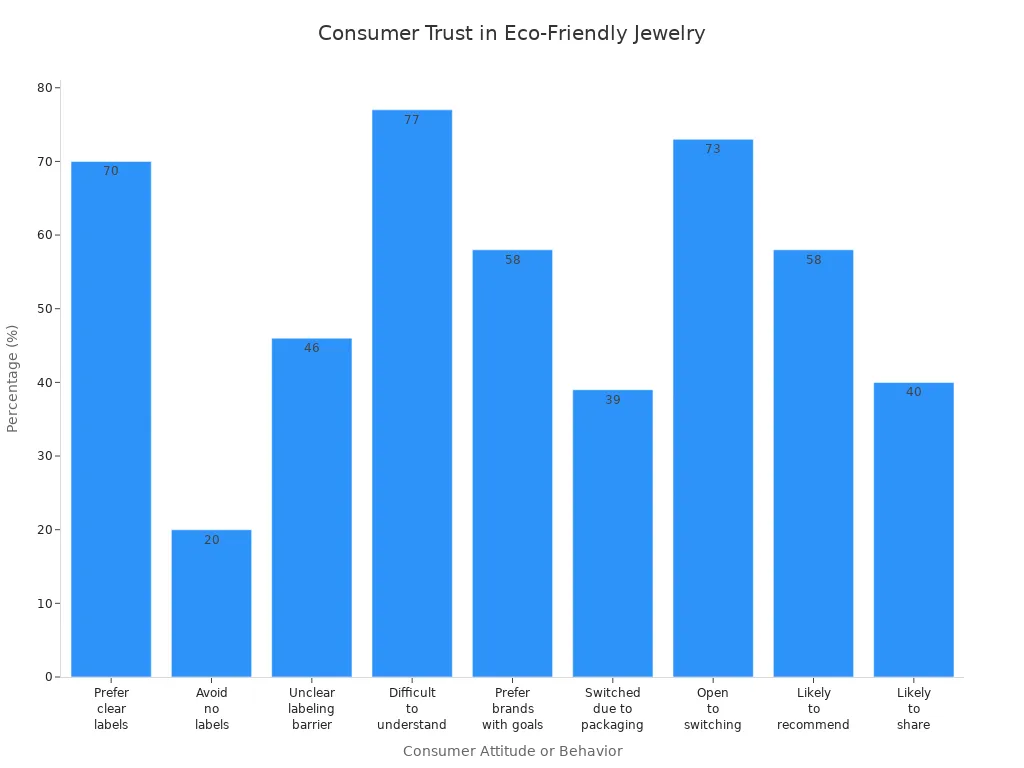
Authentic eco-friendly marketing builds lasting trust and loyalty for any jewelry brand. The following data highlights the impact of clear communication and transparency:
| Statistic | Value | Source |
|---|---|---|
| 70% of consumers prefer clear sustainability labels | 70% | Shorr |
| 58% prefer brands committing to sustainability goals | 58% | Shorr |
| 39% switched brands due to unsustainable packaging | 39% | Shorr |
- Ongoing transparency in sustainability is now a baseline requirement for consumers.
- Brands that emphasize transparency and ethical practices outperform traditional luxury competitors.
- Consumers seek jewelers who disclose sourcing and environmental policies.
Positioning a jewelry brand as eco-friendly through real action and clear communication leads to increased loyalty, higher sales, and a stronger reputation. Companies that market your jewelry with these principles attract conscious consumers and secure long-term business growth.
FAQ
What makes a jewelry brand eco-friendly?
A jewelry brand becomes eco-friendly by using recycled materials, ethical sourcing, energy-efficient production, and sustainable packaging. The brand also maintains transparency and earns recognized certifications. These actions demonstrate real commitment to environmental responsibility.
How can a jewelry brand prove its sustainability claims?
Brands provide proof through third-party certifications, environmental impact reports, and transparent supply chain documentation. They share real data and progress updates. Customers trust brands that display recognized eco labels and publish annual sustainability reports.
Which certifications are most important for eco-friendly jewelry?
| Certification | Focus Area |
|---|---|
| RJC | Ethical sourcing |
| Fairtrade | Fair labor and gold |
| KPCS | Conflict-free diamonds |
These certifications validate responsible practices and help brands build credibility.
How does a jewelry brand avoid greenwashing?
Brands avoid greenwashing by using clear language, sharing specific data, and supporting claims with evidence. They align marketing messages with real actions. Brands respond transparently to feedback and update customers on sustainability progress.
Why is sustainable packaging important for jewelry brands?
Sustainable packaging reduces environmental impact and appeals to eco-conscious buyers. Brands use recyclable or biodegradable materials and minimalist designs. Packaging reflects the brand’s values and enhances the customer experience.
How can customers get involved in a brand’s eco-friendly journey?
Customers participate by providing feedback, joining sustainability challenges, and sharing user-generated content. Brands reward sustainable choices through loyalty programs. Engagement strengthens the brand’s commitment and builds community.
What are the benefits of eco-friendly marketing for jewelry brands?
Eco-friendly marketing builds trust, attracts conscious consumers, and increases loyalty. Brands that prioritize sustainability outperform competitors. Clear communication and real action lead to higher sales and a stronger reputation.
How often should a jewelry brand update customers on sustainability progress?
Brands should provide annual sustainability updates. Regular communication builds trust and accountability. Visual reports and progress summaries help customers understand the brand’s impact and ongoing commitment.