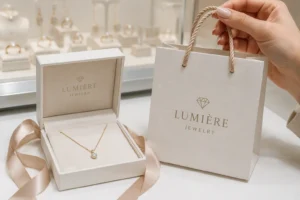
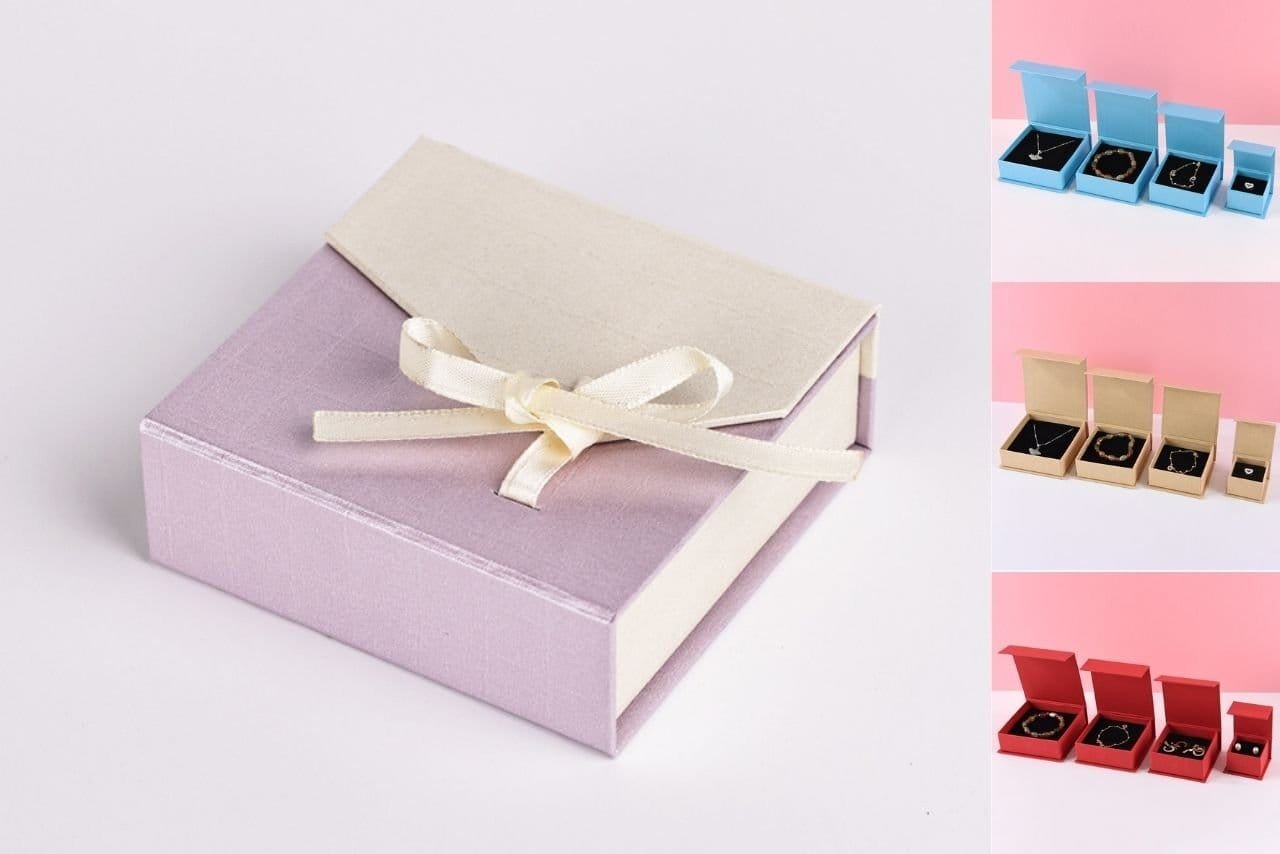
Mother of pearl inlaid jewelry boxes are characterized by their iridescent aragonite surfaces, utilizing the organic-inorganic composite material found in the inner shell layer of mollusks to provide a naturally reflective and structurally resilient protective enclosure. Unlike painted or synthetic finishes, mother of pearl (nacre) offers a multi-layered crystalline structure that diffracts light into a spectrum of colors while providing a highly durable, scratch-resistant exterior. For a professional 보석 상자 제조업체, the precision inlay process involves hand-cutting 1mm to 2mm nacre tiles and bonding them to a stabilized hardwood or stone frame using acid-free resins. In the global 주얼리 포장 sector, these boxes are prized for their biocompatibility and chemical neutrality, creating an ideal micro-environment for the long-term archival storage of fine gold, platinum, and organic gemstones such as pearls and opals.
Material Science & Artisanal Standards
The Physics of Nacre: Aragonite Platelets and Elasticity
The brilliance of a 보석 상자 featuring mother of pearl is a result of its unique microstructural architecture. Nacre is composed of hexagonal platelets of aragonite (calcium carbonate) arranged in continuous layers. These layers are separated by organic polymers like chitin, which act as “molecular shock absorbers.”
From a technical perspective, this structure makes mother of pearl exceptionally tough. At a leading 보석 상자 공장, the material is valued for its fracture resistance; unlike glass or ceramic, the organic interlayers in nacre prevent micro-cracks from propagating through the material. This ensures that the box retains its aesthetic and structural integrity even in high-traffic retail environments.
Inlay Precision: Hand-Cutting and Resin Bonding Standards
Manufacturing mother of pearl boxes is a labor-intensive process that requires micrometric precision. The shell is first harvested and flattened into thin sheets. Because nacre is extremely hard, it must be cut using water-cooled diamond saws or high-precision laser cutters to avoid thermal discoloration.
[Technical Insight: The Layered Assembly of Nacre over a Hardwood Substrate]
A professional 보석 상자 제조업체 will use neutral-cure adhesives to bond the inlay to the box frame. Cheaper alternatives often use high-VOC glues that can leach through the organic nacre, causing permanent yellowing or clouding of the iridescence. High-end boxes are finished with multiple layers of hand-rubbed lacquer to create a perfectly flush surface between the wood and the inlay.
| Metric | Natural Mother of Pearl | Synthetic Pearloid | 혜택 |
|---|---|---|---|
| 모스 경도 | 3.5 – 4.5 | 2.0 – 2.5 | Superior scratch resistance |
| Thermal Stability | 높음 | Low (Heat Sensitive) | Protects interior temperature |
| Refractive Depth | Deep / Dimensional | Flat / Surface-level | Luxury “Appreciation” value |
Archival Suitability: Chemical Neutrality in Storage
One of the most significant advantages of mother of pearl in 주얼리 포장 is its chemical compatibility with organic gemstones. Because nacre is biologically produced, it does not contain the industrial sulfur or ammonia compounds found in some plastics and treated woods.
This creates a “safe zone” for storing pearls and opals. Natural nacre provides a subtle humidity-buffering effect, preventing the micro-environment within the box from becoming too dry¡ªa common cause of pearls losing their “orient” or luster. Combined with a sulfur-free velvet lining, a mother of pearl box is a premier choice for heirloom silver and high-jewelry collections.
Long-term Resale Value: Material Integrity Index
*Data represents perceived value retention over a 50-year period in antique markets.
보존 및 진위 확인 관련 자주 묻는 질문
Q1: How can I tell if a jewelry box is real mother of pearl or plastic?
A: The Temperature and Pattern Test: Natural nacre feels cold to the touch and slowly warms to your skin temperature. Plastics feel immediately warm or neutral. Furthermore, real mother of pearl has organic irregularities and depth; synthetic “pearloid” has a flat, repeating pattern often visible under magnification.
Q2: What is the best way to clean the pearl inlay?
A: Use a soft, lint-free microfiber cloth. For deeper cleaning, use a cloth slightly dampened with distilled water. Avoid all acidic cleaners (like vinegar or lemon juice) and harsh chemicals, as these will dissolve the calcium carbonate in the nacre, permanently destroying its luster.
Q3: Does mother of pearl fade in sunlight?
A: Natural mother of pearl is highly UV-resistant. However, the lacquers and adhesives used in the box construction can be sensitive to prolonged direct sunlight. To maintain the iridescent depth, store the box in a cool area away from direct window exposure.
Q4: Why are some mother of pearl boxes more expensive than others?
A: It usually comes down to inlay thickness and complexity. “Mosaic” styles using thousands of tiny hand-cut pieces require more labor than large, flat tile applications. The source of the shell (e.g., White MOP vs. Black Tahitian MOP) also significantly impacts raw material costs.
기술 참조 및 업계 데이터:
- Biomineralization and Mechanical Properties of Nacre – 뉴욕 타임즈 사이언스
- Archival Standards for Organic Inlay Materials in Packaging – 홈디포 전문가 가이드
- Market Valuation of Antique Artisanal Storage – 비즈니스 인사이더 리테일
- Engineering Heritage: The Evolution of Iridescent Substrates – WOLF 1834 엔지니어링 블로그