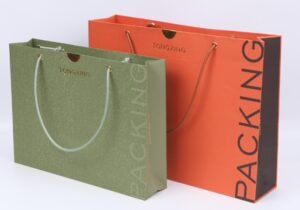
Foil stamping and screen printing both decorate custom jewelry bags. The better choice depends on three things: the look you want, the bag material and the budget. Shenzhen Tongxing Packaging Co., Ltd. supplies bags finished with either method, so the comparison below stays practical. Five criteria guide the decision: visual effect, material compatibility, durability, design complexity and cost. Each one changes the answer for a given bag style. A metallic logo on a rigid box follows one path. A bold multi-colour design on a kraft bag follows another. Readers can weigh the criteria in order and match the method to their own packaging brief.
Punti chiave
Foil stamping gives a shiny metallic look. Screen printing gives bold colours.
Choose foil for smooth paper or rigid bags. Choose screen printing for fabric or textured bags.
Foil suits simple logos. Screen printing handles complex multi-colour designs.
Foil resists scuffing well on smooth surfaces. Screen printing stays durable on art paper.
Foil has higher set-up costs. Screen printing becomes cheaper for large orders.
Foil stamping explained
The dry transfer process
Foil stamping is a dry transfer process. It uses metallic or coloured foil and a heated die. A custom metal die is made and engraved with the design you want. The die is heated. The heated die is pressed against the foil. The foil’s pigment moves onto the surface below. The foil sticks to the material through a heat-activated adhesive layer. This gives a durable, polished, high-contrast finish on substrates such as paper, card or leather.
The process uses no liquid ink at any stage. So each impression gives a clean, sharp edge. The die carries the full design, so the same mark repeats precisely across a production run. Tongxing Packaging applies this method to shopping bags in art paper, kraft paper and recycled stock.
Best-fit jewellery bag styles
Foil stamping suits single-colour metallic marks and fine script logos. A thin serif wordmark or a delicate monogram keeps its detail well under a heated die. The reflective finish draws the eye without the need for a second colour.
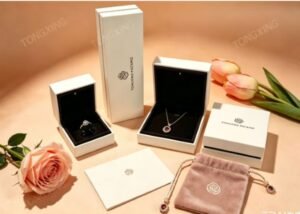
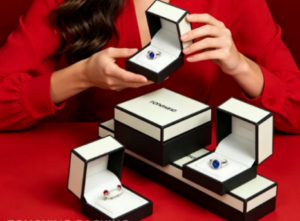
Typical fits include luxury paper bags, rigid boxes and ribbon-tied jewellery paper bags. A luxury paper bag with a gold or silver logo gains a premium look from one foil pass. Rigid boxes accept a deep, crisp impression on their wrapped surface. Ribbon-tied jewellery paper bags pair the foil mark with a soft handle and a refined closure. These styles share a common trait: the bag itself carries the brand, so a single metallic accent does the work of a full colour print.
Screen printing explained
The mesh and ink process
Screen printing forces liquid inks through a fine mesh screen. The mesh is stretched over an aluminium or wooden frame that matches the size of the item being printed. A light-sensitive coating is spread evenly across the mesh. A clear mask with the artwork on it is placed over the mesh, and the whole screen is exposed to UV light. The coating hardens on the areas that will not print. Washing the mesh with water removes the soft coating from the printing areas and opens the stencil. After drying and checking, the screen mask is ready.
The finished screen is placed over the paper bag surface. Ink is spread across the screen and passes through the open mesh holes. A squeegee blade is pulled across the mesh, briefly pressing it against the paperboard so the ink moves onto the bag surface. Only one colour is printed per screen, so multi-colour designs need several screens. Each ink layer is left to dry before the next one is applied. Commercial printers usually use industrial machines so they can print in bulk on paper bags.
Best-fit jewellery bag styles
Screen printing suits multi-colour logos and bold artwork. The method handles solid blocks of colour, large letterforms and graphic patterns with confidence. Up to four different colours can be screened over the material using a scraper, which gives brands room for a full palette on a single bag.
Typical fits include kraft paper, art paper and promotional tote bags. Kraft paper carries a bold single-colour mark well and keeps the natural texture visible. Art paper holds finer multi-colour work and a smooth finish. Promotional tote bags benefit from large, high-impact graphics that repeat across a run. Tongxing Packaging supplies shopping bags in art paper, kraft paper and recycled stock for these applications.
Visual results compared
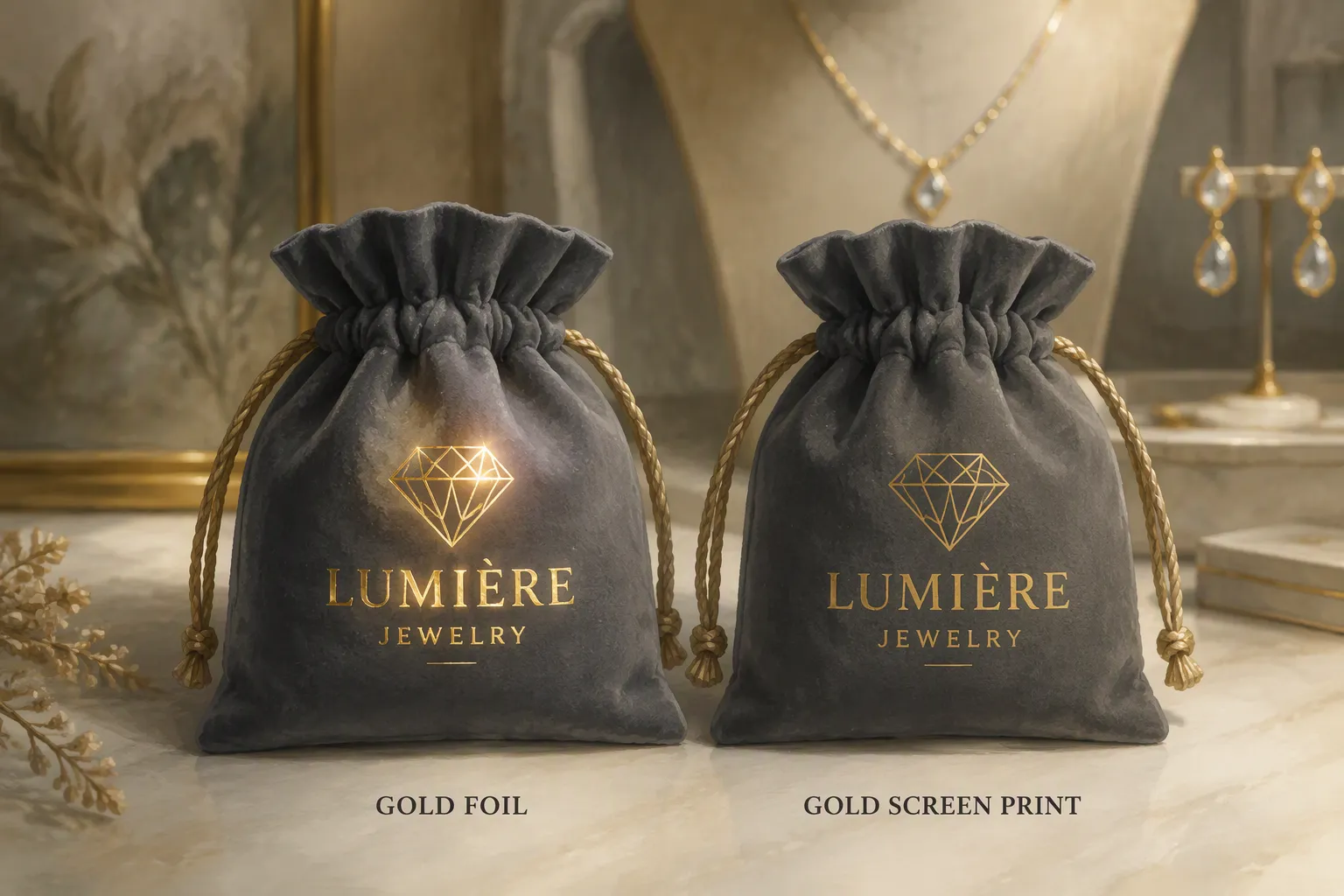
Glossiness and metallic shine
Glossiness is the clearest difference between the two methods. Foil stamping gives a shiny, reflective metallic foil. The surface catches light and makes a shimmering, high-shine image. Gold and silver foils show this effect most strongly. Holographic foils go further with a shifting, rainbow-like reflection. No liquid ink can reach the same brightness.
Screen printing with metallic ink acts in a different way. The printed image sits flat or matte on the bag. There is a metallic base, but the finish shows only a slight twinkle of metallic. The ink cannot copy the mirror-like depth of a foil impression.
Method | Gloss / Finish Characteristics |
|---|---|
Foil stamping (gold/silver) | Shiny, reflective metallic foil that catches light to create a shimmering, high-shine image |
Screen printing (gold/silver ink) | Flat or matte image; metallic base but lacks the high shine of foil, only a slight twinkle of metallic |
The look also differs. Foil reads as a premium accent. It draws the eye to one mark and lets the bag material carry the rest of the design. Screen printing reads as graphic coverage. It builds a full visual field across the bag surface.
Cost by coverage follows the same split. A small foil mark uses little foil and one die pass, so a compact logo stays cheap. Screen printing charges by colour and by printed area. A large multi-colour design adds cost with each screen and each pass.
Colour range and fine detail
Screen printing wins on colour range. Each screen carries one colour, and a run can use several screens in a row. Brands get a full palette, solid blocks and layered graphics. Foil stamping works in single metallic or coloured tones per pass. Multi-colour foil work needs separate dies and separate passes, which adds complexity.
Fine detail favours foil in some cases and limits it in others. Hot foil stamping suits bold logos, fine line detail and deep metallic finishes. The method also carries die cost and lead-time issues. Very thin lines and tiny reversed-out text can fill in, so printers advise checking minimum line weights and type sizes for the chosen method.
Practical limits apply to foil artwork:
Foil blocking is not well suited to fine detail alignment, such as small type or thin-lined shapes.
Positive (solid) lines should not be thinner than 0.5 mm.
Reversed-out (knockout) lines should not be thinner than 2 mm.
Small text should be avoided; fine fonts, especially serif or tapered designs, do not reproduce well, and the thinnest stroke of any font must be at least 1 mm wide.
Intricate patterns and tight spacing can work well on coated or smooth stocks, but fine detail may fill in on heavily textured paper.
Vector artwork is recommended for smoother results on small, intricate areas and fine text.
Screen printing holds small text and thin strokes with more tolerance on smooth art paper. Tongxing Packaging can advise on artwork preparation for either method before a bag goes to production.
Material fit for custom jewelry bags
Paper, card and rigid surfaces
Paper stocks work well with both methods, and the choice depends on the surface finish. Art paper has a smooth, coated face. It holds fine foil detail and crisp screen-printed edges just as reliably. Kraft paper has a rougher surface that soaks up more. Screen printing lays down a solid ink layer that covers the texture evenly. Foil stamping on kraft paper can press the foil into the grain, so the metallic mark may show a slightly textured edge. Recycled stock acts in a similar way to kraft paper. Its surface varies more from batch to batch, so printers often suggest a test impression before a full run.
Rigid boxes and luxury paper bags take foil stamping especially well. The wrapped board gives a firm base for the heated die, and the impression stays sharp across the panel. Screen printing also works on rigid surfaces, though the ink sits on top of the wrap rather than sinking into it. For custom jewelry bags in art paper or rigid board, both methods remain viable. The deciding factor is the visual goal rather than the substrate itself.
Fabric, velvet and PU surfaces
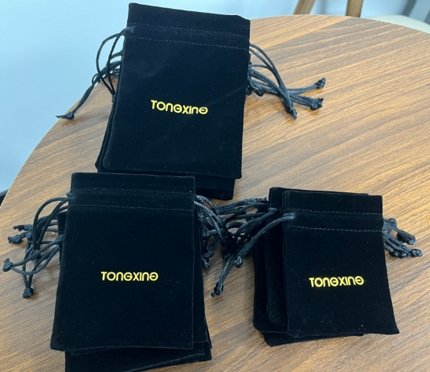
Fabric and soft pouches change the balance. Hot foil stamping works on fabrics, leather and plastics, and it gives a luxurious finish on dark stocks. A PU-coated film such as Temptation Velvet produces an ultra-matt, soft-touch surface. This PU-based film suits hot foil stamping and spot coatings, though testing is recommended before production. Screen printing handles materials of any shape, thickness and size. It delivers good detail clarity, vivid colours and exceptional coverage, and its cost falls over long runs.
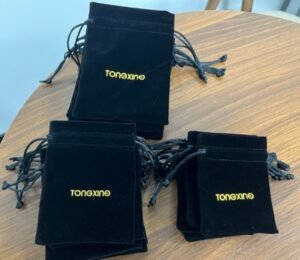
Velvet and soft-touch PU pouches therefore favour foil for a metallic accent and screen printing for bold colour. Shenzhen Tongxing Packaging Co., Ltd. supplies custom jewelry bags across paper, fabric and PU formats, and the team can confirm which method suits a given pouch before sampling.
Durability and wear
Scuffing and handling
Foil stamping bonds the foil to the surface through a heat-activated adhesive layer. The metallic film sits as a thin, fused layer on the stock. This bond resists light rubbing well on smooth, coated papers. A gold or silver mark keeps its shine through normal retail handling, bagging and repeated opening of the bag. Deep impressions on rigid boxes hold their edge because the die presses the foil into the board itself.
Screen printing lays ink on top of the surface. The ink layer stands slightly proud of the paper. On art paper the cured ink grips firmly and resists scuffing in ordinary use. On rougher kraft stock the ink bridges the grain, and heavy abrasion against other bags in transit can dull the printed area over time. A protective varnish or lamination over the print reduces this risk.
Handling matters for both methods. Sharp folds, creased corners and contact with hard edges cause the most visible wear. Bags that travel loose in a larger carton take more knocks than bags packed in an inner box. Tongxing Packaging can advise on packing methods that protect a decorated panel during shipping.
Longevity by substrate
Substrate choice shapes how long a decorated bag keeps its appearance. Coated art paper gives both methods a stable base. Foil holds a crisp edge, and screen ink cures to a hard, durable film. Rigid board performs best of all, because the wrapped panel does not flex in normal use.
Kraft paper and recycled stock flex more and vary in surface texture. Foil pressed into a coarse grain can lift slightly at the edges after repeated folding. Screen ink covers the texture evenly and tolerates flexing better on these stocks. Fabric and PU pouches behave differently again. Foil on a soft-touch PU film stays smooth under light handling, while screen ink on fabric can crack if the pouch creases sharply.
The practical rule is simple. Match the method to how the bag will be used. A gift bag that leaves the store once favours a premium foil accent. A promotional tote that travels daily favours a robust screen-printed layer.
Design complexity
Logos, fine lines and small text
Foil stamping handles fine work well when the artwork stays within the die’s limits. Foilco says a skilled print finisher can make clean foiled results with lines as thin as 1pt. Negative elements, like letters cut out of a solid foiled area, need a minimum thickness of 0.3 mm. Strokes that are narrower may taper and become hard to read after stamping. The smallest text size recommended is 6pt. Anything smaller becomes hard to read, especially on glossy surfaces in bright light. A delicate script logo or a small monogram therefore stays readable in foil, as long as the designer keeps strokes above these limits.
Screen printing has its own minimum. Industry guidance recommends a smallest font size of 8pt, because text below that size becomes twisted or unreadable on textured or uneven surfaces. Mesh count changes the result. On paper, a 43T mesh loses detail up to font size 14, while a 90T mesh gives good results from size 14 and stays readable from size 12. Fine lines, tight spacing and delicate elements tend to fill in or blur. Printers therefore prefer bold, clear shapes for this method.
Multi-colour and gradient artwork
Screen printing handles multi-colour artwork through colour separation. The design is split into layers, and each colour usually needs its own screen. Spot colour, four-colour process, simulated process and index colour are the common routes. A design with many shades becomes costly and slow, because every screen adds a pass.
True smooth gradients are not possible in a single pass. Printers use the halftone technique instead. Tiny dots of varying sizes and densities blur together at viewing distance and copy a smooth blend. The four-colour process, using cyan, magenta, yellow and black, creates the look of many colours from four screens. Simulated process printing uses roughly 3 to 14 or more colours for photorealistic work. Foil stamping works in single metallic or coloured tones per pass, so multi-colour foil needs separate dies and separate passes. Tongxing Packaging can check artwork against either method before production.
Cost and run size
Set-up costs compared
Foil stamping carries a tooling cost before the first bag is printed. A custom metal die must be engraved with the design, and that die is a one-off charge. The die also takes time to produce, so a foil order has a longer lead time before production begins. A single die serves one colour and one design. Multi-colour foil work needs a separate die for each tone, and each die adds its own set-up charge.
Screen printing carries a different set-up cost. Each colour needs its own mesh screen, and the screen must be coated, exposed and washed before printing starts. A one-colour logo therefore needs one screen, while a four-colour design needs four. Screens cost less than an engraved metal die, so the entry cost for screen printing is lower on simple artwork. The balance shifts when a design uses many colours, because every extra screen adds to the total.
Unit cost by volume
Unit cost falls as run size grows under both methods. The set-up charge is fixed, so a longer run spreads that charge across more bags. Foil stamping also uses foil and die passes in proportion to the printed area. A small logo on a large run therefore becomes very economical per bag. A large foil block uses more foil and more press time, which raises the unit cost.
Screen printing behaves in a similar way. Ink and press time scale with the printed area and the number of colours. Long runs suit screen printing well, because the screen cost is recovered quickly and the per-bag charge settles at a low level. Short runs favour foil for a compact mark, since one die pass covers a small area cheaply.
Tongxing Packaging supplies shopping bags in art paper, kraft paper and recycled stock, and the team can quote either method against a given bag style and order quantity.
Choosing the right method for custom jewelry bags
Matching method to brand and bag
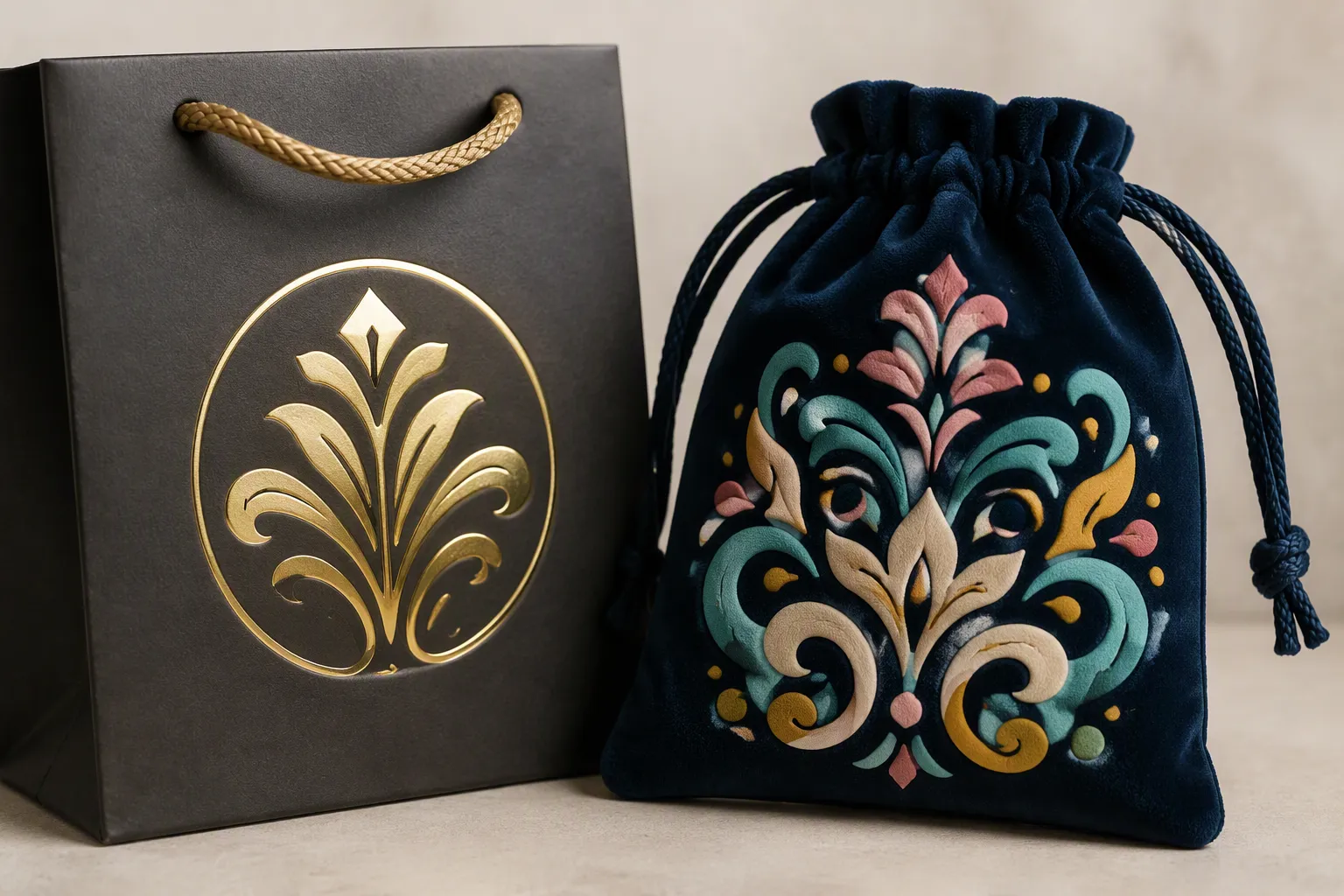
The choice starts with what the brand stands for. A premium metallic accent on paper or rigid bags points to foil stamping. Bold multi-colour artwork at volume points to screen printing. The table below shows how each method reads against common brand positions.
Matching Factor | Hot Foil Stamping | Serigrafia |
|---|---|---|
Visual effect | Reflective metallic shine | Solid matte or semi-gloss colours |
Tactile feel | Smooth, slightly recessed foil | Raised ink layer |
Compatible materials | Cardboard, leatherette | Suede, velvet, textured paper |
Colour capability | Metallic shades only (gold, silver and similar) | Full Pantone range |
Brand image fit | High-end luxury and classic | Vibrant, modern and textile-based |
A luxury or classic jewellery brand gains most from a reflective foil mark on a rigid box or a ribbon-tied paper bag. A vibrant, modern label with a full palette suits screen printing on velvet pouches or textured paper. The bag material narrows the choice further. Cardboard and leatherette take foil cleanly, while suede and velvet take screen ink well. Neither method is better in general. Each one fits a different brief.
Sampling before production
A physical proof settles the question better than any specification sheet. Tongxing Packaging recommends a structured sampling round before production begins. The steps below keep the process practical.
Define the product and pack type, such as a carton, rigid box, sleeve, bag or label, with dimensions and quantities.
State the board weight and finish, or ask the printer to recommend one for the chosen foil.
Place foil on its own clearly named spot-colour layer and mark which foil colour goes where.
Check fine detail, since very thin lines and tiny reversed text can fill in; request minimum line weights and type sizes.
Leave registration tolerance and avoid designs that depend on a hairline fit between foil and printed colour.
State what else sits on the pack, such as embossing, spot UV, lamination or window patches, because these affect the order of operations.
Request a proof on the real board, since a physical sample shows how foil reflects light.
Confirm the timeline in working days, because die-making and proofing add time.
Testing on the final production stock matters as much as the proof itself. Slight coating differences can affect foil adhesion under press conditions. New stock or custom ink combinations deserve a test before a full run. Large-area foil jobs and multi-foil jobs need proofing to avoid wasted stock and surprise rejects. Ink also needs realistic curing time, and heavy coverage may need longer than a single day. A low-wax ink helps foil transfer. A PDF cannot show how foil reflects light, so a physical sample remains the cheapest insurance. Shenzhen Tongxing Packaging Co., Ltd. offers sampling and proofing for custom jewelry bags, and the team can match a method to a brand position before a full order is placed.
Five factors settle the choice. The look you want comes first, then the bag material, how complex the design is, how much wear it must take and the budget. Foil stamping gives a premium metallic accent on paper or rigid bags. Screen printing delivers bold colour and good value at volume. Neither method suits every brief, and each one serves a distinct purpose.
Shenzhen Tongxing Packaging Co., Ltd. supplies custom jewelry bags in art paper, kraft paper and recycled stock. The team can match a method to a brand position and confirm the finish through a physical sample. Buyers can request a tailored recommendation before production begins.
FAQ
Does foil stamping work on every jewellery bag material?
No. Foil stamping works best on smooth, firm surfaces like art paper, rigid board and leatherette. Rough kraft paper and recycled stock may show a textured foil edge. Soft fabrics and PU films do take foil, but it is wise to test an impression before a full run.
Can screen printing produce a metallic gold or silver logo?
Screen printing can put down metallic ink, but the result looks flat or matte. It shows only a slight twinkle of metallic. A true mirror-like shine needs foil stamping. Brands that want a reflective accent should pick foil for that mark.
Which method suits a small order of custom jewelry bags?
A small foil logo on a short run stays cheap, because one die pass covers a small area. Screen printing has a lower start-up cost on simple one-colour artwork. The balance depends on colour count and printed area, so a quote against the actual design settles it.
How many colours can each method print?
Foil stamping applies one metallic or coloured tone per pass, so multi-colour foil needs separate dies. Screen printing uses one screen per colour and handles multi-colour logos, solid blocks and halftone gradients with confidence. Bold palettes therefore favour screen printing.
Can a brand combine both methods on one bag?
Yes. A bag can carry a foil-stamped logo and a screen-printed graphic on different panels. Tongxing Packaging can plan the order of operations so each finish sits correctly. A physical proof confirms how the two effects read together before production.