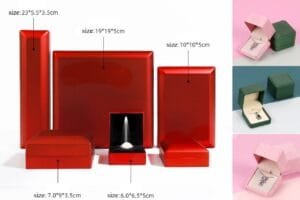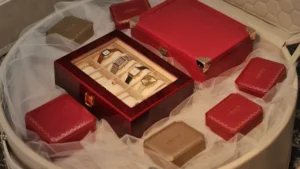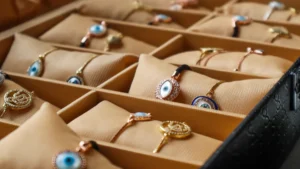
A glass display jewelry box functions as a curated vitrine, utilizing high-transparency silicates to transform private collections into a visual narrative while providing a chemically inert protective barrier. Unlike traditional opaque containers, these units leverage ambient light refraction to enhance the perceived fire and scintillation of faceted gemstones. For a professional Jewelry Box manufacturer, the design of glass display units necessitates the use of lead-free, low-iron glass to eliminate the chromatic distortion (green tint) typical of standard glass, ensuring that 18k gold and platinum alloys are rendered with absolute color accuracy. In the global jewelry packaging sector, these “gallery-style” boxes are preferred for retail flagships and high-end home vanities because they allow for constant visual inspection, significantly reducing the mechanical wear and surface oils associated with repetitive handling.
Display Engineering & Aesthetics
Optical Brilliance: Light Transmission and Gemstone “Fire”
The primary technical driver behind a Jewelry Box made of glass is its light transmission efficiency. A high-quality display box utilizing Starphire or low-iron glass achieves over 91% light transmission. This allows for maximum “scintillation”¡ªthe play of light on a diamond’s surface¡ªand “fire,” the dispersion of light into spectral colors.
By eliminating the shadow-casting lids of wooden boxes, the glass display unit creates omnidirectional illumination. Any leading Jewelry Box Factory focuses on the beveling of the glass edges; these 45-degree angles act as prisms, bending light into the interior corners and ensuring that even pieces tucked into the rear of the box receive sufficient lux to remain visually prominent.
Structural Integrity: Tempered Glass and Metal Joinery
Industrial-grade display boxes utilize tempered safety glass, which is four to five times stronger than standard annealed glass. This process involves heating the glass to approximately 620¡ãC followed by rapid cooling, creating surface compression that resists impact and thermal shock.
[Technical Comparison: Impact Resistance of Annealed vs. Tempered Silicates]
The joinery of these boxes often employs UV-cured adhesives or traditional metal soldering (brass/lead-free tin). For B2B retail environments, the metal-to-glass bond must be stress-tested for repetitive lid cycles. A professional Jewelry Box manufacturer will specify the use of brass structural ribs to prevent the “bowing” of large glass panels under their own weight.
| Metric | Low-Iron Tempered Glass | Standard Float Glass | Benefit |
|---|---|---|---|
| Refractive Index | 1.52 | 1.51 | True-to-life color rendering |
| Mohs Hardness | 6.0 – 7.0 | 5.5 | High scratch resistance |
| Chromatic Aberration | Near Zero | Noticeable (Green edge) | Premium visual unboxing |
Archival Display: Preventing Dust and Moisture Accumulation
While glass display units provide exceptional aesthetics, they must be engineered to mitigate thermal condensation. Because glass is a thermal conductor, it can react to temperature changes in a room, leading to “fogging” inside the unit.
Modern jewelry packaging in the glass category utilizes air-tight gasket seals (often thin, transparent silicone) to prevent moisture ingress. For B2B showroom applications, this is vital; it ensures that the internal relative humidity (RH) remains stable, protecting sensitive organic materials like pearls from the cracking associated with rapid environmental fluctuations.
Retail Engagement Index: Transparent vs. Opaque Packaging
*Score represents time spent by consumers interacting with product during retail trials.
Maintenance and Display Optimization FAQ
Q1: How do I clean fingerprints off the glass without leaving streaks?
A: Use a 70% isopropyl alcohol solution and a high-denier microfiber cloth. Avoid ammonia-based cleaners, as these can react with the metal soldering or solder-tinting over time, leading to discoloration of the box¡¯s frame.
Q2: Will the glass box protect my silver jewelry from tarnishing?
A: Glass itself is non-reactive, but standard display boxes are not airtight. To prevent tarnish, ensures your box includes an anti-tarnish velvet base or place a small charcoal desiccant pack inside the unit.
Q3: Can glass jewelry boxes be used for travel?
A: No. Even tempered glass is susceptible to shatter-points at the corners. Glass display boxes are strictly designed for static home or retail display. For travel, utilize a leather or fabric-based jewelry roll.
Q4: Why does my glass box have a greenish tint at the edges?
A: This is due to the presence of iron oxide in standard float glass. For a true “art gallery” look, ask your supplier for “low-iron” or “opti-white” glass, which removes this distortion and ensures your jewelry¡¯s true color shines through.
Q5: Is it safe to store pearls in a glass box under sunlight?
A: No. Sunlight causes localized heat buildup (the greenhouse effect) inside the box. High heat can dehydrate pearls, leading to “crazing” or cracking of the nacre. Always place glass display boxes in indirect or filtered light.
Article References & Industry Data:
- Optical Transmission and Chromatic Aberration in Silicates – The New York Times Science
- Mechanical Standards for Tempered Safety Glass in Luxury Goods – Home Depot Pro Guide
- Retail Psychology: The Impact of Transparency on Consumer Trust – Business Insider Retail
- Chemical Compatibility of Adhesives in Sealed Displays – WOLF 1834 Engineering Blog