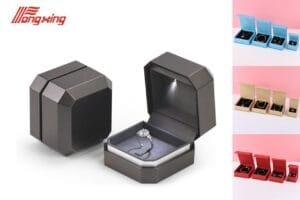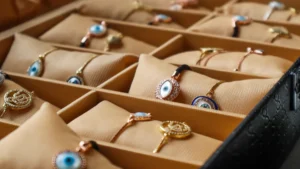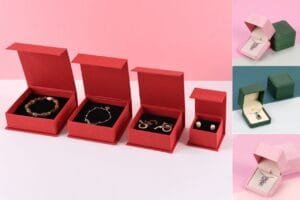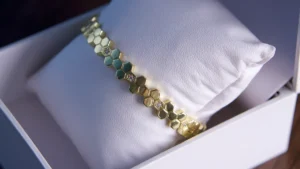
Glass, acrylic, and unique material jewelry boxes represent the modern evolution of “visible storage,” utilizing high-clarity polymers and tempered silicates to maximize gemstone brilliance through omnidirectional light transmission. Unlike opaque timber or leather enclosures, these units function as passive display vitrines, reducing the need for excessive handling while providing a chemically inert environment for sensitive alloys. For a professional Jewelry Box manufacturer, the engineering of transparent storage focuses on UV-filtering capabilities and the elimination of refractive distortion. In the global jewelry packaging sector, materials like cast acrylic (PMMA) and lead-free crystal are prized for their non-porous surfaces, which prevent the absorption of moisture and oils that typically compromise the luster of organic stones like pearls and opals.
Material Engineering Framework
Acrylic Science: PMMA Clarity and UV Stabilization
The primary advantage of an acrylic Jewelry Box is its Refractive Index (RI) of 1.49, which is nearly identical to glass but with 50% less weight. In a professional Jewelry Box Factory, the focus is on utilizing cast acrylic rather than extruded variants. Cast acrylic offers superior molecular stability, ensuring that the box does not yellow or develop “crazing” (micro-cracks) when exposed to retail display lighting.
Technical Insight: High-end acrylic boxes are often treated with UV-absorbers during the polymerization process. This is critical for jewelry packaging because UV radiation can cause “color fading” in semi-precious stones like amethyst and kunzite. A stabilized acrylic unit blocks 98% of harmful UV rays, serving as a protective shield while maintaining a “floating” aesthetic.
Glass Engineering: Tempered vs. Beveled Silicates
Glass remains the standard for luxury heritage storage. Modern glass boxes utilize low-iron tempered glass to eliminate the green tint common in standard silicates. This ensures that the color of the jewelry is rendered with 100% accuracy.
[Technical Schematic: Light Path through Beveled Glass vs. Flat Acrylic]
The use of beveled edges in glass box construction is not merely for “vintage charm.” Beveling acts as a prism, refracting light into the interior of the box to highlight the “fire” and scintillation of faceted gemstones. Leading Jewelry Box manufacturers utilize CNC glass grinding to achieve tolerances of +/- 0.1mm, ensuring that the metal solder or adhesive joints are virtually invisible.
| Metric | Cast Acrylic (PMMA) | Tempered Glass | B2B Advantage |
|---|---|---|---|
| Light Transmission | 92% | 90% | Maximizes visual sparkle |
| Impact Resistance | High (17x glass) | Moderate | Ideal for shipping/logistics |
| Chemical Neutrality | High | Absolute | Zero tarnish risk |
Unique Substrates: Resin, Bone Inlay, and Composites
Innovation in the jewelry packaging sector has led to the rise of unique composite materials:
- Resin Composites: Allows for the suspension of gold leaf or botanicals within the box wall, creating a bespoke, artisanal aesthetic.
- Bone & Mother-of-Pearl Inlay: Provides a natural, high-tactile relief. These organic materials are naturally moisture-buffering, similar to wood.
- Concrete & Terrazzo: Preferred for “Industrial Minimalist” branding. These materials offer extreme thermal mass, keeping jewelry cool in warm climates.
Material Suitability Index: Retail vs. Home Use
*Score represents the balance of clarity, shatter-resistance, and ease of cleaning.
Selection & Technical Maintenance FAQ
Q1: How do I remove scratches from an acrylic jewelry box?
A: Minor surface scratches can be removed using a fine-grade plastic polishing compound (like Novus #2). Avoid using glass cleaners with ammonia, as these will cause the acrylic to “fog” over time.
Q2: Why is my glass box developing “fog” on the inside?
A: This is often condensation due to rapid temperature changes. Glass is a thermal conductor. Ensure the box is kept away from HVAC vents. If the fog is permanent, it may be “leaching” from low-quality silicone adhesives¡ªalways source from a Jewelry Box manufacturer that uses acetic-free sealants.
Q3: Is acrylic safe for long-term silver storage?
A: Yes. Acrylic is chemically inert and does not contain sulfur. However, because it is not breathable, ensure you include a silica desiccant pack to prevent trapped moisture from causing tarnish.
Q4: What is the benefit of a mirrored base in a transparent box?
A: A mirrored base utilizes total internal reflection to bounce light back up through the gemstones, significantly increasing the perceived “brilliance” of diamonds and crystals in low-light environments.
Article References & Industry Data:
- Optical Clarity and UV Degradation of PMMA – The New York Times Science
- Mechanical Properties of Tempered Silicates in Packaging – Home Depot Pro Guide
- Retail Trends: The Rise of Visible Inventory – Business Insider Retail Insights
- Chemical Compatibility of Modern Polymers and Precious Metals – WOLF 1834 Engineering Blog