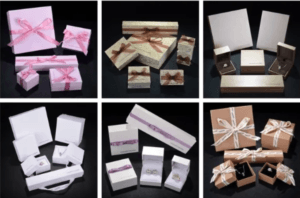
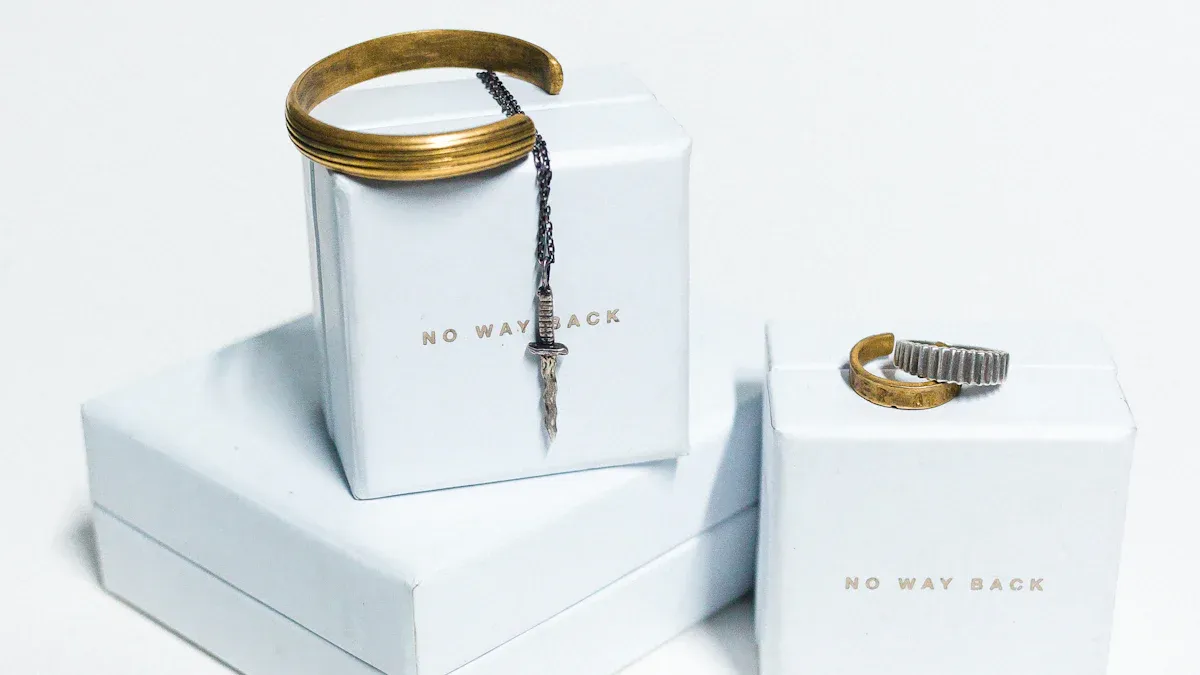
A small business faces several key expenses when sourcing custom jewelry boxes. Costs arise from design, materials, labor, and shipping. Overhead can include website maintenance and rental space. A jewelry packaging manufacturer may charge additional fees for unique Jewelry Display options or custom Jewelry Pouch designs. The table below summarizes these cost components:
| Cost Component | Description |
|---|---|
| Material Cost | Includes materials for jewelry packaging, such as boxes, bags, and labels. |
| Labor Cost | Time spent on assembly and finishing, calculated at market rates. |
| Overhead | Business expenses, including rent and digital operations. |
| Shipping | Charges for transporting materials, with possible taxes and duties. |
| Packaging | Average cost per item for custom jewelry boxes or pouches. |
Cost Analysis remains crucial for managing profit margins and making informed decisions.
Cost Analysis of Custom Jewelry Packaging
Design and Development Costs
Custom Artwork and Branding
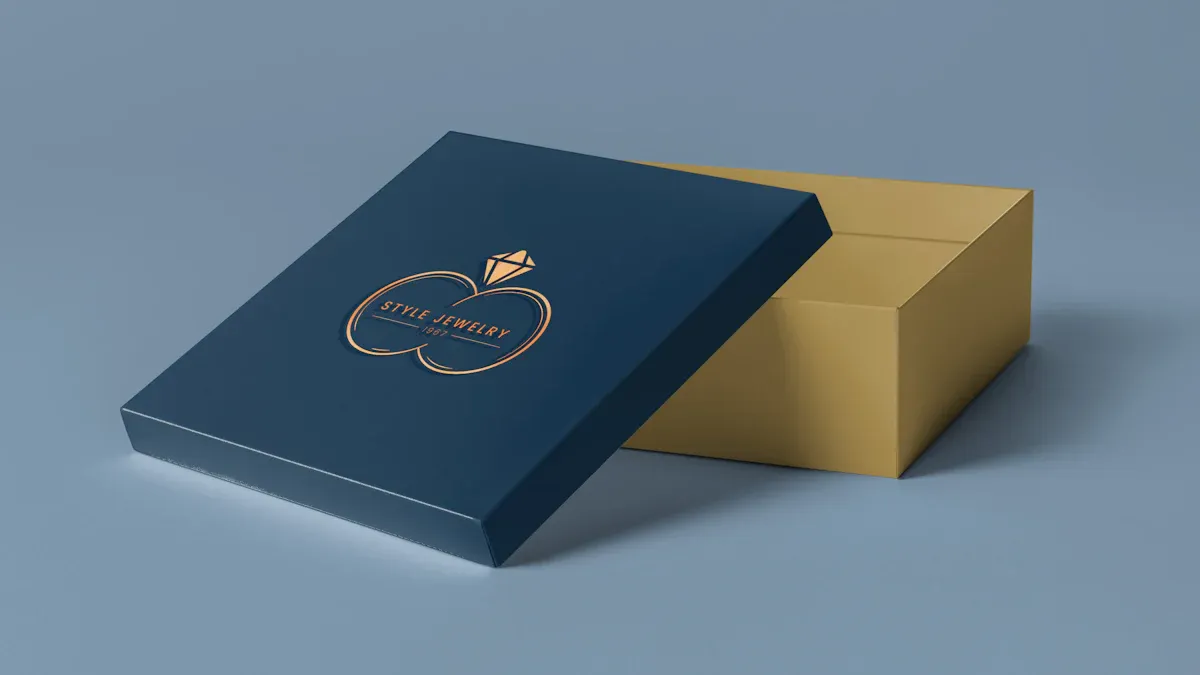
Design and branding represent the first major step in the cost analysis of custom jewelry packaging. Small businesses often face a wide range of expenses based on the complexity of their visual identity and the expertise of the designer. Simple designs typically cost between $500 and $2,500, while customized solutions range from $3,000 to $7,000. Luxury branding projects can exceed $8,000 and reach $20,000 or more.
| Design Type | Cost Range |
|---|---|
| Simple Design | $500 – $2,500 |
| Customized Design | $3,000 – $7,000 |
| Luxury Design | $8,000 – $20,000+ |
Costs rise with increased design complexity. More intricate branding requires additional labor and precise manufacturing. Each branding element, such as foil stamping or embossing, introduces extra steps and quality control measures. These factors drive up the overall packaging cost and impact the final price per unit.
Prototype and Sample Creation
Prototype and sample creation allow businesses to test and refine their packaging before full production. This stage often includes several iterations to ensure the final product meets brand standards and functional requirements. Expenses in this phase depend on the number of prototypes, the materials used, and the level of detail required. Businesses should allocate a portion of their budget for this essential step, as it helps prevent costly errors during mass production.
Material Selection and Cost Breakdown
Types of Box Materials
Selecting the right packaging materials forms a critical part of cost analysis. The choice of material affects both the appearance and durability of the jewelry box. Common options include corrugated packaging, folding cartons, rigid boxes, flexible packaging, jewelry pouches, paper bags, plastic hinge boxes, and paper jewelry boxes. Each material comes with its own price range:
| Packaging Type | Cost per Unit |
|---|---|
| Corrugated Packaging | $2.7–$3.5 |
| Folding Cartons | $1.8–$2.25 |
| Rigid Boxes | $8.5–$10.00 |
| Flexible Packaging | $0.25–$0.75 |
| Jewelry Pouches | $0.30–$1.50 |
| Jewelry Paper Bags | $0.50–$2.00 |
| Plastic Hinge Jewelry Boxes | $2.00–$4.50 |
| Paper Jewelry Boxes | $1.00–$3.00 |
The selection process should consider both the cost and the perceived value of the packaging.
Inserts, Linings, and Add-ons
Inserts, linings, and add-ons enhance the presentation and protection of jewelry. Velvet, foam, or satin linings add a premium feel but increase the overall packaging cost. Custom inserts ensure that each piece fits securely, reducing the risk of damage during transit. Add-ons such as ribbons, magnetic closures, or custom tags can further elevate the unboxing experience. Each additional feature adds to the total cost analysis and should align with the brand’s positioning.
Eco-friendly Packaging Options
Sustainable packaging materials have gained popularity among small businesses. Options include recycled paper, biodegradable plastics, and soy-based inks. While eco-friendly choices may carry a slightly higher price, they appeal to environmentally conscious consumers and can enhance brand reputation. Businesses must weigh the benefits of sustainability against the impact on their packaging cost.
Production and Manufacturing Expenses
Setup Fees and Tooling
Production begins with setup fees and tooling costs. These represent fixed expenses required to prepare machinery and create specialized equipment for unique box shapes or features. For example, a custom rigid jewelry box may incur setup costs of $800. If a business orders 500 boxes, each unit absorbs $1.60 of this fee. Increasing the order to 2,000 units reduces the per-unit setup cost to $0.40. This demonstrates the importance of order quantity in spreading fixed costs.
Tip: Higher order quantities lower the per-unit cost by distributing setup fees across more units.
Per-unit Production Costs
Per-unit production costs include labor, materials, and overhead for each jewelry box. These costs fluctuate based on the complexity of the design, the choice of packaging materials, and the level of customization. Rigid boxes and luxury finishes command higher prices, while simple folding cartons or flexible packaging offer more affordable solutions. Accurate cost analysis at this stage ensures that businesses maintain healthy profit margins.
Minimum Order Quantities
Manufacturers often set minimum order quantities (MOQs) to justify setup and tooling investments. Low-volume orders result in higher per-unit costs, as fixed expenses must be allocated across fewer boxes. Small businesses should negotiate MOQs that align with their sales forecasts and storage capabilities. Understanding this dynamic helps optimize the overall packaging cost and prevents unnecessary inventory buildup.
Labor and Assembly in Packaging
Manual vs. Automated Assembly
Small businesses often face a critical decision between manual and automated assembly for custom jewelry packaging. Manual assembly offers flexibility and allows for intricate details, but it increases labor costs and can slow down production. Automated assembly, on the other hand, streamlines the process and reduces per-unit expenses, but it requires significant upfront investment in machinery and may limit customization options. Companies must evaluate their order volume, desired packaging complexity, and available resources to determine the most cost-effective approach. Manual assembly suits limited runs or highly customized packaging, while automation benefits larger orders with consistent designs.
Quality Control and Inspection
Maintaining high quality in custom jewelry packaging requires a robust inspection process. Each batch undergoes structural checks, surface review, and visual evaluation to ensure the boxes maintain their intended form and appearance. A clear and structured order flow helps ensure every custom jewelry box meets the required specifications and maintains consistent quality. The inspection process directly impacts labor costs, as it often involves dedicated staff or third-party services.
| Evidence Type | Details |
|---|---|
| First-pass yield rates | 85-95% with reputable partners vs. 95-99% in controlled in-house environments |
| Remakes and repairs | Can add 5-15% to effective costs |
| Quality assurance overhead | May require on-site inspectors or third-party verification services (1-3% of order value) |
| Aesthetic consistency | Challenging to maintain across production batches |
Quality control ensures that each jewelry box meets brand standards and customer expectations. However, maintaining consistent quality across batches can be challenging, especially when production scales up. Remakes and repairs due to failed inspections can add 5-15% to effective costs. Some businesses invest in on-site inspectors or third-party verification services, which may account for 1-3% of the order value. High first-pass yield rates, especially in controlled in-house environments, help reduce waste and keep costs manageable. Quality assurance remains a cornerstone of successful packaging operations, as it protects brand reputation and customer satisfaction.
Shipping, Freight, and Tariffs
Domestic vs. International Shipping
Shipping costs for custom jewelry packaging vary significantly based on destination. Domestic shipping offers predictable rates and faster delivery times, while international shipping introduces additional expenses and complexities. The choice between domestic and international shipping affects not only the total cost but also the speed and reliability of delivery.
| Shipping Method | Cost Range | Notes |
|---|---|---|
| USPS First-Class Mail | $4.50 – $6.50 | Up to 13 oz |
| USPS Priority Mail | $9.65 – $15 | 1–3 days delivery |
| FedEx Express Saver | $25 – $35 | Faster delivery options |
| UPS Ground | $12 – $20 | Starts around $12, excludes precious stones |
| Third-party insurance | $1–$3 per $100 | Based on declared value |
Weight and dimensions play a major role in determining shipping costs. Insurance policies, often required for valuable shipments, increase overall expenses. Packaging materials also contribute to the total shipping cost, as heavier or bulkier boxes incur higher fees. Businesses must balance the need for protective packaging with the desire to minimize shipping expenses.
Freight, Handling, and Logistics
Freight and handling costs include the expenses associated with moving packaging from the manufacturer to the business or directly to customers. Logistics management ensures timely delivery and reduces the risk of damage during transit. Companies often work with freight forwarders or logistics providers to optimize routes and consolidate shipments, which can lower costs. However, complex logistics chains may introduce additional handling fees and require careful coordination to maintain quality standards throughout the process.
Tariffs and Import Duties
International shipments may incur tariffs and import duties, which can significantly impact the total cost of custom jewelry packaging. These charges depend on the country of origin, the materials used, and the declared value of the goods. Businesses must research applicable tariffs and factor them into their pricing strategies. Failure to account for these costs can erode profit margins and disrupt supply chains. Proactive planning and transparent communication with suppliers help mitigate the risk of unexpected expenses.
Fixed and Variable Costs in Custom Jewelry Boxes
One-time Setup and Design Fees
One-time setup and design fees represent a significant initial investment for small businesses entering the custom jewelry packaging market. These fees cover the creation of custom dies, molds, or printing plates required for unique packaging designs. The following table illustrates typical setup fees for various packaging types:
| Type of Packaging | Cost Range (per unit) | One-time Setup Fee |
|---|---|---|
| Folding cartons | $0.30–$1.20 | $100–$500 |
| Rigid boxes | $1.50–$4.00 | $100–$500 |
| Non-woven pouches | $0.25–$0.90 | N/A |
| Magnetic closure boxes | $2.00–$5.50 | N/A |
| Acrylic boxes | $1.80–$6.00 | N/A |
While one-time setup fees can be substantial, they enable businesses to achieve a high level of customization and quality in their packaging. Spreading these costs over larger order quantities reduces the per-unit impact and improves overall cost efficiency.
Recurring Per-unit and Operational Costs
Recurring per-unit and operational costs form the backbone of ongoing packaging expenses. These costs include raw materials, direct crafting labor, fulfillment, shipping, and digital advertising. The following table outlines common fixed and variable costs for small businesses:
| Cost Type | Description | Monthly Amount |
|---|---|---|
| Fixed Costs | Salaries (Founder Jeweler) | $5,000 |
| Fixed Costs | Studio Space Overhead (Rent and Utilities) | $1,200 |
| Variable Costs | Raw Materials Inventory | N/A |
| Variable Costs | Direct Crafting Labor | N/A |
| Variable Costs | Fulfillment & Shipping | N/A |
| Variable Costs | Digital Advertising Budget | $833 |
Fixed costs, such as salaries and studio space, remain constant regardless of production volume. Variable costs fluctuate based on order size and packaging complexity. Monitoring both types of expenses allows businesses to maintain profitability and adapt to changing market conditions. Quality management at every stage, from material selection to final assembly, ensures that operational costs translate into value for both the business and its customers.
Quality remains the central theme throughout labor, assembly, shipping, and cost management. Businesses that prioritize quality in every aspect of their packaging process build stronger brands, foster customer loyalty, and achieve long-term success in the competitive jewelry market.
Factors Affecting the Price of Custom Jewelry Boxes
Box Structure and Size Impact
Standard vs. Custom Shapes
Box structure plays a significant role in determining the final price of custom jewelry packaging. Standard shapes, such as rectangles or squares, allow manufacturers to automate production. Automation reduces labor time and minimizes the risk of defects, which helps keep costs low. In contrast, custom shapes often require manual assembly and specialized tooling. Complex structures increase labor hours and introduce more production uncertainty. As a result, businesses see higher prices when they choose unique or intricate box designs.
Size and Material Usage
The size of a jewelry box directly influences both material and production costs. Larger boxes require more raw materials, which increases expenses. Manufacturers may need to use thicker materials or add reinforcements for bigger boxes, further raising costs. Larger boxes also need bigger inserts, which adds to labor time for cutting and assembly. Printing and die-cutting become less efficient with larger layouts, as fewer templates fit on each sheet. Shipping costs rise as well, since larger boxes reduce packing density and may not fit standard shipping dimensions.
Tip: Choosing a simpler structure and standard size can help small businesses control packaging costs and improve production efficiency.
Material Choices and Their Influence
Cost Differences Between Materials
Material selection for custom jewelry boxes remains one of the most important decisions for small businesses. Cardboard and paperboard offer affordable options, while rigid board and specialty materials like velvet or acrylic command higher prices. Eco-friendly materials, such as recycled paper or biodegradable plastics, may cost more upfront but can enhance brand reputation. The choice of material affects not only the price per unit but also the perceived value of the jewelry inside.
Durability and Presentation Value
Durability and presentation value often justify higher material costs. Rigid boxes provide superior protection and a premium feel, making them ideal for high-end jewelry. Soft pouches or lightweight cartons suit lower-priced items or casual gifting occasions. The right material selection for custom jewelry boxes ensures that packaging aligns with the brand’s image and meets customer expectations for quality and aesthetics.
Branding and Customization Options
Printing Techniques and Finishes
Custom branding options allow businesses to differentiate their packaging and create memorable unboxing experiences. Techniques such as foil stamping, embossing, and UV coating add visual appeal but increase production costs. Digital printing offers flexibility for small runs, while offset printing suits larger orders. The choice of finish impacts both the look and the price of each box.
Logo Placement and Design Complexity
The placement and complexity of logos or graphics also affect costs. Simple, single-color logos placed in standard locations require less setup and labor. Intricate designs or multiple placements demand more time and specialized equipment. Businesses should balance their custom branding options with budget constraints to achieve the desired impact without overspending.
Order Quantity and Lead Time
Bulk Discounts and Economies of Scale
Order quantity has a direct impact on the price of custom jewelry boxes. When a business increases its order from 100 to 1,000 units, the cost per unit can drop from $2 to $1.10. Bulk ordering allows fixed costs to spread across more units, which can reduce the price by up to 45%. This significant reduction helps a business maintain competitive pricing and improve profit margins. Larger orders also streamline production, making it easier for manufacturers to offer better rates.
- Ordering larger quantities leads to lower per-unit costs.
- Bulk discounts help a business allocate resources more efficiently.
- Economies of scale benefit both small and growing businesses.
Rush Orders and Expedited Production
Lead time affects the price of custom jewelry boxes. Rush orders require manufacturers to prioritize production, often resulting in higher labor and operational costs. Expedited production can increase the price by 20% to 50% compared to standard timelines. A business should plan packaging needs in advance to avoid these extra charges. Proper scheduling ensures timely delivery and keeps costs predictable.
Quality Control and Assurance Costs
Inspection Procedures
Quality control remains essential for any business that values its reputation. Inspection procedures include finished product review, pre-packaging inspection, and final quantity checks. These steps ensure that each box meets brand standards and customer expectations.
- Finished product review checks for defects or inconsistencies.
- Pre-packaging inspection verifies logo printing, trimmed threads, and cleanliness.
- Final quantity check confirms all items are present and correct.
Reject Rates and Rework
The cost of quality assurance includes more than just inspections. Reject rates and rework can add unexpected expenses. If a batch fails inspection, the business may need to cover the cost of remakes or expedited delivery of replacements. Contracts should define express warranties for material defects and performance. This approach protects the business from legal and financial risks.
| Cost Component | Description |
|---|---|
| Tooling | Specialized equipment for unique box shapes and features, a significant upfront expense. |
| Legal and Financial Risk Mitigation | Quality control is essential to mitigate risks associated with faulty packaging. |
| Express Warranties | Contracts should define warranties for material defects and performance to ensure quality. |
| Expedited Delivery of Replacements | In case of quality failure, sellers must provide replacements at their expense to avoid delays. |
Shipping Methods and Packaging for Transit
Standard vs. Express Shipping
Shipping methods influence both the price of custom jewelry boxes and the overall customer experience. Standard shipping offers cost savings but may take longer. Express shipping ensures faster delivery but increases expenses. A business must balance speed and cost based on customer expectations and order urgency.
Protective Packaging for Safe Delivery
Proper packaging protects valuable items from damage and theft during transit. Investing in premium packaging prevents costly losses from damaged goods. Secure shipping enhances brand perception and customer trust. Research shows that customers who receive well-presented packages are more likely to make repeat purchases and refer others. The cost of loss or damage in transit can exceed the product’s retail value, including refunds, replacements, and potential legal costs. For this reason, a business should prioritize protective packaging to safeguard both products and reputation.
Cost Breakdown Strategies for Small Businesses
Conducting a Detailed Cost Breakdown
Identifying All Expense Categories
Small businesses must identify every expense category to achieve an accurate cost breakdown. They should include design, materials, labor, shipping, and overhead. A comprehensive approach allows owners to pinpoint areas where packaging costs can be reduced. The following table outlines strategies that help businesses manage expenses effectively:
| Strategy | Description |
|---|---|
| Leverage Bulk Purchasing | Negotiate bulk discounts with suppliers to lower per-unit costs. Group buys can deepen savings. |
| Optimize Packaging Size | Tailor packaging dimensions to fit products snugly, reducing material waste and shipping costs. |
| Implement Packaging Automation | Invest in automated machinery to enhance efficiency and minimize errors, leading to long-term savings. |
| Eliminate Unnecessary Add-ons | Remove non-essential packaging elements to cut costs and waste, achieving significant reductions. |
A detailed cost breakdown enables owners to make informed decisions and maintain profitability.
Tracking and Analyzing Costs Over Time
Tracking packaging costs over time reveals trends and highlights inefficiencies. Owners should use spreadsheets or specialized software to monitor expenses. Regular analysis helps them adjust strategies and respond to market changes. By reviewing historical data, they can forecast future costs and improve scalability. Consistent tracking ensures that the cost breakdown remains accurate and actionable.
Avoiding Unnecessary Packaging Expenses
Streamlining Packaging SKUs
Streamlining packaging SKUs reduces complexity and lowers packaging costs. Owners should audit their current packaging and eliminate redundant materials. They can switch to recycled mailers or poly mailers for durability and cost-effectiveness. Right-sizing boxes and downgrading materials further decrease expenses. The following ordered list summarizes practical steps:
- Audit packaging to identify unnecessary materials.
- Optimize packing processes for efficiency.
- Switch to recycled mailers instead of boxes.
- Use recycled poly mailers for cost-effectiveness.
- Right-size boxes to avoid extra material costs.
- Make packaging thinner to reduce expenses.
These actions support a lean cost breakdown and improve scalability.
Eliminating Overly Complex Designs
Complex designs often inflate packaging costs without adding value. Owners should remove non-essential features and focus on simplicity. Eliminating unnecessary add-ons can reduce packaging expenses by up to 30%. A streamlined design enhances scalability and ensures consistent quality.
Tip: Simple packaging designs improve production efficiency and reduce waste.
Aligning Packaging Choices with Business Growth
Scaling Packaging Solutions
Scalability remains essential for small businesses planning for growth. Owners should select packaging that protects and displays various jewelry types. They must align packaging with their target audience and maintain consistent branding. Planning quantity and budget optimizes cost-efficiency and supports business expansion. Adding personal touches creates memorable experiences and strengthens customer loyalty.
- Consider functionality and size for protection and display.
- Tailor designs to customer demographics.
- Plan quantity and budget for cost-efficiency.
- Add emotional touches for memorable packaging.
Planning for Future Needs
Anticipating future needs ensures that packaging solutions remain scalable. Owners should review their cost breakdown regularly and adjust packaging choices as their business evolves. They must invest in flexible designs and materials that accommodate new product lines. Strategic planning supports long-term growth and keeps packaging costs under control.
Negotiating and Selecting Suppliers
Comparing Supplier Quotes
Small businesses often receive quotes from multiple packaging suppliers. They should compare these quotes not only on price but also on value-added services, lead times, and quality guarantees. A structured comparison table helps clarify differences:
| Supplier | Unit Price | MOQ | Lead Time | Customization | Quality Assurance |
|---|---|---|---|---|---|
| Supplier A | $2.10 | 500 | 3 weeks | Basic | Included |
| Supplier B | $1.85 | 1,000 | 4 weeks | Advanced | Extra Fee |
| Supplier C | $2.50 | 300 | 2 weeks | Premium | Included |
They should request samples to evaluate material quality and print accuracy. They can ask for references or case studies to verify reliability. Businesses benefit from clarifying all hidden costs, such as setup fees, shipping, and tariffs, before making a decision.
Tip: A detailed quote comparison prevents unexpected expenses and ensures the supplier aligns with business needs.
Building Long-term Partnerships
Long-term supplier relationships offer stability and cost advantages. Businesses that commit to ongoing orders often receive better pricing, priority production slots, and flexible payment terms. They should communicate expectations clearly and provide feedback on quality and service. Regular reviews help both parties address issues early and adapt to changing requirements. A strong partnership can lead to collaborative innovation, such as new packaging designs or sustainable material options.
Balancing Quality, Branding, and Budget
Prioritizing Essential Features
Small businesses must identify which packaging features matter most for their brand and customers. They should focus on elements that enhance the unboxing experience, such as secure closures, clear branding, or protective inserts. Non-essential add-ons, like elaborate ribbons or specialty coatings, can increase costs without adding significant value. By prioritizing core features, businesses maintain a premium look while controlling expenses.
- Secure product fit
- Consistent logo placement
- Durable materials
- Simple yet elegant design
Shipping and packaging costs are projected to reach 40% of revenue by 2026. Businesses must optimize packaging dimensions and negotiate shipping rates to manage these rising expenses.
Choosing Value-driven Materials
Selecting value-driven materials supports both branding and budget goals. Cardboard and recycled paper offer affordability and sustainability. Rigid boxes and specialty finishes suit luxury items but should match the product’s price point. Businesses can request material samples to assess durability and appearance. They should balance presentation with cost by choosing materials that reflect their brand without overspending.
Note: Small businesses that balance premium presentation with budget constraints build stronger brands and protect profit margins.
Actionable Steps for Managing Packaging Costs
Setting and Monitoring Packaging Budgets
Budget Planning and Allocation
Every small business must establish a clear packaging budget before launching a new jewelry line. They should start by listing all packaging pricing elements, including materials, design, labor, and shipping. Owners can use a simple table to allocate funds for each category:
| Packaging Category | Estimated Cost | Allocation (%) |
|---|---|---|
| Materials | $1,200 | 40% |
| Design | $600 | 20% |
| Labor | $450 | 15% |
| Shipping | $450 | 15% |
| Contingency | $300 | 10% |
This approach helps them avoid overspending and ensures that every packaging pricing decision supports profitability. They should review historical price data to set realistic targets for each cost area.
Ongoing Cost Monitoring
Regular monitoring of packaging pricing keeps expenses under control. Owners should track actual spending against their budget each month. They can use spreadsheets or accounting software to record every packaging transaction. If they notice a spike in packaging pricing, they must investigate the cause. Early detection of cost overruns allows for quick adjustments. Consistent monitoring also reveals trends that inform future packaging pricing strategies.
Implementing Cost Control Measures
Regular Supplier Evaluation
Supplier performance directly affects packaging pricing and quality. Owners should evaluate suppliers at least twice a year. They can compare packaging pricing, delivery times, and defect rates. If a supplier raises the price or delivers inconsistent packaging, the business should request quotes from other vendors. This process encourages competitive pricing and maintains high standards for jewelry packaging.
Tip: Building strong relationships with reliable suppliers can lead to better packaging pricing and priority service during peak seasons.
Adjusting Strategies Based on Performance
Businesses must remain flexible with their packaging strategies. If packaging pricing increases or quality drops, they should adjust their approach. They might switch to alternative materials, renegotiate contracts, or streamline packaging designs. Owners should document every change and measure its impact on packaging pricing and overall cost. This data-driven approach supports scalability in custom jewelry packaging and helps maintain profitability.
Ensuring Packaging Supports Brand and Profitability
Aligning Packaging with Brand Image
Packaging serves as the first touchpoint between a jewelry brand and its customers. Owners should ensure that every packaging element reflects the brand’s values and aesthetic. Consistent branding across all packaging builds trust and recognition. They must balance packaging pricing with visual appeal, choosing materials and finishes that enhance the jewelry’s perceived value without inflating the price. This alignment strengthens the brand and supports long-term growth.
Measuring ROI on Packaging Investments
Measuring the return on investment for packaging helps businesses understand the true value of their spending. Owners can track metrics such as repeat purchases, customer reviews, and unboxing shares on social media. If premium packaging leads to higher sales or positive feedback, the investment justifies the higher packaging pricing. If not, they should reconsider their packaging strategy. This evaluation process supports scalability in custom jewelry packaging and ensures that every dollar spent on packaging contributes to the bottom line.
Custom jewelry boxes play a vital role in the jewelry business. Every business must analyze the cost of custom jewelry boxes to remain profitable. Material selection impacts the price and quality of custom jewelry boxes. Owners should review each material used in custom jewelry boxes. They must compare the cost of every material and choose the best option for their custom jewelry boxes. Custom jewelry boxes require careful planning. Owners should track the cost of each material in custom jewelry boxes. They can negotiate with suppliers for better prices on custom jewelry boxes. Custom jewelry boxes reflect the brand’s image. Owners must align the material in custom jewelry boxes with their business goals. Custom jewelry boxes need ongoing cost control. Every material in custom jewelry boxes affects the bottom line. Owners should conduct regular reviews of custom jewelry boxes. They must adjust the material in custom jewelry boxes as the business grows. Custom jewelry boxes demand attention to detail. Owners who manage the material in custom jewelry boxes can achieve brand consistency. Custom jewelry boxes support business growth. Material choices in custom jewelry boxes ensure profitability. Custom jewelry boxes require strategic decisions. Owners who focus on the material in custom jewelry boxes can optimize expenses. Custom jewelry boxes benefit from effective supplier negotiations. Material management in custom jewelry boxes leads to long-term success. Custom jewelry boxes remain essential for small businesses. Material analysis in custom jewelry boxes drives smart decision-making. Custom jewelry boxes require a thorough cost breakdown. Material tracking in custom jewelry boxes supports future planning. Custom jewelry boxes help build customer trust. Material quality in custom jewelry boxes enhances the unboxing experience. Custom jewelry boxes require ongoing evaluation. Material improvements in custom jewelry boxes keep the brand competitive. Custom jewelry boxes offer opportunities for innovation. Material upgrades in custom jewelry boxes can set a business apart. Custom jewelry boxes require commitment to excellence. Material consistency in custom jewelry boxes ensures customer satisfaction.
FAQ
What is the average cost per unit for custom jewelry packaging?
Small businesses usually pay between $1 and $10 per unit. The price depends on material, design complexity, and order quantity. Bulk orders often lower the per-unit cost.
How can a small business reduce packaging expenses?
They can streamline packaging SKUs, choose standard sizes, and negotiate bulk discounts. Removing unnecessary add-ons also helps control costs.
Does eco-friendly packaging cost more?
Eco-friendly options often cost 10–20% more than standard materials. Many customers value sustainability, which can justify the higher price.
What is the typical lead time for custom packaging orders?
Lead times range from two to six weeks. Custom designs or international suppliers may require more time. Planning ahead prevents rush fees.
Are there minimum order requirements for custom jewelry boxes?
Most manufacturers set minimum order quantities, usually between 300 and 1,000 units. Higher MOQs often result in lower per-unit costs.
How does packaging impact brand perception?
High-quality packaging enhances brand image and customer satisfaction. Consistent branding and premium materials create a memorable unboxing experience.
What should a business include in its packaging budget?
A comprehensive budget should cover design, materials, labor, shipping, setup fees, and a contingency fund for unexpected expenses.
Can packaging costs be negotiated with suppliers?
Yes. Businesses often secure better rates by comparing quotes, building long-term relationships, and committing to larger or repeat orders.