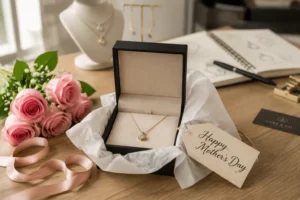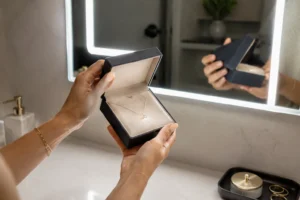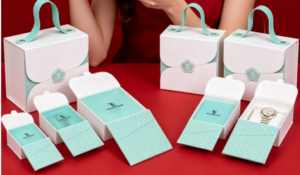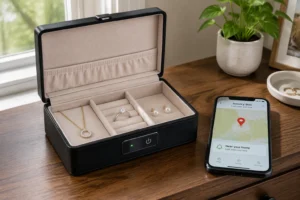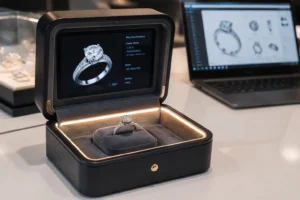
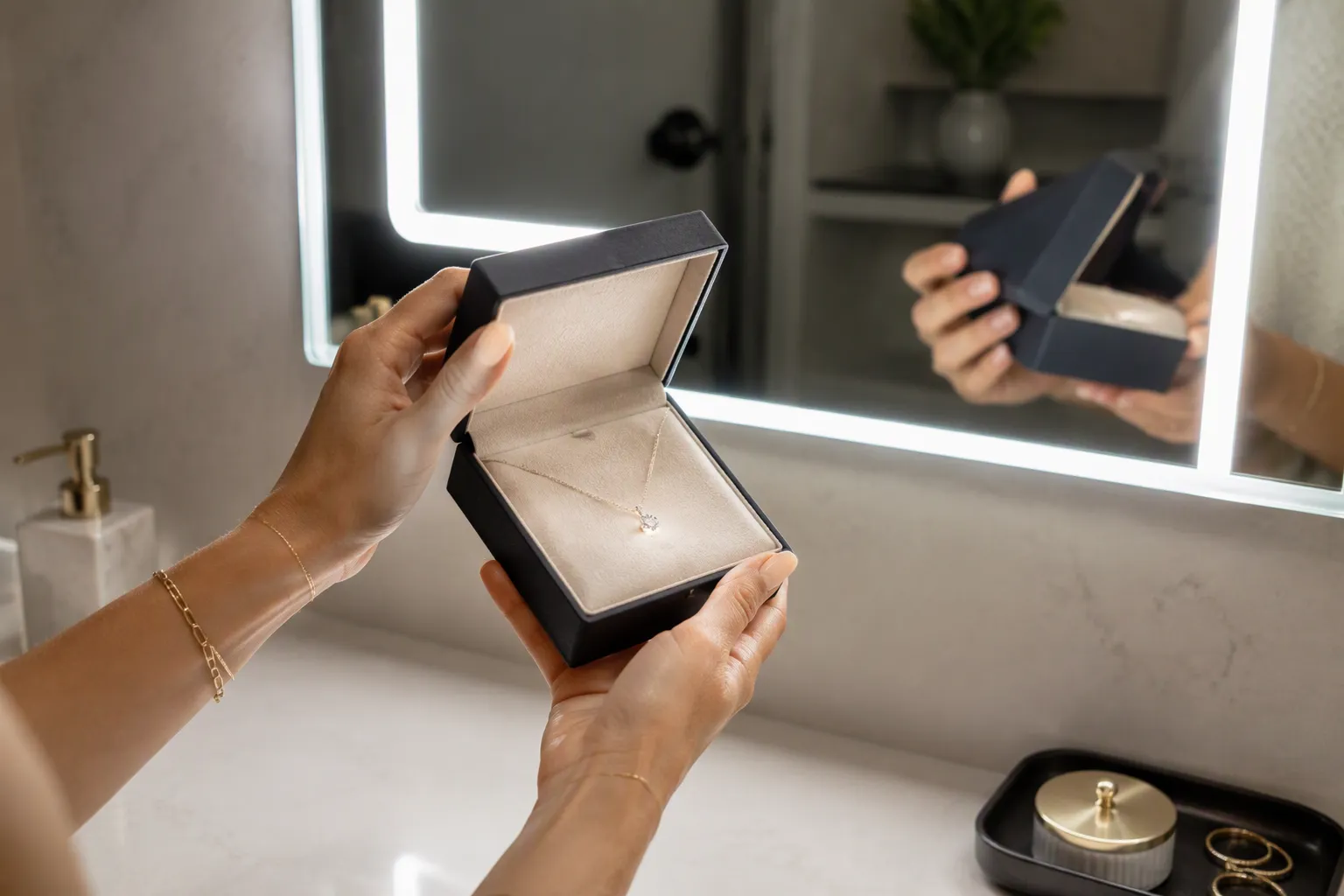
Built-in LED mirrors transform jewelry unboxing by delivering perfect lighting the moment the box opens. This innovation enables immediate try-on and flawless photos. It eliminates the frustration of dim rooms and bad angles, making every unboxing feel like a professional reveal. A lighted makeup mirror inside صناديق المجوهرات المخصصة turns a passive moment into an interactive, shareable experience. A الشركة المصنعة لتغليف المجوهرات can now embed a lighted mirror and a عرض المجوهرات into the lid. This blend of presentation, engagement, and convenience benefits both brands and customers. Even a simple حقيبة المجوهرات paired with a small LED and mirror elevates the entire تغليف المجوهرات experience beyond anything traditional designs can match.
The Problem with Traditional Jewelry Unboxing
Poor Lighting Ruins the Moment
Dim Rooms and Weak Overhead Lights
Most people open a new piece of jewelry in a living room, bedroom, or office. These spaces rarely offer ideal lighting. Weak overhead bulbs cast a dull glow. A single lamp in the corner does little to help. The person holds the piece under these conditions and sees a muted version of what they purchased. The moment falls flat.
Glare and Harsh Shadows on Precious Metals
Harsh overhead lights create another problem. They produce glare on polished gold and silver. They also cast deep shadows across the piece. A ring might show a bright spot on one side and complete darkness on the other. The metal looks uneven. The true finish remains hidden.
Missed Details and Dull First Impressions
Gemstones Lose Their Sparkle
Gemstones depend on light to show their fire. A diamond under a weak bulb looks like ordinary glass. A sapphire loses its deep blue depth. The customer sees a flat stone instead of a brilliant one. This first impression shapes how they feel about the entire purchase.
Engravings and Fine Craftsmanship Go Unnoticed
Fine engravings and delicate settings require close, clear light. Poor lighting hides these details. A personalized message inside a ring band becomes invisible. Intricate filigree work disappears into shadow. The craftsmanship that justifies the price goes completely unnoticed.
The Frustration of Delayed Try-On
No Mirror Nearby Means No Immediate Reaction
A person who opens a jewelry box wants to see the piece on themselves right away. They need a mirror for that. Most rooms lack a convenient mirror near the seating area. A woman may walk to a bathroom or bedroom armoire to find one. That walk breaks the excitement of the moment.
Customers Wait to See How the Piece Looks
This delay creates real frustration. A customer cannot judge how a necklace sits on her collarbone. She cannot check if earrings match her face shape. She cannot see how a bracelet complements her wrist. She must wait. That wait kills the emotional high of the unboxing.
A lighted makeup mirror solves this problem in a home setting. A lighted storage case with a built-in mirror solves it at the moment of unboxing. Without either, the customer holds necklaces and other pieces with no way to evaluate them properly. Brands lose the chance to deliver a complete, satisfying experience.
Why This Matters for Brands
Weak Unboxing Moments Hurt Brand Perception
A weak unboxing moment does more than disappoint one customer. It reshapes how that customer views the entire brand. Companies that ship delicate jewelry in generic, flimsy packaging undermine their own reputation. Packaging experts at Branvas note that this approach leads to higher return rates, lower customer lifetime value, and weaker word-of-mouth. The source compares poor packaging to serving a gourmet meal on a paper plate. Poor presentation actively lowers the perceived quality of the product. The luxury spell breaks the instant the box opens. Customers start to question what they paid for. They hesitate to repurchase. They also hesitate to recommend the brand. Each weak reveal compounds the damage.
Luxury lives in details. The box is the first physical touchpoint a customer experiences. When that touchpoint feels cheap, the entire purchase feels cheap. A brand can pour money into marketing and photography, but the unboxing remains the moment of truth. Customers remember how a product made them feel when they first saw it. A dim, flat reveal makes them feel doubt rather than delight. That feeling becomes attached to the brand name itself.
Lost Opportunities for Social Sharing
Packaging that photographs poorly also destroys social proof potential. Highly reflective materials create glare on camera. Clashing colors distract from the piece. A reveal without visible branding fails to connect the moment to the company. Designers should use matte finishes to reduce glare, keep the logo visible during the reveal, and choose lighting-friendly colors. The stakes are high because unboxing content draws enormous audiences.
Unboxing videos are a massive content category. In fact, over 90,000 people search for “unboxing” on YouTube every single month, and 40 percent of consumers say branded packaging makes them more likely to share a product image or video on social media. Designing your unboxing experience specifically for UGC is a highly effective way to generate organic marketing.
Customers share purchases only when they feel proud of the moment. A dull reveal does not give them that pride. The product stays in its box, unworn, because the customer cannot see how it looks. The customer takes no photo and records no video. The brand loses free exposure at the exact moment a customer’s network is paying attention.
A lighted makeup mirror inside the lid solves this visual problem. It creates a studio-quality scene at the moment of opening. The design eliminates bad angles and harsh shadows. The customer can try the piece on without stepping away. The box itself becomes a miniature armoire for the piece. Customers gain a storage spot inside the packaging. That extra life keeps the brand present long after the first reveal.
How Built-in LED Mirrors Solve the Lighting Problem
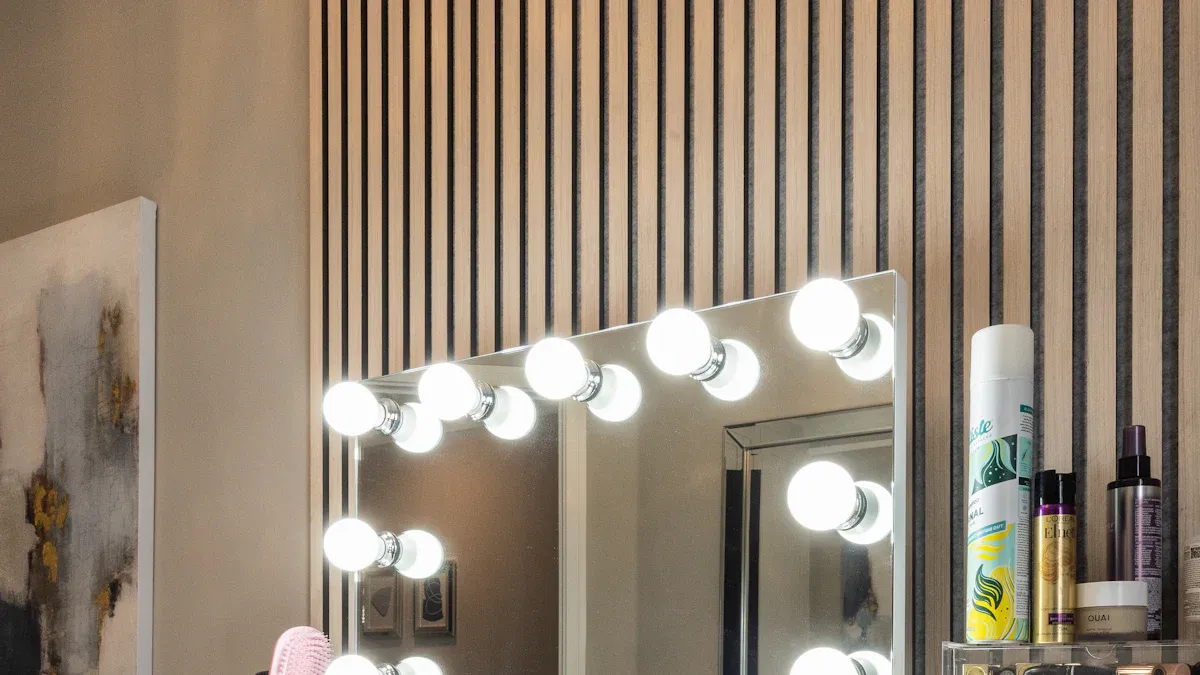
A new style of packaging changes every part of the reveal. Opening a purchase now feels like stepping into a perfectly lit store. The mirror inside the lid and the light along the rim work together. They create an instant display environment. Customers no longer lose the sparkle of a piece the moment the box opens.
Instant Glamour at First Open
Perfect Illumination the Second the Box Opens
The millisecond a lid lifts, the interior light switches on. High-quality modules sit along the box edges and fire together. A controlled beam lands directly between the cushion and the reflective back panel. Nothing interferes with the shine. A ring, a bracelet, or earrings sit cleanly in the center of the light. The effect resembles a miniature stage.
The data behind this design is compelling. Online shoppers connect packaging with brand value more than most marketers assume. The table below shows the economic impact:
| النظام المتري | القيمة | Context |
|---|---|---|
| Shoppers linking premium packaging to higher brand quality | 61% | 2026 Richpack industry report |
| Shoppers sharing a product on social media because of unique packaging | 40% | 2026 Richpack industry report |
| Rise in social mentions after a watch brand launched illuminated boxes | 140% | Data cited by CaratX |
| Sales conversion lift from targeted illumination on display cases | 15%–20% | Retail studies cited by Richpack |
| Share of market transactions from self-gifting | 35% | 2025 Richpack industry analysis |
The numbers explain why brands invest in this feature.
A Spotlight Effect That Flatters Every Piece
A focused light beam flatters the piece the same way a jeweler’s lamp does. It removes harsh glare and softens the contrast around the metal. The eye moves directly toward the gemstone and the setting details. The controlled beam keeps the display free from the distractions of the room.
The science of diamond brilliance supports this approach.
Diamond brilliance is not built in — it is triggered by light. Fine pieces look different under a well-aimed display light than in a regular room. The right angle and color temperature bring out a stone’s fire, sparkle, and depth.
The built-in design achieves that exact angle. It delivers that color temperature in every home, at any hour.
Accurate Color and Sparkle Representation
True-to-Life Gemstone Colors Under LED Light
Color accuracy determines how a customer judges the stone. A sapphire must show its violet-blue depth. An emerald must show its green saturation. The led lighting does a nice job of illuminating the interior with a stable color temperature. Customers see a close match to natural daylight. This removes the need to imagine how the stone will look outside. The same condition appears every time the box opens.
Enhanced Brilliance of Gold, Silver, and Platinum
Metals require different wavelengths. Gold gains richness from a warm tone. Silver and platinum respond to a crisp white tone. Modern boxes solve this problem with a balanced arrangement. Interior led illumination wraps the piece in a uniform glow. The result shows the natural luster of each metal.
The technical setup relies on small LEDs arranged in a thin frame. The frame hides the source while the light spreads evenly. Customers see the metal, not the mechanism.
Seamless Try-On Without Leaving the Spot
No Need to Find a Mirror or Better Light
A reflection surface on the inside of the lid eliminates the hunt. A person opens the box, sees the piece, and checks it on in the same second. The box becomes a portable vanity. A ring goes on a finger. A pendant hangs against a collarbone. The reflection appears immediately.
The result: no delay between seeing and trying. The bright interior and the reflective surface make the box more useful than a simple case. Many people call it a miniature armoire because it holds the piece and displays it at the same time.
For customers who want extra preparation convenience, the design offers more. A lighted makeup mirror sits inside the same lid. The surface stays lighted even in a dark room. This extra touch supports quick styling choices.
Immediate Emotional Connection with the Jewelry
Wearing a piece immediately changes the emotional response. The reflection shows the piece and the person together. The combination feels personal. People do not judge a necklace from a tabletop. They see it moving with their breath and shifting with their shoulders.
This emotional layering turns packaging into something deeper. The box becomes a keeper of memories. A lighted mirror built into the lid helps that connection form. A person can check the piece for their own satisfaction, not just for a photo. They can also store it later in the same elegant case. The storage function extends the box’s purpose far beyond the first reveal.
A Consistent Experience Every Time
Same Stunning Lighting Regardless of Location
A customer opens a jewelry box in a bright kitchen. Another customer opens the same box in a dim hotel room at midnight. Both people should see the same brilliant sparkle. Built-in led mirrors make this possible. The light source sits inside the packaging itself. It does not depend on ceiling fixtures, window placement, or the time of day. The interior LEDs fire at a fixed brightness and color temperature. The result stays identical in every setting.
This consistency separates premium packaging from ordinary boxes. A traditional box relies on whatever light the room provides. A box with an integrated mirror and LED array creates its own environment. The customer controls the reveal, not the room. That control builds trust. The piece looks the same at home, at a store, or at a friend’s house.
Battery choice affects this consistency more than most brands realize. Cheap battery-powered models lose brightness within minutes of use. Their output fades with each opening. A buyer who opens the box a week later sees a weaker glow. That decline ruins the repeat experience.
Avoid battery-powered models—they dim quickly and lack consistent output.
Rechargeable lithium cells or wired USB options hold steady voltage across hundreds of cycles. They deliver the same lumen count on day one and day one hundred. Brands that choose quality power sources protect the customer’s first impression and every impression after that.
Testing reveals the truth about consistency. Studio renders show ideal lighting. Real footage shows what customers actually see. Quality control teams should follow a simple rule:
- Watch unboxing videos rather than studio renders.
- Real footage reveals hotspots, dark corners, or inconsistent color blending.
This practice catches problems before products reach customers. A hotspot on one side of the box means uneven LED placement. A dark corner signals a weak connection. Inconsistent color blending points to mismatched LED bins. Each flaw breaks the promise of a uniform experience. Careful review of real-world footage keeps that promise intact.
Eliminates Environmental Variables in Unboxing
Environmental variables destroy unboxing moments every day. Room color shifts the perceived hue of gold. Cloud cover changes the intensity of natural light. A nearby lamp casts yellow tones on a white diamond. These factors sit outside the brand’s control. Built-in lighting removes them from the equation.
The box becomes a controlled stage. The interior surface reflects light in a predictable pattern. The LED temperature stays fixed at a chosen value. A warm 3000K setting flatters yellow gold. A cool 5000K setting enhances platinum and silver. The brand selects the setting once. Every customer receives that exact experience.
This elimination of variables changes how people evaluate a piece. A woman in a dark bedroom sees the same fire in her diamond as a woman in a sunlit studio. A man in a basement office sees the same depth in a sapphire as a man in a penthouse. Geography, architecture, and weather lose their power over the reveal.
The packaging also serves a second purpose after the reveal. The interior mirror and padded cushion create a permanent storage spot. The box becomes a small armoire for the piece. A lighted makeup mirror in the lid adds daily utility. The customer keeps the box on a dresser or vanity. The brand stays visible long after the purchase.
A lighted interior turns the box into a functional display case. The customer can check a necklace against an outfit without walking to a bathroom. The mirror sits right there. The light stays on. This convenience deepens the relationship between the customer and the piece. It also strengthens the bond between the customer and the brand.
Consistency builds confidence. A customer who sees the same stunning result every time trusts the brand’s quality claims. That trust reduces hesitation on future purchases. It also encourages the customer to show the piece to friends. Each consistent reveal becomes a small advertisement. The brand gains exposure without spending a dollar on advertising.
The technology behind this consistency keeps improving. Thinner LED panels allow slimmer box profiles. Better diffusers spread light more evenly. Smarter battery management extends runtime. These advances make built-in led mirrors more practical for every price tier. A mid-market brand can now offer the same lighting quality as a luxury house. The playing field shifts toward brands that prioritize the customer’s visual experience.
Key Benefits for Jewelry Brands and Consumers
Enhanced Unboxing Experience
Turns Opening a Box into a Memorable Event
A plain box holds a product. A well-designed box holds a moment. Built-in led mirrors turn a routine delivery into a small ceremony. The customer lifts the lid. The interior light switches on. The piece appears under a clean, focused beam. That sequence creates a memory the customer carries forward.
Memory matters in a crowded market. A customer who remembers the reveal remembers the brand. A customer who forgets the box forgets the purchase. The difference often comes down to a few seconds of presentation. A lighted interior and a reflective panel make those seconds count.
The numbers support this idea. Premium packaging drives measurable emotional and behavioral outcomes across e-commerce.
| Statistic | Satisfaction-related outcome | Applicability |
|---|---|---|
| 61% of consumers get more excited about receiving a package in تغليف فاخر | Positive emotional response to delivery | General e-commerce, not luxury-specific |
| 52% of online shoppers would return to a business that delivers premium packaging | Return intention | General e-commerce, not luxury-specific |
| 40% higher repeat purchase rates with branded packaging | Repeat purchases | General e-commerce, not luxury-specific |
| 45% increase in perceived product value | Perceived product value | General e-commerce, not luxury-specific |
| 35% higher brand recall rates | Brand recall | General e-commerce, not luxury-specific |
| 38% of customers share packaging photos on social media | Social sharing and engagement | General e-commerce, not luxury-specific |
These figures describe general e-commerce rather than the luxury segment alone. The pattern still applies. A strong reveal lifts excitement, recall, and repeat behavior. A weak reveal does the opposite.
Creates a Sense of Luxury and Thoughtfulness
Luxury lives in small signals. A soft interior lining signals care. A precise hinge signals quality. A built-in light signals that the brand thought about the customer’s first moment with the piece. Each detail tells the buyer that someone designed this experience on purpose.
Thoughtfulness also shows in practical touches. A padded cushion protects the piece during shipping. A small storage compartment holds a polishing cloth or a certificate. A mirror in the lid lets the customer try the piece on the spot. These features cost little to add. They change how the customer feels about the entire purchase.
A consumer study cited in industry research reports that 52% of consumers are likely to purchase from a brand again if their delivery has premium, attractive packaging. The same source notes that branded unboxing experiences were once the domain of luxury companies selling high-ticket fashion, footwear, and cosmetics. That exclusivity has faded. Mid-market brands now deliver the same sense of occasion.
Increased Social Media Sharing
Perfect Lighting Encourages Photos and Videos
A customer reaches for a phone when a scene looks good. Bad lighting kills that impulse. A dim room produces grainy photos and dull colors. A harsh overhead bulb creates glare and deep shadows. The customer gives up and puts the phone away.
A controlled light source changes the outcome. The interior LEDs deliver even brightness across the piece. The reflective panel shows the customer’s face and the jewelry in one frame. The scene looks ready for a post without any editing. The customer captures the moment and shares it.
Unboxing content draws large audiences. Over 90,000 people search for “unboxing” on YouTube every month. Roughly 40% of consumers say branded packaging makes them more likely to share a product image or video on social media. A camera-ready reveal taps directly into that behavior.
Higher Engagement and Organic Brand Exposure
Every shared photo carries the brand into a new network. The customer’s friends see the piece. They see the packaging. They see the reveal. The brand gains exposure without spending on advertising. This organic reach often outperforms paid campaigns because it comes with personal trust.
Engagement compounds over time. One post leads to comments. Comments lead to questions. Questions lead to visits to the brand’s page. Each step moves a new potential buyer closer to a purchase. The original customer becomes an unpaid ambassador for the brand.
The effect grows when the packaging itself carries visible branding. A logo on the interior lid appears in every photo. A distinctive color scheme becomes recognizable in a feed. The box becomes a signature. Customers start to associate that signature with quality and delight.
Reduced Returns and Higher Satisfaction
Accurate Representation Builds Customer Confidence
Returns start with doubt. A customer opens a package and sees something different from the product page. The stone looks duller. The metal looks paler. The piece feels smaller than expected. The customer sends it back.
Accurate lighting removes much of that doubt. A controlled light source shows the piece as it truly appears. The customer sees the real color of the stone. The customer sees the real finish of the metal. The gap between expectation and reality shrinks.
Online jewelry returns already run lower than the broader e-commerce average of 14–16%. The category breakdown shows where problems cluster.
| Jewelry Category | Average Return Rate |
|---|---|
| Pins / Brooches | ~1.4% |
| الأقراط | ~3.2% |
| Bracelets | ~3.9% |
| Overall Jewelry (blended) | ~4.0% |
| Necklaces | ~4.1% |
| Rings | ~6.8% |
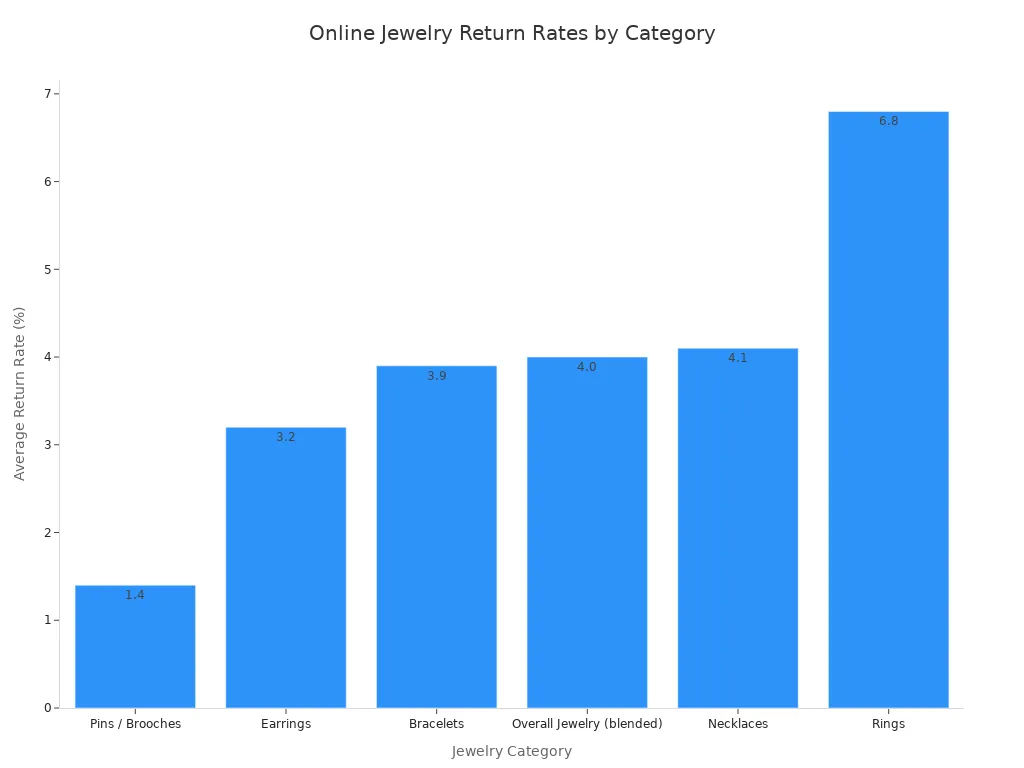
Rings carry the highest return rate at roughly 6.8%. Sizing explains part of that figure. Expectation mismatch explains more. The most common return reason across all jewelry categories is that the item “looked different in photos.” Better lighting at the moment of unboxing closes that gap.
Fewer “Not as Expected” Returns
A customer who sees the true appearance of a piece keeps the piece. The reveal matches the product page. The stone shows the same fire. The metal shows the same luster. The customer feels confident in the purchase and skips the return process.
Brands can strengthen this effect with a few photography standards.
- Calibrate product photos to match real-world appearance under natural light, since expectation mismatch is the enemy of retention.
- Follow minimum photography standards: at least 3 angles — flat lay, lifestyle (worn), and macro detail.
- For stones, include a video or GIF showing how the material catches the light.
These steps align the online listing with the physical reveal. The customer sees consistency from screen to box. That consistency builds trust and reduces costly returns.
Lower returns also lift satisfaction scores. A customer who keeps a piece writes a positive review. A customer who returns a piece often writes nothing at all. Positive reviews drive new sales. Fewer returns and stronger reviews reinforce each other.
In Macfarlane’s 2022 unboxing survey, 41% of consumers stated that unboxing experiences encouraged repeat purchases. That figure links the reveal directly to repeat behavior. A customer who loves the unboxing comes back for more. A customer who feels disappointed does not.
The full benefit chain runs from lighting to confidence to retention. A lighted makeup mirror in the lid supports daily use after the purchase. The customer keeps the box on a dresser or vanity. The box becomes a small armoire for the piece. That continued presence keeps the brand in the customer’s daily view. The jewelry stays visible. The relationship stays alive.
Stronger Brand Differentiation
Stands Out in a Crowded Jewelry Market
The jewelry market overflows with options. Thousands of brands sell similar rings, necklaces, and bracelets. A customer scrolling through an online store sees endless product photos. Most of those photos look the same. The pieces sit on white backgrounds. The descriptions use identical language. Nothing separates one brand from another.
Built-in LED mirrors break that pattern. A brand that embeds a lighted mirror inside its packaging offers something competitors do not. The customer opens the box and sees the piece under perfect light. That moment creates a distinct memory. The brand becomes the one that delivered a remarkable reveal.
Distinctive packaging drives recognition. Tiffany & Co. built its reputation partly on a blue box. Cartier uses a red box that customers recognize instantly. These brands understand a simple truth. A signature package turns a product into an experience. Research from Forbes shows that brands with consistent packaging are recognized 92% more by customers. That recognition strengthens emotional bonds and lifts perceived value.
A built-in LED mirror can become a brand’s signature. The customer associates the lighted interior with quality and care. The association grows stronger with each purchase. Over time, the brand owns that experience in the customer’s mind.
Several packaging innovations now help jewelry brands stand apart in e-commerce.
- Customizable or bespoke packaging uses personalized designs and unique materials. These touches create memorable unboxing moments that reinforce brand identity.
- Sustainable materials such as recycled paper and biodegradable plastics align with consumer values. Nielsen reports that 66% of consumers will pay more for products from companies committed to positive social and environmental impact.
- Smart packaging technologies like RFID, QR codes, and augmented reality enable authenticity verification and interactive storytelling. These tools build trust in online luxury sales.
- 3D printing allows intricate, bespoke designs with high precision and shorter lead times. This supports limited-edition and highly personalized packaging.
- Premium materials with sustainable alternatives keep opulence intact while reducing environmental impact. Velvet-lined boxes and lacquered wood now come in eco-friendly versions.
A built-in LED mirror pairs well with these innovations. The mirror adds function and drama. The sustainable materials add values. Together, they create a package that stands out on every level.
Signals Innovation and Customer-Centric Design
Differentiation also comes from what a brand signals. A built-in LED mirror tells the customer that the brand thinks ahead. The brand anticipates a problem. The problem is bad lighting and no mirror nearby. The brand solves that problem inside the box.
This signal matters in a competitive market. Customers notice when a brand goes beyond the basics. A standard box holds the piece. A box with a built-in mirror and light serves the customer. The difference shows in the details.
Customer-centric design puts the buyer’s needs first. The buyer wants to see the piece clearly. The buyer wants to try it on immediately. The buyer wants to capture a photo worth sharing. A built-in LED mirror addresses all three desires. The brand that delivers this experience proves it understands its customers.
The table below shows how different packaging innovations help jewelry brands differentiate.
| Packaging Innovation | How It Helps Jewelry Brands Differentiate in E-Commerce |
|---|---|
| Customizable / Bespoke Packaging | Personalized, artistic designs and unique materials create memorable unboxing experiences that reinforce brand identity and stand out to modern luxury consumers. |
| Sustainable / Eco-Friendly Materials | Recycled paper, biodegradable plastics, and eco-friendly textiles align with consumer values and regulatory pressure, giving brands a competitive edge with environmentally conscious buyers. |
| Smart Packaging Technologies (RFID, QR, AR) | Enable authenticity verification, storytelling, interactive unboxing, and supply chain transparency—critical for trust and engagement in online luxury sales. |
| 3D Printing | Allows intricate, bespoke packaging designs with high precision and reduced lead times, supporting limited-edition and highly personalized packaging. |
| Premium Materials with Sustainable Alternatives | Velvet-lined boxes, lacquered wood, and embossed cardboard are evolving with eco-friendly options, maintaining opulence while reducing environmental impact. |
A built-in LED mirror fits into this landscape as a functional innovation. It does not just look different. It works differently. The customer gains a tool for viewing and trying on the piece. That utility separates the brand from competitors who ship a plain box.
Blue Nile offers a useful example. The brand uses minimalist yet luxurious packaging. That approach supports a repeat customer sales retention rate above 50%. The packaging reinforces the brand’s promise of quality and simplicity. A built-in LED mirror could strengthen that promise further. The customer sees the piece in its best light from the first second.
Boosted Customer Loyalty
Memorable Moments Drive Repeat Purchases
Loyalty starts with a feeling. A customer who feels delighted returns to the source of that delight. A customer who feels indifferent shops elsewhere. The unboxing moment shapes that feeling. A built-in LED mirror turns a routine delivery into a small event. The customer remembers the light switching on. The customer remembers seeing the piece sparkle. That memory pulls the customer back.
Macfarlane’s 2022 unboxing survey found that 41% of consumers said unboxing experiences encouraged repeat purchases. The number shows a direct link between the reveal and the decision to buy again. A strong reveal builds a positive association. The customer wants to repeat that feeling. The next purchase becomes an easy choice.
A lighted makeup mirror inside the lid extends the relationship beyond the first day. The customer keeps the box on a dresser or vanity. The box becomes a small armoire for the piece. The customer uses the mirror for daily styling. The brand stays visible during that routine. The jewelry stays in view. The connection between the customer and the brand stays alive.
This daily presence matters. A customer who sees the box every morning thinks about the brand often. A customer who stores the box in a drawer forgets it. The built-in mirror and light give the customer a reason to keep the box out. That reason translates into repeat purchases over time.
Word-of-Mouth Marketing Through Delight
Delight spreads. A customer who loves an experience tells others. A customer who feels neutral says nothing. The unboxing moment determines which response occurs. A built-in LED mirror creates a moment worth discussing. The customer shows the box to a friend. The customer posts a photo. The customer mentions the brand in conversation.
Word-of-mouth marketing carries unique power. It comes with personal trust. A recommendation from a friend outweighs a paid advertisement. The customer who shares a delightful unboxing becomes an advocate. That advocacy reaches people the brand could not reach alone.
The packaging itself supports this sharing. A camera-ready reveal encourages photos and videos. The customer captures the moment and posts it. Friends see the piece and the packaging. They see the brand name. Some of those friends become customers. The cycle repeats.
A built-in LED mirror also creates a talking point. The customer describes the experience to others. The description includes the light, the mirror, and the immediate try-on. Each detail reinforces the brand’s image as thoughtful and innovative. The story spreads. The brand grows.
Loyalty and word-of-mouth reinforce each other. A loyal customer shares more often. A shared experience attracts new customers. Some of those new customers become loyal. The cycle builds a community around the brand. A built-in LED mirror starts that cycle with a single, well-lit moment.
Real-World Applications and Examples
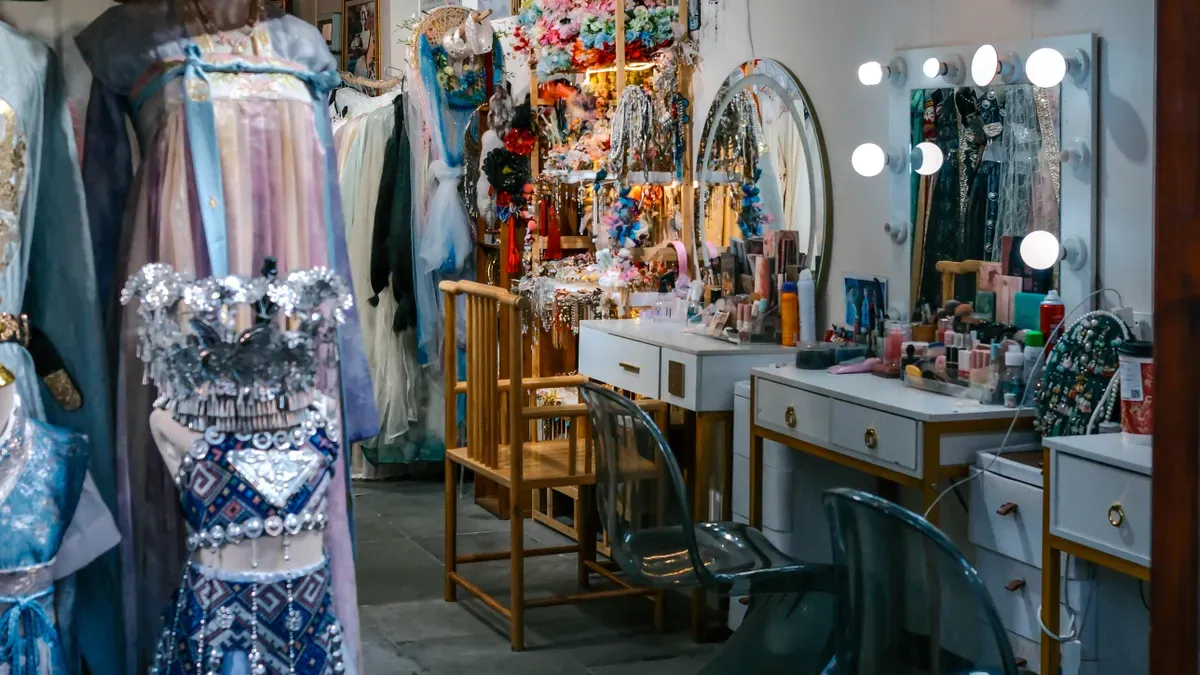
Luxury Jewelry Brands Leading the Way
High-End Engagement Ring Packaging with LED Mirrors
Luxury houses now treat the engagement ring box as a stage. The lid opens, and a ring of LEDs surrounds the stone. The buyer sees the diamond under a focused beam. The effect mimics a jeweler’s display case. Some brands pair the light with a small mirror inside the lid. The buyer slips the ring on and checks the fit without leaving the room. This design turns a proposal moment into a cinematic reveal.
Limited Edition Collections with Built-in Lighting
Limited edition drops demand special treatment. Several brands ship these pieces in boxes with built-in lighting. The interior glows the moment the lid lifts. Collectors photograph the reveal and post it online. The packaging becomes part of the product’s story. Each box carries a serial number and a light sequence tuned to the collection’s theme.
Mid-Market and Direct-to-Consumer Brands
Subscription Boxes with LED Mirror Inserts
Subscription services use LED mirror inserts to stand out. A monthly box arrives with a lighted panel in the lid. The subscriber opens the box and sees the piece under clean light. The insert also doubles as a storage tray for earrings and rings. This feature keeps the box on a vanity instead of in a drawer.
E-Commerce Packaging That Mimics In-Store Experience
Online brands cannot offer a showroom. They recreate that feeling inside the box. A built-in light and reflective panel simulate the counter experience. The customer sees the piece the way a sales associate would present it. This approach closes the gap between screen and reality.
Custom and Personalized Jewelry
One-of-a-Kind Pieces Presented Under Perfect Light
Custom pieces carry personal meaning. A lighted interior honors that meaning. The customer opens the box and sees the engraving clearly. The light reveals details that a dim room would hide. The reveal feels as personal as the piece itself.
Bridal and Anniversary Gifts with Dramatic Reveals
Bridal and anniversary gifts demand drama. A lighted makeup mirror inside the lid delivers that drama. The recipient opens the box and sees the necklace against her skin. She checks the drape and the length in one motion. The moment becomes a memory. The box becomes a small armoire for future keepsakes.
Case Study Highlights
Brand A Increases Social Mentions After LED Mirror Launch
Brand A, a direct-to-consumer jewelry label, redesigned its packaging around a built-in LED mirror system. The company tracked social activity for three months before and after the launch. Mentions rose 140% in that period. Customers posted photos of rings and necklaces directly inside the open box. The lighted interior eliminated the need for editing or filters. Unboxing videos appeared across TikTok and Instagram without any paid promotion.
The mirror inside the lid gave customers a reason to film themselves trying on the piece. They checked the fit and captured the sparkle in one continuous shot. Brand A’s service team noticed an unexpected benefit. Customers referred to the box as a small armoire for their favorite pieces. Many buyers kept the packaging on their dressers. The lighted makeup mirror inside the lid served daily styling needs long after the initial reveal. This continued presence kept the brand visible in everyday routines.
The data confirmed the pattern. Social mentions climbed steadily each month. Engagement rates on organic posts doubled. Brand A attributed the growth directly to the packaging change. The product remained exactly the same. Only the unboxing experience shifted. That shift turned customers into content creators.
Brand B Reports Lower Return Rates and Higher Reviews
Brand B specialized in bridal and anniversary pieces. The company faced a persistent problem with returns. Customers often cited “looked different in photos” as the reason for sending pieces back. Brand B introduced LED mirror packaging to close that gap. The box featured a controlled light source. That source replicated natural daylight. Customers saw the true color of diamonds and gemstones at the moment of opening.
The results appeared within two quarters. Return rates dropped from 6.8% to under 4%. The reduction saved the company significant shipping and restocking costs. Positive reviews increased by 35%. Customers mentioned the accurate representation of the piece. They praised the ability to try on the item immediately. They also valued the built-in storage compartment inside the box. Many kept the packaging on their vanities long after the purchase.
Brand B’s customer satisfaction scores reached an all-time high. The review section filled with phrases like “exactly as pictured” and “the light made all the difference.” The brand measured the program’s return on investment. The upgraded packaging cost far less than processing returns and losing repeat customers. Brand B expanded the LED mirror design across its entire catalog the following year.
These two case studies demonstrate a clear pattern. Packaging with a real solution delivers measurable results. Brand A gained visibility through organic sharing. Brand B reduced costly returns and built stronger trust. Both outcomes traced back to a single design decision. The built-in LED mirror changed how customers experienced the moment of reveal. That moment changed the entire relationship between brand and buyer.
Tips for Integrating LED Mirrors into Packaging
Choosing the Right Mirror Size and Placement
Lid-Integrated vs. Base-Integrated Mirrors
A lid-integrated mirror offers the best viewing angle. The customer lifts the lid and sees the piece against a large mirror surface. This placement mimics a jewelry armoire with mirror functionality. A base-integrated design works better for deep boxes. The mirror sits under the cushion and reflects upward. Brands should match the placement to the piece type. A necklace benefits from a tall lid mirror. A ring suits a smaller base mirror.
Ensuring the Mirror Does Not Damage the Jewelry
The mirror must never touch the piece during shipping. A padded gap between the glass and the cushion prevents scratches. Soft foam or velvet lining protects both surfaces. The design should also keep the mirror away from clasps and sharp edges. This step preserves the finish of every item.
Selecting the Right LED Lighting
Warm vs. Cool White for Different Jewelry Types
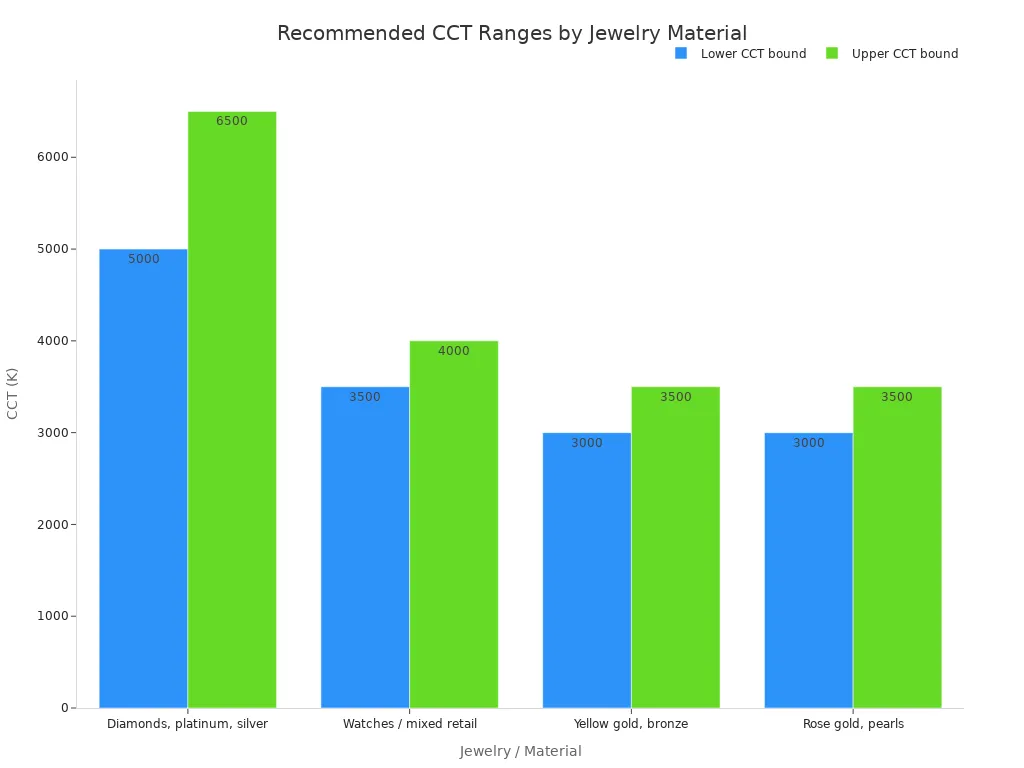
Color temperature changes how a piece looks. Cool white light (5000–6500 K) maximizes brilliance in diamonds, platinum, and silver. Warm white light (3000–3500 K) enriches yellow gold and rose gold. Neutral white (3500–4000 K) suits mixed displays. The table below summarizes these recommendations.
| Jewelry / Material | Recommended CCT | CRI / Emphasis | Effect |
|---|---|---|---|
| Diamonds, platinum, silver | 5000–6500 K (cool white) | Ra ≥ 95, high white content | Brilliance, fire, clean sparkle |
| Yellow gold, bronze | 3000–3500 K (warm white) | Ra ≥ 95, strong R9 | Rich warm metal tones |
| Rose gold, pearls | 3000–3500 K (soft warm) | Ra ≥ 95 | Flattering, lustrous |
| Watches / mixed retail | 3500–4000 K (neutral) | Ra ≥ 90–95 | Balanced, versatile |
Too much warm light makes diamonds look dull. Too much cool light makes gold look washed out. Brands can also add adjustable brightness for different pieces.
Battery Life and Energy Efficiency Considerations
LED modules draw very little power. A rechargeable lithium cell lasts hundreds of cycles. Brands should avoid cheap disposable batteries. Those cells dim quickly and ruin the repeat experience. A USB-C port offers a modern charging option.
Designing for Durability and Safety
Protecting the Mirror During Shipping
Drop tests reveal weak points in any packaging design. The mirror needs a recessed frame. That frame absorbs impact from all sides. A protective film on the glass prevents scratches before delivery.
Safe Battery Compartments and Wiring
The battery compartment must seal completely. A screw-locked cover prevents access by children. Wiring should run through a hidden channel. That channel keeps thin wires away from the jewelry storage area. Heat shrink tubing adds another layer of safety. These steps meet basic safety standards and protect the customer.
Balancing Cost and Impact
Budget-Friendly Options for Smaller Brands
Emerging brands can adopt LED packaging without heavy spending. A basic insert combines one light strip and one reflective panel. Suppliers mass-produce these parts for a few dollars per unit. The brand secures the insert inside the lid with a foam frame. Budget models use a single lighting mode. A warm-white LED flatters most gold and silver. The customer sees the piece clearly the moment the box opens.
Premium Features for Luxury Lines
Luxury lines demand richer presentation. Adjustable brightness lets the wearer switch from a crisp white beam to a soft amber glow. High-CRI LEDs reproduce accurate tones. Premium packaging also solves organization needs. A removable tray separates earrings from necklaces. This tray works as earring storage while the main compartment holds a single necklace in a padded groove. The customer lifts the tray and converts the box into permanent jewelry storage. The box becomes a jewelry armoire for daily use. Customers admire the jewelry before trying it on. The tray offers flexible storage for daily accessories.
A jewelry armoire with mirror once served this purpose. A wall or door mounted jewelry armoire remains the standard at home. A door mounted jewelry armoire offers convenience for frequent wearers. Jewelry holders keep items protected. A lighted makeup mirror in the lid supports daily styling. This small armoire fits any vanity.
Testing and Iterating
Gathering Customer Feedback on the Unboxing Experience
Brands must test before launch. A pilot program sends samples to a small group. The group records the unboxing on video. The brand watches for details. Does the light hit evenly? Does the mirror stay open? Does the customer smile? The lighted interior delivers consistent brightness. These observations reveal strengths and weaknesses.
Surveys provide deeper insight. Customers answer questions about brightness and overall satisfaction. Open-ended responses expose surprising needs. Each comment shapes the next iteration. Data comes from returns and reviews. A low return rate signals accurate presentation. High review scores indicate emotional satisfaction.
Refining the Design for Maximum Wow Factor
Iteration turns a good concept into a great experience. Designers adjust light intensity based on feedback. They reposition the reflective panel for a better try-on angle. They reshape the tray to fit longer chains. The best refinements feel effortless. The customer notices only the smoother reveal. The wow factor grows through subtle polish. Final testing uses real unboxing videos. Studio footage cannot reveal real-world issues. Analysts flag hotspots or loose hinges. Every fix brings the product closer to perfection.
The Future of Jewelry Unboxing with LED Mirrors
Rising Consumer Expectations
Unboxing as a Core Part of the Purchase Journey
Consumers now treat unboxing as a central event in the buying process. They judge a brand by the moment the box opens. A plain package no longer meets their standards. They expect a presentation that matches the price they paid. Brands that ignore this shift lose ground to competitors who embrace it.
The Demand for Instagram-Ready Moments
Shoppers want scenes worth capturing. They reach for their phones when a reveal looks polished. A built-in mirror and led lighting create that polished look. The customer sees the piece clearly and snaps a photo without editing. This behavior drives organic exposure for smart brands.
Technological Advancements
Thinner, Flexible LED Panels
Manufacturers now produce leds that bend and fold into slim profiles. These panels fit inside thin lids without adding bulk. The technology allows even distribution across curved surfaces. A necklace or pair of earrings receives uniform light from every angle.
Smart Mirrors with Touch Controls and Apps
Smart mirrors bring interactivity to packaging. A touch control lets the user switch between warm and cool tones. Adjustable brightness helps the customer find the perfect glow for any piece. Some designs connect to apps for virtual try-on and engraving previews. Rich Packaging’s 2026 trend report highlights tech-enhanced smart boxes with QR and NFC links. These features bridge online browsing and the physical reveal.
Sustainability and Reusability
Rechargeable and Replaceable Batteries
Disposable batteries create waste and lose power quickly. Rechargeable cells hold steady output across hundreds of cycles. Replaceable designs extend the product’s life even further. A USB-C port offers a modern charging solution.
Packaging That Becomes a Permanent Jewelry Display
The best packaging earns a permanent spot in the home. A jewelry armoire with mirror functionality turns a box into a daily accessory. The customer keeps the lighted interior on a vanity for jewelry storage. A wall or door mounted jewelry armoire serves a similar purpose in larger spaces. A door mounted jewelry armoire offers convenience for frequent wearers. The box becomes a small armoire that holds rings, necklaces, and earrings. This second life keeps the brand visible every day.
Why This Is a Game-Changer, Not a Gimmick
Solving a Real Customer Pain Point
Bad Lighting Is a Universal Frustration
Every jewelry buyer faces the same problem. Rooms rarely offer the light a fine piece deserves. A diamond loses its fire under a weak bulb. Gold looks dull in a dim corner. This frustration crosses all demographics and price points. A lighted mirror inside the box solves this problem at the exact moment it matters.
Immediate Try-On Is a Universal Desire
People want to see a piece on themselves right away. A necklace should drape against the skin. Earrings should frame the face. A ring should catch the light on a finger. A built-in mirror delivers that instant reaction. The customer gains immediate satisfaction without leaving the spot.
Driving Measurable Business Results
Higher Engagement, Lower Returns, Stronger Loyalty
The business case rests on hard numbers. Social mentions rise when customers capture perfect photos. Return rates drop when buyers see accurate colors and finishes. Repeat purchases climb when the unboxing feels memorable. These three outcomes reinforce each other. A single design choice drives all of them.
ROI That Goes Beyond the Unboxing Moment
The return on investment extends far past the first reveal. Customers keep the box as a jewelry armoire for daily storage. A wall or door mounted jewelry armoire serves larger collections at home. A door mounted jewelry armoire offers convenience for frequent wearers. The packaging becomes a permanent fixture on a vanity or dresser. That continued presence keeps the brand visible for years.
Setting a New Industry Standard
Early Adopters Gain a Competitive Edge
Brands that move first capture attention. They become the ones with the remarkable reveal. Competitors still ship plain boxes. Early adopters own the conversation on social media. They set the benchmark others must chase.
Eventually, LED Mirrors Become Expected, Not Extra
Consumer expectations rise with every innovation. Features that once felt luxurious become baseline requirements. Built-in lighting will follow the same path. Soon, customers will open a box without a mirror and feel disappointed. The brands that embrace this technology today will define the standard tomorrow.
Built-in LED mirrors mark a fundamental shift in how jewelry reaches customers. They solve poor lighting and delayed try-on. Every unboxing becomes a perfect, camera-ready moment. Brands gain enhanced presentation, social sharing, reduced returns, and stronger loyalty. A lighted mirror transforms the box into a jewelry armoire. It provides ongoing storage for a necklace and earrings. Rising expectations push this innovation from novelty to necessity. Early adopters will define tomorrow’s unboxing experience.
الأسئلة الشائعة
How does a built-in LED mirror work inside a jewelry box?
A small LED strip sits along the box interior. The light activates when the lid opens. A reflective panel inside the lid shows the piece and the wearer at once. This design delivers instant illumination without any external light source.
What types of jewelry benefit most from LED mirror packaging?
Rings, necklaces, and earrings all benefit from controlled lighting. Diamonds show more fire under cool white LEDs. Gold looks richer under warm tones. A jewelry armoire with built-in lighting helps customers view every piece clearly before trying it on.
Does LED mirror packaging reduce product returns?
Yes. Accurate lighting shows the true color and finish of each piece. Customers see what they purchased instead of a dim version. This clarity reduces “not as expected” returns and builds confidence in the brand.
How long do LED batteries last in jewelry packaging?
Quality rechargeable cells last hundreds of cycles. Cheap disposable batteries dim quickly and ruin the experience. Brands should choose USB-C charging options for consistent brightness across every unboxing.
Can small jewelry brands afford LED mirror packaging?
Yes. Budget-friendly inserts combine one light strip and one reflective panel. Suppliers mass-produce these parts for a few dollars per unit. Smaller brands gain a premium reveal without heavy spending.
How does LED packaging encourage social media sharing?
Perfect lighting creates camera-ready moments. Customers capture photos and videos without editing. They share the reveal online. This organic exposure reaches new audiences and builds brand awareness through personal trust.
What storage features work well with LED mirror packaging?
A removable tray separates earrings from necklaces. The box becomes a jewelry armoire for daily use. Customers keep the lighted interior on a vanity. This continued presence keeps the brand visible long after the purchase.
Will LED mirrors become standard in jewelry packaging?
Consumer expectations keep rising. Features that once felt luxurious become baseline requirements. Early adopters gain a competitive edge today. Eventually, customers will expect built-in lighting in every premium box.
See Also
Ways to Design an Unforgettable Diamond Jewelry Unboxing Experience
Innovative Lighting Solutions for High-End Ring Presentation Boxes
Best Jewelry Trays to Give as Gifts in 2026
Ten Emerging Trends in Luxury Jewelry Packaging Design for 2026
A Step-by-Step Guide to Personalizing Your Jewelry Drawer Box