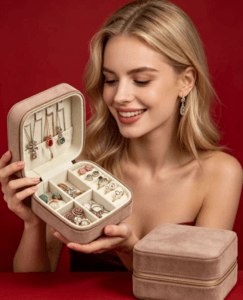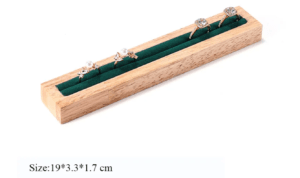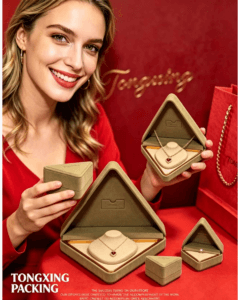
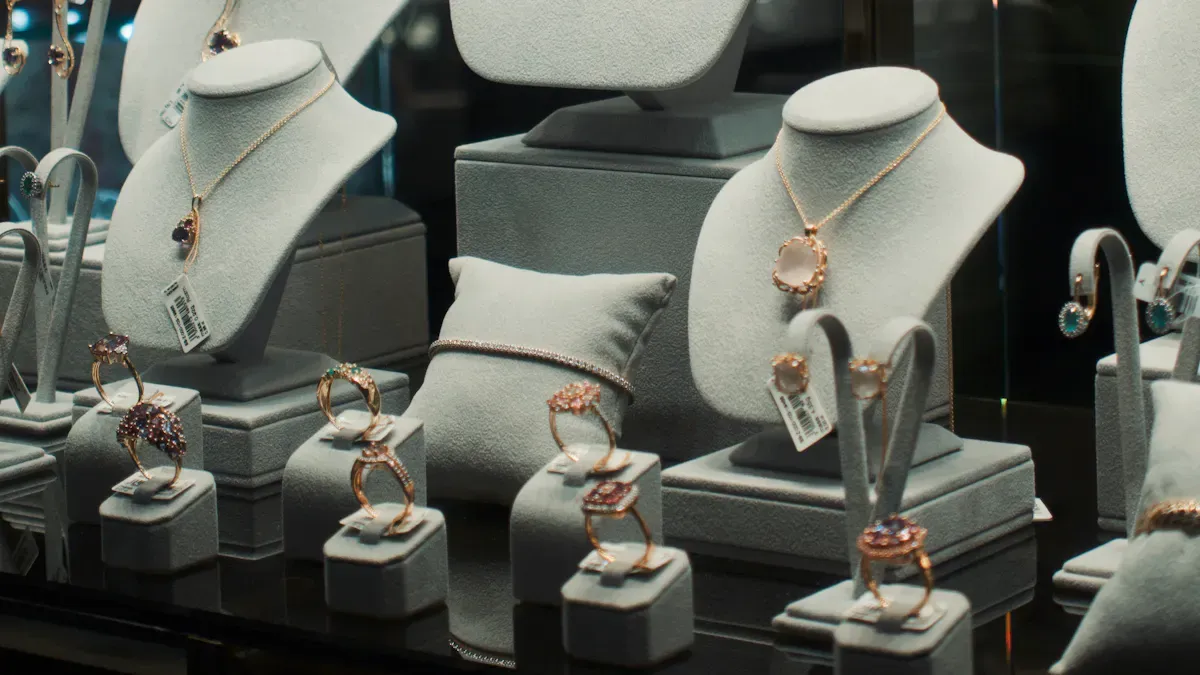
Window displays create immediate visual impact, drawing attention and increasing daily foot traffic for jewelry stores by up to 23%. Customers linger longer in shops with a well-designed Jewelry Display, especially when custom jewelry boxes and elegant Jewelry Pouch options enhance the presentation. Studies show that over 80% of significant jewelry purchases begin with a strong first impression, both online and in-store. Strategic investment in jewelry packaging from a reputable jewelry packaging manufacturer produces measurable results:
| Metric | Before Display Refresh | After Strategic Display | Average Improvement |
|---|---|---|---|
| Daily Foot Traffic | 45 visitors | 58 visitors | +29% |
| Conversion Rate | 12% | 18% | +50% |
| Average Ticket Value | $67 | $78 | +16% |
Exceptional window displays and thoughtful jewelry packaging encourage more visits and higher sales, making them a smart strategy for any retailer.
The Power of Window Displays in Attracting Foot Traffic
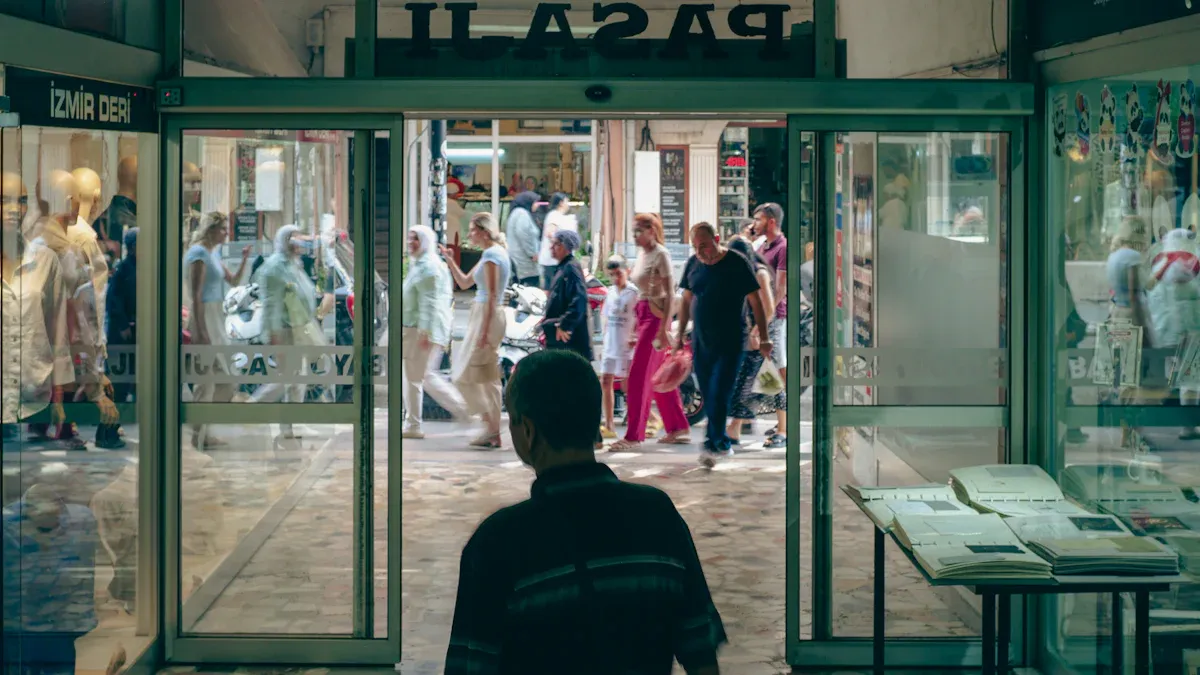
Immediate Visual Impact of Jewelry Displays
Grabbing Attention in Seconds
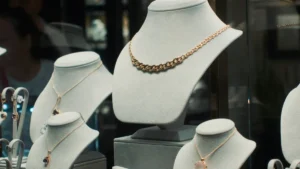
Jewelry stores operate in environments where every second counts. Shoppers often walk past storefronts quickly, so an eye-catching display must capture their attention instantly. Over 60% of purchase decisions depend on how products are showcased. Jewelry displays that feature a high-end necklace illuminated by soft lighting in a pristine glass case communicate luxury and exclusivity. This approach increases perceived value and encourages higher spending. Window displays act as silent salespeople, working around the clock to attract new customers and boost foot traffic.
- A well-executed window display can increase foot traffic by up to 30%, making it a high-ROI investment for retailers.
- Compelling window displays serve as powerful marketing tools that continuously attract customers.
- Retail displays, including jewelry displays, play a crucial role in capturing attention and driving sales.
Creating Curiosity and Desire for Jewelry
A successful jewelry display does more than showcase products; it sparks curiosity and desire. Creative window display ideas use color, lighting, and arrangement to highlight the unique qualities of each piece. When shoppers see a luxury ring or bracelet presented with thoughtful design, they feel drawn to learn more. Visual merchandising strategies encourage passersby to imagine themselves wearing the jewelry, which increases the likelihood of an in-store visit. The right display strategies transform casual observers into interested buyers.
Differentiating Your Jewelry Store from Competitors
Standing Out on a Busy Street with Unique Window Displays
High-end boutique retail environments demand distinction. Jewelry stores must stand out among competitors, especially on crowded streets. Thematic displays based on seasons, holidays, or new collections attract passersby and reinforce brand identity. Luxury displays that use glass and soft lighting create an inviting atmosphere, enhancing the perception of high-value items. These high-impact design choices help stores rise above the noise and draw attention from potential customers.
- Thematic displays based on seasons, holidays, or new collections attract passersby and strengthen brand identity.
- Luxury displays using glass and soft lighting create an inviting atmosphere, enhancing the perception of high-value items.
Communicating Brand Identity Through Jewelry Displays
Every jewelry store has a unique story. Window displays provide an opportunity to communicate brand values and personality. Luxury brands use consistent color palettes, signature props, and elegant arrangements to reinforce their image. A cohesive display assures customers of the store’s professionalism and attention to detail. This consistency builds trust and sets expectations for the in-store experience. Customers recognize the brand before they even step inside, which increases the chance of in-store conversion.
Turning Passersby into Jewelry Shoppers
Encouraging Spontaneous Visits with Window Displays
Window displays do more than attract glances—they drive action. Effective jewelry displays tell a story and create brand awareness. They enhance customer engagement and encourage in-store navigation. A well-curated display links directly to higher average order value and conversion rates. Retail window displays can increase foot traffic by up to 30% and boost sales by up to 45% through strategic impulse triggers. These results show the power of display strategies in converting passersby into shoppers.
- Effective window displays tell a story and create brand awareness.
- They enhance customer engagement and encourage in-store navigation.
- A well-curated display is linked to higher average order value and conversion rates.
- Well-executed window displays can increase foot traffic by 20-30%.
- They can boost sales by up to 45% through strategic impulse triggers.
- Retail window displays can increase foot traffic by up to 30%.
- They enhance brand recall and drive impulse purchases.
Building Trust and Interest in Your Jewelry Store
Trust plays a critical role in jewelry purchases. Shoppers seek assurance of quality and authenticity before entering a store. Luxury window displays that showcase craftsmanship and attention to detail build credibility. When customers see a clean, organized, and thoughtfully designed display, they feel confident about the store’s offerings. This trust encourages them to step inside and explore further. High-quality displays also foster interest, making the store a destination for those seeking unique and valuable pieces.
A high-end necklace bathed in soft light within a pristine glass case conveys luxury and exclusivity, increasing perceived value and encouraging higher spending.
Jewelry stores that invest in creative window display ideas and high-impact design consistently outperform competitors. They attract more foot traffic, increase in-store conversion, and build lasting relationships with customers.
Why Eye-Catching Jewelry Window Displays Matter
The Psychology of Visual Merchandising for Jewelry
Color, Lighting, and Placement in Jewelry Displays
Color, lighting, and placement play a critical role in visual merchandising design for jewelry. Strategic use of color can evoke emotions and highlight the brilliance of luxury pieces. Lighting draws attention to specific jewelry displays, making gemstones and metals sparkle. Placement ensures that each item stands out, guiding the viewer’s eye across the display. When a jewelry store uses these elements effectively, it creates a sense of luxury and exclusivity. Customers often form their first impression within seconds, influenced by how the jewelry appears in the window displays.
- Engaging multiple senses while shopping creates positive associations with jewelry.
- A customer’s perception of jewelry is shaped by its presentation in the display.
- The primacy effect shows that initial impressions from a window display can shape overall perception.
- Eye-catching displays evoke curiosity and positive emotions.
- The store’s window display acts as a cover that entices customers to enter.
- Effective visual merchandising design can create urgency among potential buyers.
Emotional Connection with Jewelry Through Window Displays
Luxury jewelry often carries emotional significance. Window displays that use thoughtful visual merchandising design can foster a strong emotional connection. By presenting jewelry in a way that tells a story or highlights its craftsmanship, stores invite customers to imagine owning or gifting these pieces. This emotional response increases the likelihood of a visit and a purchase. The right jewelry display types can transform a simple viewing experience into a memorable moment.
Storytelling Through Jewelry Window Displays
Highlighting Unique Jewelry Pieces
Window storytelling allows stores to showcase unique jewelry pieces and communicate their value. By focusing on one-of-a-kind items or new arrivals, stores can create a sense of exclusivity. This approach not only draws attention but also encourages customers to explore further.
Seasonal and Themed Jewelry Displays
Seasonal and themed displays use window storytelling to connect with customers on a deeper level. These displays reflect current trends, holidays, or special occasions, making the jewelry feel timely and relevant. Research shows that story-driven visuals create deeper connections with viewers, increasing the likelihood of engagement and purchase.
| Evidence Description | Impact on Engagement |
|---|---|
| Story-driven visuals create deeper connections with viewers | Increases likelihood of engagement and purchase |
A compelling window display narrative can set a jewelry store apart from competitors and reinforce the brand’s identity.
Creating Memorable Experiences with Window Displays
Interactive Elements in Jewelry Displays
Memorable experiences begin with interactive elements in jewelry displays. Touchpoints such as QR codes, digital screens, or tactile props engage customers and invite them to participate. These features make the luxury shopping experience more dynamic and enjoyable.
- Effective window displays serve as a crucial first impression, capturing attention in just 3 seconds.
- They attract foot traffic and communicate the store’s theme or campaign effectively.
- Engaging displays lead to higher foot traffic, stronger brand recall, and increased sales.
Consistency with In-Store Jewelry Experience
Consistency between window displays and the in-store environment strengthens the brand. When customers see a seamless transition from the window to the showroom, they feel reassured about the store’s professionalism. This alignment builds trust and encourages repeat visits, ensuring that the luxury experience extends throughout the entire shopping journey.
Common Mistakes to Avoid in Jewelry Window Displays
Overcrowding the Jewelry Display
Too Many Items Dilute Impact
Many jewelry stores believe that showcasing as many pieces as possible will attract more customers. In reality, overcrowding jewelry displays often has the opposite effect. When too many items compete for attention, individual pieces lose their allure. Customers may struggle to focus on standout jewelry, which diminishes the perceived value of each item. Visual merchandising experts recommend curating selections to highlight only the most compelling pieces. This approach allows each piece to shine and creates a sense of exclusivity.
Cluttered Windows Confuse Customers
Cluttered window displays can overwhelm and confuse potential shoppers. Messy arrangements distract from the jewelry and make it difficult for customers to identify key products. Cleanliness and organization remain crucial for effective visual merchandising. Industry experts emphasize that messy displays deter customers and reduce the likelihood of store visits. A well-organized window display communicates professionalism and builds trust in the brand.
Tip: Position jewelry displays where customers are likely to see them first, typically to the right as they enter. This placement increases visibility and draws immediate attention.
Poor Lighting Choices for Jewelry Displays
Dull or Harsh Lighting
Lighting plays a pivotal role in how customers perceive jewelry. Dull lighting can make even the most exquisite pieces appear lackluster, while harsh lighting may create unflattering reflections. Warm lighting between 2700K and 3000K creates a cozy atmosphere and enhances the perceived quality of jewelry. Stores that use poor lighting risk negative customer perceptions, which can reduce both foot traffic and sales.
- Warm lighting enhances jewelry’s appeal and creates a welcoming environment.
- Poor lighting can make a store appear outdated or uninviting, discouraging potential customers.
Failing to Highlight Key Jewelry Pieces
Spotlights and ambient lighting work together to showcase premium merchandise. When stores fail to highlight key jewelry pieces, customers may overlook high-value items. Inadequate lighting can also make the store seem less clean or modern. Effective lighting not only draws attention to featured jewelry but also elevates the overall shopping experience.
Neglecting Regular Updates to Window Displays
Outdated Displays Lose Appeal
Neglecting to refresh window displays can make a jewelry store appear stale. Customers quickly lose interest in stores that do not update their visual merchandising. Retail studies show that outdated displays lead to lost sales and reduced customer engagement.
| Consequence of Neglecting Window Displays | Suggested Solution |
|---|---|
| Outdated displays make the store appear stale, leading to a lack of customer interest and lost sales. | Invest in eye-catching and dynamic window displays, using bold visuals and clear messaging. |
Ignoring Seasonal Opportunities for Jewelry
Jewelry stores that ignore seasonal trends miss valuable opportunities to connect with customers. Regularly updating displays to reflect holidays, special events, or new collections keeps the store relevant and encourages repeat visits. Industry experts recommend using signage to highlight limited-time offers, which can create urgency and boost sales. A dynamic approach to window displays ensures that the store remains top-of-mind for shoppers throughout the year.
Lack of Clear Messaging in Jewelry Window Displays
Clear communication in window displays plays a vital role in attracting and converting foot traffic for jewelry stores. When messaging lacks clarity, potential customers may walk by without understanding the value or uniqueness of the jewelry inside. Two common pitfalls include unclear promotions or offers and inconsistent branding in jewelry displays.
Unclear Promotions or Offers
Many jewelry stores miss opportunities by failing to communicate promotions or special offers effectively. Shoppers often look for reasons to enter a store, such as a limited-time discount or a new collection launch. If the window display does not highlight these incentives, customers may not feel compelled to step inside.
- Customers respond well to concise, visible signage that explains current jewelry promotions.
- Vague language or hidden details can confuse shoppers and reduce trust.
- A clear call-to-action, such as “20% off all diamond earrings this weekend,” encourages immediate engagement.
Tip: Use bold, easy-to-read fonts and place promotional signs at eye level to maximize visibility.
A jewelry store that communicates offers clearly can increase both foot traffic and conversion rates. Shoppers appreciate transparency and are more likely to enter when they understand the value proposition.
Inconsistent Branding in Jewelry Displays
Brand consistency helps jewelry stores build recognition and trust. When window displays do not align with the store’s overall branding, customers may feel uncertain about the store’s identity. Inconsistent use of colors, logos, or display styles can create confusion and weaken the impact of the jewelry presentation.
| Branding Element | Consistent Display | Inconsistent Display |
|---|---|---|
| Logo Placement | Always visible | Missing or hidden |
| Color Palette | Matches brand | Random or clashing |
| Display Props | Cohesive style | Mismatched themes |
A jewelry store that maintains consistent branding in its window displays reinforces its reputation for quality and professionalism. Customers recognize the store’s unique style and feel more confident about the jewelry offered.
- Consistent branding creates a memorable experience and strengthens customer loyalty.
- Inconsistent displays can make even high-value jewelry appear less desirable.
Note: Review window displays regularly to ensure all elements reflect the store’s brand identity and current marketing campaigns.
A jewelry store that avoids these common mistakes will create a stronger connection with passersby and increase the likelihood of turning them into loyal customers.
Actionable Steps for Creating Effective Jewelry Window Displays
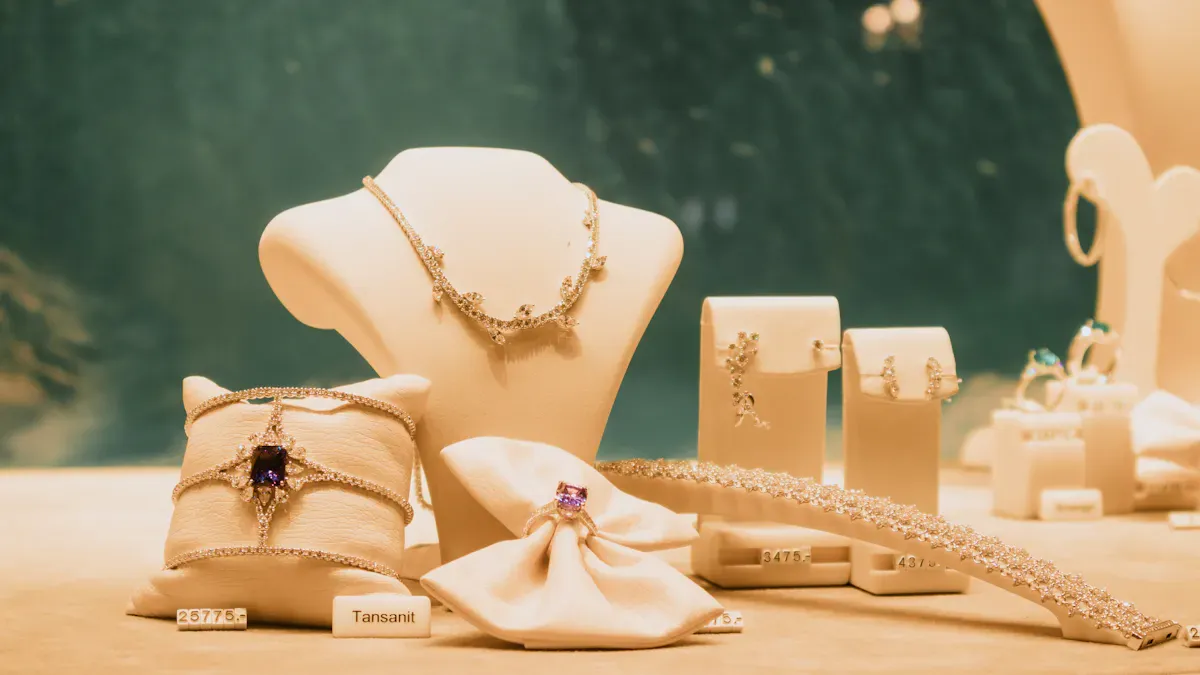
Define Your Jewelry Display Goals
What Do You Want to Communicate with Your Window Display?
Every jewelry store must set clear objectives before designing a window display. The goals should align with the store’s overall strategy and customer expectations. A well-defined goal ensures that each element in the display serves a purpose, whether it is to showcase a new collection, highlight craftsmanship, or promote a special offer. Visual merchandising experts recommend using specific criteria to guide the planning process. The following table outlines essential criteria for effective window displays:
| Criteria | Description |
|---|---|
| Product Presentation | Present products clearly and attractively. |
| Customer Movement | Encourage customer movement and exploration. |
| Staff Interaction | Support staff interaction and service. |
| Brand Identity | Reflect brand identity and positioning. |
| Security | Ensure security without compromising openness. |
| Design Alignment | Align design with target customer demographics and product category. |
| Display Principles | Apply principles like minimalism, hierarchy, and consistency in displays. |
A jewelry store that defines its goals with these criteria can create displays that attract attention, encourage exploration, and support staff in delivering excellent service.
Who Is Your Target Jewelry Customer?
Understanding the target customer shapes every aspect of the window display. The design should appeal to the preferences, lifestyles, and aspirations of the intended audience. For example, a store targeting young professionals might use modern props and bold colors, while a boutique focused on luxury shoppers may prefer classic arrangements and warm lighting. Aligning the display with customer demographics increases the likelihood of engagement and conversion.
Select Key Jewelry Pieces to Feature
Choosing Showstoppers for Window Displays
Selecting the right jewelry pieces for the window display maximizes visual impact and drives foot traffic. Merchandisers should focus on showstoppers—unique or high-value items that capture attention from a distance. The selection process must consider size, material quality, style, and functionality. The table below summarizes the main factors for choosing jewelry pieces:
| Selection Factor | Recommended Features | What to Avoid |
|---|---|---|
| Size & Space | Custom-fit dimensions, tiered layouts, adjustable depth | Overcrowding, obstructed views |
| Material Quality | Tempered glass, solid wood, stainless steel | Thin acrylic, particleboard |
| Style & Aesthetics | Cohesive with brand theme, elegant finishes | Clashing colors, outdated designs |
| Functionality | Lockable doors, LED lighting, modular trays | Fixed shelves, poor lighting |
| Customization | Interchangeable panels, digital integration | Rigid designs, no personalization |
| Budget | Mid-to-high range with long warranty | Cheap materials, no after-sales support |
A jewelry store should avoid overcrowding and ensure that each piece stands out. This approach enhances the perceived value and supports the store’s brand identity.
Rotating Jewelry Inventory for Freshness
Regularly updating the window display keeps the store relevant and encourages repeat visits. Visual merchandising experts suggest implementing a rotation schedule at least two weeks before new collections arrive. Staff can use adjustable dummies to accommodate different sizes and styles. Photographing successful displays creates a template system for future reference. Consistent brand aesthetics should remain, even as displays refresh every 7-14 days. Investing in quality display solutions reduces changeover time and prevents damage to valuable jewelry.
Tip: A rotation schedule ensures that loyal customers always find something new, increasing both engagement and conversion rates.
Use Lighting Strategically in Jewelry Displays
Spotlighting Featured Jewelry
Lighting transforms the appearance of jewelry and draws attention to hero pieces. LED lighting with a high Color Rendering Index (CRI) above 90 and color temperatures between 3000K and 4000K enhances brilliance and reveals true color. Accent lighting, such as spotlights and track lights, highlights key items and adds dynamic shadows. Strategic positioning—using front, side, back, and top lighting—emphasizes texture and form while minimizing glare.
- Accent lighting increases the perceived value of featured jewelry.
- Proper lighting can influence how long customers spend viewing a display.
Creating Mood and Ambiance with Lighting
The right lighting creates a luxurious and inviting atmosphere. Warm lighting (2700K-3000K) evokes comfort and sophistication, ideal for jewelry displays. Layered lighting combines ambient, accent, and task lighting to add depth and focus. Smart lighting solutions, such as dimmable LEDs and motion sensors, optimize brightness and energy use. Regular maintenance ensures consistent light quality, which enhances the overall visual appeal.
- Layered lighting enhances the shopping experience and supports the store’s design goals.
- Different color temperatures create distinct psychological responses, affecting how customers perceive value.
A jewelry store that invests in strategic lighting design can elevate the customer experience, reinforce the brand, and drive higher conversion rates.
Incorporate Storytelling Elements in Jewelry Window Displays
Themed Arrangements for Jewelry
Themed arrangements transform a jewelry window display from a simple showcase into a compelling visual story. By selecting a central theme—such as a romantic evening, a seasonal celebration, or a journey of craftsmanship—a store can create a cohesive narrative that resonates with passersby. Props, color palettes, and background elements should support the chosen theme, guiding the viewer’s imagination and emotions. For example, a winter-themed display might feature frosted branches, cool blue lighting, and sparkling gemstones to evoke the magic of the season. This approach not only highlights the jewelry but also invites customers to envision themselves as part of the story.
A strong narrative relies on visual hierarchy. Placing the most eye-catching pieces at the center or at eye level draws immediate attention. Supporting items and props should frame these focal points, ensuring the story remains clear and uncluttered. Lighting plays a crucial role in emphasizing the narrative, casting soft glows or dramatic shadows to enhance the mood. When executed well, themed arrangements increase customer engagement and encourage spontaneous visits.
Visual Narratives That Engage Foot Traffic
Visual narratives engage foot traffic by sparking curiosity and emotional connection. A display that tells a story—whether it’s the journey of a rare gemstone or the artistry behind a handcrafted ring—captures attention and encourages exploration. The use of props, lighting, and arrangement creates a sense of movement, guiding the viewer’s eye from one piece to the next. This technique transforms the window into an experience rather than a static presentation.
To measure the effectiveness of storytelling elements, stores should focus on the clarity of the narrative, the visual hierarchy, and the level of customer engagement. Collecting data such as foot traffic, sales figures, and customer feedback provides valuable insights into how well the display resonates with the audience. When customers pause, take photos, or ask questions about the story behind the jewelry, the display has succeeded in making a memorable impact.
Tip: Rotate themes regularly to keep the narrative fresh and encourage repeat visits from loyal customers.
Keep Jewelry Displays Clean and Organized
Regular Maintenance of Window Displays
Cleanliness and organization are essential for maintaining the appeal of jewelry window displays. A spotless display reflects professionalism and builds trust with potential customers. Daily maintenance ensures that each piece of jewelry sparkles and that the overall presentation remains inviting.
Best practices for maintaining clean and organized displays include:
- Use clean, minimalist designs to avoid overwhelming customers and keep the display focused.
- Incorporate soft lighting to highlight the craftsmanship and sparkle of each jewelry piece.
- Employ storytelling to create an emotional connection and engage customers.
- Arrange jewelry with symmetry and balance for a sense of order and luxury.
- Group jewelry logically and space elements evenly to avoid clutter.
- Integrate digital technology, such as interactive screens, to provide information without overcrowding the display.
For daily upkeep:
- Clean jewelry displays with a microfiber cloth to remove dust and fingerprints.
- Dust other display areas regularly to maintain freshness.
- Clean trays and glass cases with gentle detergent or glass cleaner.
- Control temperature (55-70°F) and humidity (40-50%) inside glass cases to preserve jewelry quality.
- Rotate stock regularly to feature new items and incorporate seasonal elements.
A well-maintained display not only attracts more foot traffic but also enhances the perceived value of the jewelry.
Professional Presentation of Jewelry
Professional presentation elevates the customer’s perception of both the jewelry and the brand. Symmetry, balance, and logical grouping create a sense of luxury and order. Each piece should have its own space, allowing customers to appreciate its unique qualities without distraction. Soft lighting enhances the brilliance of gemstones and metals, while clean surfaces ensure that nothing detracts from the jewelry’s beauty.
Note: A professional display signals attention to detail and reassures customers about the quality of the store’s offerings.
Test and Measure Results of Window Displays
Tracking Foot Traffic Changes in Jewelry Stores
Measuring the impact of window displays requires a systematic approach. Establishing baseline data is the first step. Stores can collect initial foot traffic and sales data using tools such as phone counter apps and point-of-sale (POS) reports. After updating the display, tracking changes in visitor numbers, conversion rates, and average ticket value reveals the effectiveness of the new arrangement.
| Method | Description |
|---|---|
| Establish Baseline Data | Collect initial foot traffic and sales data using tools like phone counter apps and POS reports. |
| Track Changes | Monitor visitor numbers, conversion rates, and average ticket value after display updates. |
| Lead Capture Methods | Use QR codes to gather measurable engagement metrics linked to the display’s performance. |
Lead capture methods, such as QR codes placed within the display, provide additional insights into customer engagement. These codes can link to product information, special offers, or feedback forms, allowing the store to measure how many people interact with the display beyond simply viewing it.
Gathering Customer Feedback on Jewelry Displays
Customer feedback offers valuable qualitative data on the effectiveness of window displays. Staff can engage with visitors to ask what drew them into the store or what they found most appealing about the display. Simple feedback forms or digital surveys, accessible via QR codes, encourage customers to share their impressions. This information helps identify which storytelling elements resonate most and which aspects may need improvement.
Callout: Regularly reviewing both quantitative data (foot traffic, sales) and qualitative feedback ensures that window displays continue to attract and engage customers effectively.
Key Questions to Ask When Designing Jewelry Window Displays
Is the Jewelry Display Visible from a Distance?
Maximizing Street-Level Impact for Foot Traffic
Jewelry stores must ensure that window displays capture attention from across the street. Visibility plays a critical role in attracting foot traffic. Large, bold elements such as 3D logos and backlit displays increase brand recognition and draw the eye. These features create a strong visual anchor, making the store memorable for passersby. Window vinyls offer flexible options for seasonal promotions or limited-time collections. They allow stores to update messaging quickly and keep the storefront fresh.
Tip: Position hero pieces at eye level and use lighting to highlight them, ensuring they stand out even during busy hours.
Adjusting Window Displays for Different Times of Day
Lighting conditions change throughout the day. Jewelry stores should adjust window displays to maintain maximum impact in both daylight and evening. Backlit displays and adjustable spotlights help jewelry sparkle in low light. During bright afternoons, window tints or shades can reduce glare and keep displays visible. Staff should check visibility at different times to ensure the display remains effective.
Does the Window Display Reflect Your Jewelry Brand?
Consistency with Store Identity in Jewelry Displays
A window display must tell a concise brand story. The customer journey begins at the storefront, so every element should align with the store’s identity. Consistent use of color, logo placement, and display style reassures customers about the store’s professionalism. Professional interior design extends the brand promise from the window to the showroom, enhancing overall perception.
| Aspect of Signage | Influence on Customer Perception |
|---|---|
| 3D Logos | Enhances brand visibility and recognition |
| Window Vinyls | Flexible and engaging display options |
| Backlit Displays | Creates a striking visual impact that attracts customers |
Note: A cohesive window display builds trust and makes the store more inviting to the target audience.
Aligning Jewelry Displays with Marketing Campaigns
Window displays should support current marketing campaigns. When a store launches a new collection or seasonal offer, the window display must reflect this focus. Coordinated visuals and messaging reinforce the campaign and increase its effectiveness. A well-designed display connects the store’s mission with its identity, making the brand message clear to every passerby.
Are Promotions Clearly Communicated in Jewelry Window Displays?
Highlighting Special Offers on Jewelry
Clear communication of promotions increases customer engagement. Shoppers respond to visible, concise signage that highlights special offers or new arrivals. Eye-catching displays not only attract visitors but also increase their intent to purchase. Research shows that appealing window displays directly correlate with higher foot traffic and sales.
Using Signage Effectively in Window Displays
Effective signage uses bold fonts, strategic placement, and consistent branding. Visual messages enhance the store’s identity and make promotions easy to understand. The following table summarizes research findings on the importance of clear visual communication:
| Evidence | Description |
|---|---|
| Ries (2012) | Aesthetics in retail environments influence shopper comfort and can enhance employee morale, contributing to a positive store image. |
| Van den Bosch et al. (2005) | Visual messages in corporate communication enhance visibility, distinctiveness, and consistency of corporate identity. |
| Westcott Alessandri (2001) | Visual presentations can effectively connect corporate mission with identity, reinforcing brand communication. |
| Topalian (1984) | Visual merchandising is crucial for effective corporate communication, reflecting the company’s values and identity. |
Callout: Clever display strategies not only attract more visitors but also increase their likelihood of making a purchase.
Is the Jewelry Display Inviting and Accessible?
Removing Physical Barriers in Window Displays
Jewelry stores often overlook the impact of physical barriers in their window displays. Barriers such as cluttered props, excessive signage, or even poorly placed mannequins can discourage potential customers from approaching the storefront. Customers want to feel that entry is easy and that the store welcomes them. When a display appears blocked or crowded, shoppers may hesitate or walk past without a second thought.
Store owners should evaluate their window layouts regularly. They can remove unnecessary objects that obstruct the view of key jewelry pieces. Clear sightlines allow passersby to see inside the store and observe the inviting environment. Open spaces in the display encourage curiosity and make the store feel more accessible.
A simple checklist helps staff identify and eliminate barriers:
- Remove large props that block jewelry from view.
- Keep signage minimal and positioned at eye level.
- Ensure display tables or risers do not crowd the window.
- Leave open space near the entrance for easy access.
Tip: Staff should stand outside the store and view the window from a customer’s perspective. This practice reveals obstacles that may not be obvious from inside.
Creating a Welcoming Atmosphere for Foot Traffic
An inviting window display does more than showcase jewelry. It creates a sense of warmth and hospitality that draws people inside. Lighting, color, and arrangement all contribute to this atmosphere. Soft, warm lighting makes the space feel comfortable and luxurious. Friendly color palettes, such as golds, creams, or soft blues, enhance the sense of welcome.
Stores can use subtle cues to invite customers in. Open doors, visible staff, and clear pathways from the sidewalk to the entrance all signal that visitors are encouraged to enter. Seasonal decorations or fresh flowers add a personal touch and show attention to detail.
A welcoming atmosphere also depends on the store’s ability to connect with the community. Local artwork, community event posters, or collaborations with nearby businesses can make the store feel like a neighborhood destination.
| Element | Effect on Atmosphere |
|---|---|
| Warm Lighting | Increases comfort and luxury |
| Open Pathways | Encourages easy entry |
| Friendly Colors | Enhances approachability |
| Seasonal Decor | Shows attention to detail |
Note: Customers remember how a store made them feel. An accessible, inviting window display increases the chance that they will step inside and explore the jewelry collection.
Tips and Best Practices for Jewelry Store Window Displays
Use High-Quality Props and Materials in Jewelry Displays
Enhancing Perceived Value of Jewelry
Retail experts agree that the materials and props used in jewelry displays play a crucial role in shaping customer perceptions. Velvet-lined cases, vintage decor, and rich textures set the scene for a luxurious shopping experience. These elements not only protect the jewelry but also create an emotional connection with shoppers. Display cases add formality and prestige, making each piece feel exclusive. When customers see jewelry presented with care and sophistication, they often associate the brand with quality and trust. The right lighting further enhances this effect, casting a warm glow that highlights the brilliance of each item and encourages impulse purchases.
Avoiding Cheap or Distracting Elements in Window Displays
Low-quality props or cluttered arrangements can undermine the perceived value of jewelry. Plastic stands, faded fabrics, or mismatched decor distract from the beauty of the pieces and may cause customers to question the store’s professionalism. Retailers should select props that complement the jewelry and reinforce the brand’s image. Clean lines, cohesive color schemes, and premium materials like velvet or silk communicate an elevated standard. By avoiding cheap or distracting elements, stores ensure that the jewelry remains the focal point of the window displays.
Change Jewelry Window Displays Regularly
Keeping Content Fresh for Foot Traffic
Frequent updates to window displays keep the store relevant and engaging. Industry leaders recommend rotating displays every few weeks to maintain customer interest and encourage repeat visits. Seasonal themes, bold colors, and dynamic lighting create drama and spark curiosity among passersby. A fresh display signals that the store values innovation and pays attention to current trends. This approach not only attracts new customers but also gives loyal shoppers a reason to return.
Leveraging Holidays and Events in Jewelry Displays
Designing displays around holidays and special events provides opportunities to connect with the community and highlight unique collections. Grouping jewelry by color or material creates a cohesive shopping experience that feels timely and intentional. Call-to-action signs, such as limited-time offers or exclusive launches, add urgency and excitement. By leveraging holidays and events, retailers can boost foot traffic and drive sales during peak shopping periods.
Collaborate with Local Artists or Designers for Jewelry Displays
Unique Visual Concepts for Window Displays
Partnering with local artists or designers introduces fresh perspectives and creativity to window displays. These collaborations often result in unique visual concepts that set the store apart from competitors. Artists can contribute custom props, murals, or installations that enhance the storytelling aspect of the display. This strategy not only elevates the design but also showcases the store’s commitment to supporting local talent.
Community Engagement Through Jewelry Displays
Collaborations with local creatives foster a sense of community and invite engagement from a broader audience. Shoppers may visit the store to see a featured artist’s work, then discover the jewelry collection. Community-focused displays build goodwill and strengthen the store’s reputation as a neighborhood destination. By integrating local partnerships into their retail strategy, jewelry stores can create memorable experiences that resonate with both new and returning customers.
Tip: Regularly update window displays and collaborate with local talent to keep the store’s visual merchandising fresh, relevant, and engaging.
Incorporate Technology in Jewelry Window Displays
Digital Screens for Dynamic Jewelry Content
Jewelry stores now use digital screens to create engaging window displays. These screens allow retailers to showcase high-definition videos, rotating product images, and animated graphics. Shoppers walking by can see jewelry collections in motion, which captures attention more effectively than static displays. Digital screens also enable stores to update content quickly, keeping the presentation fresh and relevant for every season or promotion.
Retailers often use digital screens to highlight craftsmanship, share behind-the-scenes footage, or display customer testimonials. This approach builds trust and adds a modern touch to the store’s image. Digital content can also feature close-up shots of gemstones, showing details that might be hard to see from outside. By integrating digital screens into the window display design, stores create a memorable experience that stands out on busy streets.
A well-planned digital display supports the overall design strategy. It should complement the physical arrangement of jewelry and props, not overwhelm them. Placement matters—screens positioned at eye level attract more views. Retailers should also consider screen brightness and resolution to ensure visibility in different lighting conditions.
Tip: Use short video loops and clear visuals to keep the message concise and impactful.
QR Codes for Interactive Jewelry Experiences
QR codes offer a simple way to make window displays interactive. When customers scan a QR code with their smartphones, they can access product details, virtual try-on features, or exclusive online offers. This technology bridges the gap between the physical and digital shopping experience, encouraging passersby to engage with the brand even after store hours.
Jewelry stores often use QR codes to link to product catalogs, appointment booking pages, or social media profiles. This approach provides instant information and helps build a connection with tech-savvy shoppers. QR codes can also support contactless shopping, which many customers now prefer.
For best results, stores should integrate QR codes into the window display design thoughtfully. Codes should be easy to find but not distract from the jewelry itself. Clear instructions next to the code help guide customers through the process. Retailers can track QR code scans to measure engagement and refine their display strategies.
- Place QR codes near featured jewelry pieces for targeted interaction.
- Update linked content regularly to keep the experience fresh.
- Use branded frames or colors to make QR codes visually appealing.
By combining digital screens and QR codes, jewelry stores create innovative window displays that attract attention, encourage interaction, and support a modern retail design.
Real-World Examples and Case Studies of Jewelry Window Displays
Successful Jewelry Store Window Displays
Case Study: Local Boutique’s Seasonal Jewelry Display Boosts Foot Traffic
A small boutique in Chicago transformed its holiday season by designing a winter-themed jewelry display. The team used frosted glass, shimmering snowflake props, and blue LED lighting to create a sense of luxury and wonder. They placed a statement necklace at the center, surrounded by matching earrings and bracelets. The boutique tracked a 28% increase in foot traffic during December. Shoppers commented on the inviting atmosphere and the sense of exclusivity. The display encouraged impulse visits and helped the store sell out several featured pieces before the season ended.
Case Study: National Chain’s Brand Storytelling Through Window Displays
A national jewelry retailer launched a campaign to highlight its heritage and craftsmanship. The company designed window displays that showcased artisans at work, using video screens and real tools as props. Each display told a story about the journey from raw material to finished luxury piece. Customers felt a deeper connection to the brand. The campaign resulted in a 15% rise in store visits and a noticeable increase in average transaction value. The storytelling approach reinforced the retailer’s reputation for quality and authenticity.
Lessons Learned from Effective Jewelry Window Displays
What Worked and Why in Jewelry Displays
Successful displays focused on a clear theme and strong visual hierarchy. Stores that highlighted one or two luxury pieces at eye level attracted more attention. Lighting played a critical role in making gemstones sparkle and metals shine. Interactive elements, such as QR codes or digital screens, engaged tech-savvy shoppers. Consistency with in-store branding built trust and encouraged customers to explore further.
Measurable Impact on Foot Traffic for Jewelry Stores
Retailers who invested in creative window displays saw measurable results. The following table summarizes key outcomes:
| Store Type | Foot Traffic Increase | Sales Growth | Customer Feedback |
|---|---|---|---|
| Local Boutique | 28% | 22% | “Inviting and unique” |
| National Chain | 15% | 18% | “Loved the craftsmanship” |
Note: Data shows that luxury-focused displays not only attract more visitors but also drive higher sales and customer satisfaction.
Creative Approaches from Jewelry Industry Leaders
Innovative Use of Materials in Jewelry Window Displays
Industry leaders experiment with unexpected materials to create memorable luxury experiences. Some stores use mirrored surfaces to amplify light and make jewelry appear more abundant. Others incorporate natural elements like driftwood or marble to contrast with sparkling gems. These choices elevate the perceived value of each piece and set the store apart from competitors.
Collaborations and Partnerships in Jewelry Displays
Many luxury brands partner with local artists or designers to develop exclusive window displays. These collaborations introduce fresh ideas and attract new audiences. For example, a New York jeweler worked with a sculptor to create a kinetic display that moved gently with passing footsteps. The installation became a local attraction, drawing crowds and increasing store visits. Partnerships like these reinforce a brand’s commitment to creativity and community engagement.
A successful jewelry window display uses strong lighting, clear themes, and high-quality materials. These elements attract attention and build trust. Effective displays increase foot traffic and drive higher sales. Jewelry stores benefit from regular updates and creative storytelling. They should track results and listen to customer feedback. Every store can improve by testing new ideas and refining their approach. A well-designed window display turns passersby into loyal customers.
FAQ
What is the ideal frequency for updating jewelry window displays?
Retail experts recommend updating window displays every two to four weeks. Frequent changes keep the storefront fresh and encourage repeat visits. Seasonal updates and new collection launches provide excellent opportunities for refreshes.
How can a jewelry store measure the success of a window display?
A store can track foot traffic, sales data, and customer feedback. Many retailers use digital counters or POS reports. Customer surveys and QR code scans also provide valuable insights into display effectiveness.
Which lighting works best for jewelry window displays?
LED lighting with a color temperature between 3000K and 4000K works best. This range enhances gemstone brilliance and metal shine. Adjustable spotlights help highlight key pieces and create a luxurious atmosphere.
Should a jewelry store use props in window displays?
Props add context and visual interest. Stores should select high-quality materials that complement the jewelry. Velvet, glass, and elegant stands work well. Avoid clutter or distracting elements that compete with the jewelry.
How important is brand consistency in window displays?
Brand consistency builds trust and recognition. Every display should reflect the store’s colors, logo, and style. Consistent branding reassures customers about quality and professionalism.
Can technology improve jewelry window displays?
Technology enhances engagement. Digital screens showcase videos and rotating images. QR codes offer interactive experiences and product information. These tools attract tech-savvy shoppers and provide measurable engagement data.
What are common mistakes to avoid in jewelry window displays?
Many stores overcrowd displays, use poor lighting, or neglect regular updates. Others fail to communicate promotions clearly or ignore brand consistency. Clean, focused, and well-lit displays attract more customers.