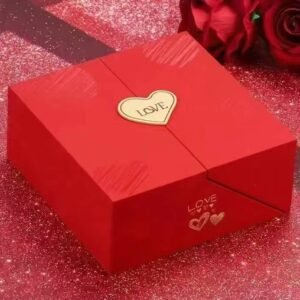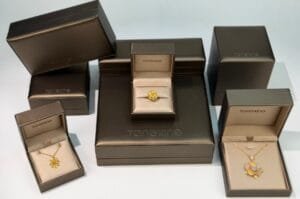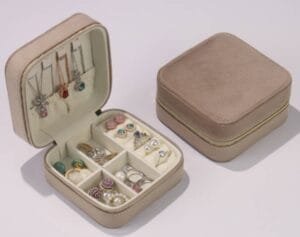
Bone and jade jewelry boxes represent a convergence of Eastern material philosophy and technical archival storage, utilizing high-density biomineral and silicate substrates to create a thermally stable environment for precious ornaments. Characterized by their low thermal effusivity, these materials function as natural insulators, protecting sensitive gemstones from the rapid temperature fluctuations that can cause micro-fractures in high-carat gold and platinum. For a professional Jewelry Box manufacturer, the integration of jade involves precision diamond-tool milling to achieve a monolithic finish, while bone inlay requires acid-free stabilization to prevent the organic oils from reacting with the jewelry packaging linings. In the global luxury market, these units are prized for their chemical neutrality and artisanal heritage, providing a non-reactive micro-environment that preserves the delicate luster of organic stones like pearls and opals.
Eastern Material Framework
Nephrite Mechanics: Why Jade is Suited for Archival Storage
The technical value of a Jewelry Box featuring jade (nephrite or jadeite) lies in its interlocking felted crystal structure. Unlike most minerals which are granular, jade is composed of fibrous crystals that wrap around one another, granting it the highest fracture toughness of any natural stone.
At a leading Jewelry Box Factory, jade panels are milled to a thickness of 3mm to 5mm. Because jade is non-porous, it creates an absolute moisture barrier. When used as a lid or side panel, it blocks the ingress of atmospheric pollutants and sulfur-rich humidity, which are the primary catalysts for the tarnishing of sterling silver jewelry stored within.
Bone Inlay Stabilization: Preventing Organic Oil Transfer
Bone jewelry boxes utilize calcium-phosphate biocomposites, typically ethically sourced water buffalo or camel bone. For a professional Jewelry Box manufacturer, the technical challenge is degreasing and stabilization. Raw bone contains organic fats that, if not properly removed via high-intensity ultrasound and hydrogen peroxide baths, will eventually leach through the box’s velvet lining.
Once stabilized, bone provides a high-tactile relief surface. It is naturally hygroscopic, absorbing trace amounts of condensation that might otherwise settle on metal surfaces. In B2B retail, bone-inlaid units are strategically utilized for “Eco-Luxury” branding, offering the visual appeal of ivory without the ethical or legal CITES restrictions.
| Metric | Natural Nephrite Jade | Stabilized Bone | Benefit |
|---|---|---|---|
| Thermal Conductivity | Low (Stable) | Very Low (Insulating) | Prevents heat-induced tarnish |
| Mohs Hardness | 6.0 – 6.5 | 2.5 – 4.0 | Scratch-resistant exteriors |
| Chemical Reactivity | Zero (Inert) | Near Zero (Stabilized) | Archival-safe contact |
Thermal Management: The “Cool-Lid” Effect for Delicate Stones
Jade and bone are superior to metal and plastic in terms of thermal effusivity. In a retail window under high-intensity LED lighting, a metal box will rapidly heat up, creating a “greenhouse” effect that can dehydrate the nacre of pearls. Jade, however, absorbs and dissipates heat slowly.
This passive cooling effect makes these materials a staple in Eastern jewelry packaging. For high-value emeralds and opals¡ªwhich are prone to internal cracking (crazing) if subjected to rapid heat changes¡ªa jade-lidded box provides a significant layer of physical protection that wood or synthetic leather cannot match.
Long-term Resale Value: Aesthetic Aging Index
*Score represents material integrity and collectibility over a 50-year projection.
Maintenance and Authentication FAQ
Q1: How can I distinguish real jade from green glass imitations?
A: The Thermal and Sound Test: Real jade has high thermal mass and will feel notably cold to the touch, warming up very slowly. When tapped with a metal object, nephrite jade produces a clear, high-frequency musical ring, whereas glass imitations produce a dull “clink.”
Q2: What is the best way to clean a bone-inlaid box?
A: Avoid water. Bone is porous and can swell. Use a soft, dry microfiber cloth. If a deep clean is required, a tiny amount of lemon oil on a cloth will restore the luster and prevent the organic fibers from becoming brittle and cracking.
Q3: Will the white color of a bone box turn yellow over time?
A: Some natural yellowing (patina) is expected with age. However, a box from a reputable Jewelry Box Factory is pre-stabilized to minimize this. Keep the box away from direct sunlight and kitchen grease to prevent accelerated discoloration.
Q4: Is it safe to store gold jewelry in a jade box without a lining?
A: While jade is chemically inert, we recommend a soft velvet or silk lining. Jade is harder than gold (6.5 vs. 2.5 on the Mohs scale), and contact between the two can result in surface scratches on the metal over time.
Q5: Why are Eastern-style boxes often made with brass fittings?
A: Brass provides a non-corrosive mechanical joint that complements the weight of bone and stone. In Eastern aesthetics, the gradual patina of brass is seen as a “living” element that enhances the antique value of the bone or jade container.
Technical References & Industry Data:
- Mineralogical Stability of Nephrite and Jadeite – The New York Times Science
- Biocomposite Stabilization in Bone-Inlay Manufacturing – Home Depot Pro Guide
- Market Valuation of Heritage Materials in Luxury Retail – Business Insider Retail
- Archival Integrity: Thermal Dissipation in Stone Enclosures – WOLF 1834 Engineering Blog