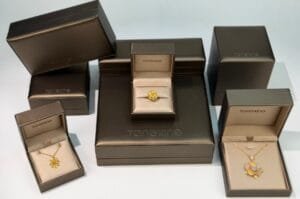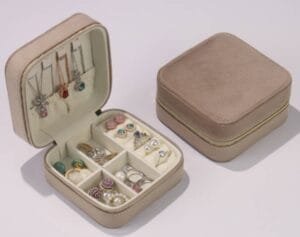
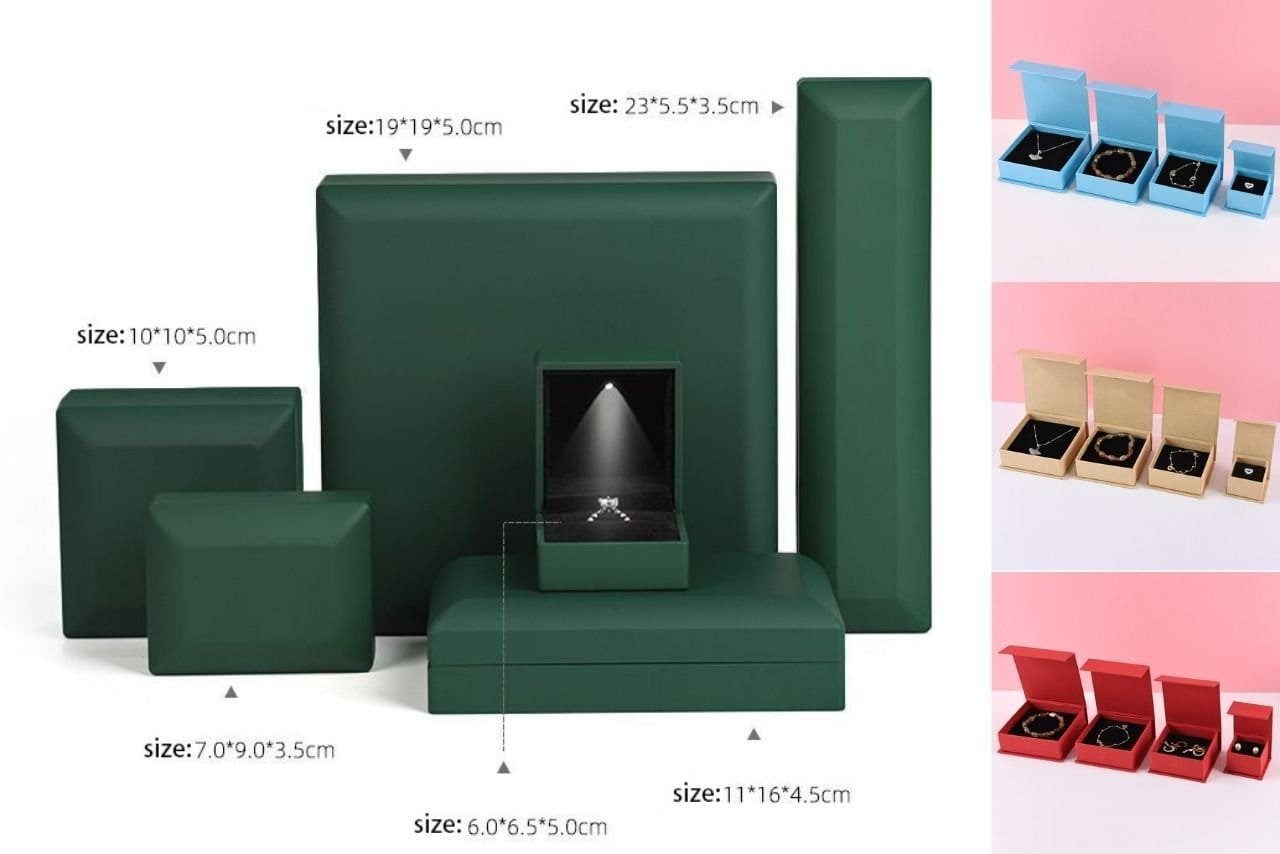
Cleaning dust from a velvet jewelry box requires a specialized dry-maintenance approach to preserve the fabric’s vertical pile and prevent the permanent matting of its synthetic or natural fibers. Unlike flat-surface materials, velvet’s dense warp-pile structure acts as a mechanical trap for airborne particulates, skin cells, and textile lint, which can eventually harbor moisture and accelerate the oxidation of stored precious metals. For a professional Jewelry Box manufacturer, the integrity of the velvet lining is critical for maintaining a low-friction environment; therefore, aggressive wet scrubbing must be avoided. Effective decontamination involves the use of electrostatic attraction and targeted low-pressure airflow to lift debris without compromising the chemical treatments, such as anti-tarnish polymers, often integrated into high-end jewelry packaging solutions.
Maintenance & Cleaning Protocol
The Physics of Dust Entrapment in Velvet Pile
Velvet is characterized by its pile density¡ªthe number of upright tufts per square inch. While this structure provides superior cushioning for a Jewelry Box, it also creates a high-surface-area “filter” that attracts dust through static electricity. In a professional retail setting, the visibility of dust on dark-toned velvet (such as navy or emerald) can diminish the perceived value of the merchandise.
From a technical standpoint, dust is not merely an aesthetic issue. Dust particles are often hygroscopic, meaning they draw moisture from the air. When trapped deep within the velvet pile, this moisture creates a micro-corrosive environment directly in contact with your jewelry, making routine dust removal a vital part of collection preservation.
Dry Cleaning Methods: Electrostatic vs. Mechanical Lift
Every leading Jewelry Box Factory recommends dry methods as the primary defense against debris.
- Soft-Bristle Brushing: Use a dedicated velvet brush or a soft goat-hair brush. Move the brush in the direction of the nap (the way the fibers naturally lay) to lift surface dust. This also redistributes the fibers to prevent “crush spots.”
- Low-Tack Adhesive Lift: For stubborn lint, use a professional-grade lint roller or a piece of high-quality masking tape. It is critical to use a low-tack adhesive to ensure no chemical residue is left on the velvet, which could later react with metal alloys.
- Pressurized Air: For intricate corners and ring slots, use a canister of compressed air. Hold the nozzle at a 45-degree angle to blow dust out of the box rather than deeper into the seams.
| Tool Type | Effectiveness | Risk Level | Recommended Use |
|---|---|---|---|
| Micro-Vacuum | High | Low | Weekly maintenance |
| Lint Roller (Standard) | Medium | High (Residue) | Emergency only |
| Goat Hair Brush | High | Zero | Daily/Showroom care |
Advanced Spot Treatment: Solvent Selection and Safety
If dust has mixed with oils or liquids to form a stain, solvent-free spot cleaning is required. Never saturate the fabric; excess moisture can dissolve the glues used by the Jewelry Box manufacturer to bond the velvet to the inner frame, leading to delamination.
Use a damp (not wet) microfiber cloth with distilled water. If a cleaning agent is necessary, use a pH-neutral, non-ionic surfactant. Blot the area gently; never rub, as rubbing will permanently distort the pile direction and create a “bald” or shiny spot that cannot be repaired.
Dust Removal Efficiency (%) by Technique
*Data represents particulate lift percentage from a standard 1.5mm velvet pile.
Industrial Specs: Pile Restoration and Maintenance Frequency
For B2B distributors and collectors, pile restoration is a necessary skill. Over time, the weight of jewelry will compress the velvet. To restore the “bloom” of the fabric, a light application of indirect steam (from a distance of at least 15cm) followed by gentle brushing will revive the upright fibers.
Maintenance frequency is dictated by the environment. In urban areas with higher particulate counts, a weekly dry-vacuum cycle is recommended. For archival storage within a safe, a quarterly inspection and dusting are sufficient to ensure the anti-tarnish environment remains uncompromised.
Professional Cleaning & Preservation FAQ
Q1: Why is my velvet jewelry box attracting more dust than usual?
A: This is often caused by static buildup. Low-humidity environments (below 30%) increase static charge. Using a humidifier or storing the box in a closed cabinet can significantly reduce the rate of dust accumulation.
Q2: Can I use a standard hair dryer to blow dust off?
A: Only on the cool setting. High heat can cause synthetic velvet fibers (polyester or nylon) to melt or distort, and it may weaken the adhesives used in the box’s construction.
Q3: Will cleaning the dust affect the anti-tarnish lining?
A: Dry cleaning will not affect it. However, wet cleaning with soaps can strip the chemical treatments from the velvet fibers, reducing the lining¡¯s ability to protect silver from oxidation.
Q4: How do I remove dust from the tight corners of the ring slots?
A: A clean, dry makeup brush or a soft-bristled toothbrush is perfect for reaching into deep crevices. Follow this with a quick burst of compressed air for a professional finish.
Q5: Is it safe to use water-based wipes on velvet?
A: Generally, no. Most wipes contain fragrances and preservatives that can leave a film on the velvet. This film can be transfered to your jewelry, potentially causing reactions with sensitive stones like pearls.
Q6: How do I restore velvet that has been “flattened” by a heavy necklace?
A: Use the indirect steam method. Hold a steamer near the box (never touching) and once the fibers are slightly warm and damp, use a soft brush to lift them back into a vertical position.
Q7: Do different colors of velvet require different cleaning methods?
A: The method is the same, but lighter colors (like blush or cream) may hide dust while showing oil stains more easily, whereas darker colors (like navy or black) make every speck of dust visible, requiring more frequent dry maintenance.
Article References & Technical Sources:
- Textile Science: Pile Density and Particulate Entrapment – The New York Times Science
- Adhesive Stability in Luxury Packaging Construction – Home Depot Professional
- Retail Presentation Standards: Velvet Maintenance – Business Insider Retail Insights
- The Physics of Anti-Tarnish Environments – WOLF 1834 Engineering Blog