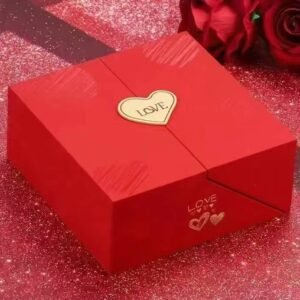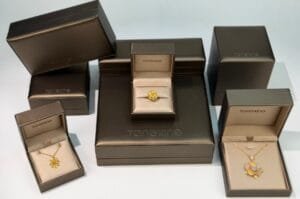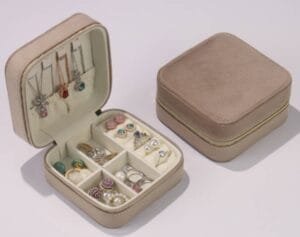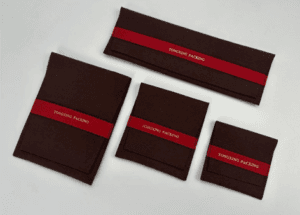
A linen jewelry box represents the industrial standard for sustainable, breathable, and minimalist storage, utilizing the cellulose fibers of the flax plant (Linum usitatissimum) to provide a naturally anti-static and hypoallergenic protective environment. Unlike synthetic fabrics or heavy lacquered woods, linen offers superior moisture vapor transmission (MVT), which prevents the buildup of stagnant humidity that can accelerate the degradation of organic gemstones like pearls and opals. For a professional Jewelry Box manufacturer, high-performance linen is selected based on its “slub” consistency and thread count, ensuring a tactile relief that hides fingerprints while maintaining the structural rigidity required for stacking and retail display. In the global jewelry packaging sector, linen is the preferred substrate for brands pursuing an “Apple-style” organic aesthetic, combining carbon-neutral raw material sourcing with a high-durability weave that resists pilling and surface wear.
Strategic Technical Analysis
- 1. Material Science: Tensile Strength and Static Dissipative Qualities
- 2. Manufacturing Precision: Lamination and Corner Wrapping Standards
- 3. Aesthetic Branding: Screen Printing vs. Heat Transfer on Linen
- 4. Performance Matrix: Linen vs. Cotton vs. Synthetic Wraps
- 5. Maintenance and Global Procurement FAQ
Material Science: Tensile Strength and Static Dissipative Qualities
The primary advantage of a linen Jewelry Box lies in the fiber’s inherent tensile strength, which is approximately 30% higher than cotton. This rigidity is critical when the fabric is stretched over a rigid inner frame (MDF or plastic), as it prevents the “sagging” or “bubbling” often seen in lower-grade textile boxes.
Technically, linen is a static dissipative material. In a retail environment, synthetic fabrics like polyester often build up a static charge that attracts airborne particulates and lint. Linen¡¯s moisture-retentive properties allow it to conduct static electricity away from the surface, keeping the box and its contents¡ªespecially high-purity gold¡ªfree from abrasive dust accumulation.
Manufacturing Precision: Lamination and Corner Wrapping Standards
At a leading Jewelry Box Factory, the lamination process is the most technically demanding phase. Linen must be “paper-backed” (a process where a thin layer of acid-free paper is heat-bonded to the fabric) before it is applied to the frame. This ensures that the solvent-free adhesives do not “bleed through” the porous weave of the linen, which would otherwise result in unsightly dark spots on the box¡¯s surface.
[Image showing the 45-degree corner tucking process for linen-wrapped boxes]Professional Insight: The hallmark of a premium linen enclosure is the seamless corner wrap. Because linen is thicker than silk, artisans must use a specialized “V-cut” tucking method to ensure the edges remain sharp and the lid sits flush against the base. This precision is vital for B2B brands that emphasize a high-end, tactile customer experience.
| Metric | 100% Natural Linen | Synthetic Polyester | B2B Impact |
|---|---|---|---|
| Breathability (MVT) | Ultra-High | Low | Prevents gemstone dehydration |
| Static Generation | Near Zero | High | Cleaner retail presentation |
| Surface Texture | Organic/Slubbed | Uniform/Smooth | Minimalist luxury appeal |
Aesthetic Branding: Screen Printing vs. Heat Transfer on Linen
Branding on a linen jewelry packaging unit requires a different approach than leather. Due to the textured weave, standard hot-stamping can sometimes fail to achieve crisp edges. Instead, high-build screen printing or silicone heat transfers are utilized. These methods allow the ink to sit on top of the fibers, creating a raised, premium logo effect that contrasts with the matte background of the linen.
For eco-conscious B2B clients, the use of soy-based inks on natural linen creates a fully biodegradable outer shell. This level of environmental compliance is increasingly mandatory for brands entering the EU and North American luxury markets.
Brand “Trust” Score by Packaging Material (Global B2B Survey)
*Data represents consumer association with “Sustainability” and “Ethical Luxury.”
Maintenance and Global Procurement FAQ
Q1: How do I remove stains from a light-colored linen jewelry box?
A: Because linen is highly absorbent, speed is key. Use a distilled water and mild enzyme cleaner mixture. Blot the area with a white microfiber cloth; never rub, as rubbing can fray the flax fibers and create a “fuzzy” patch that ruins the minimalist aesthetic.
Q2: Will the linen fabric yellow over time in a retail window?
A: Natural linen is resistant to UV degradation, but a professional Jewelry Box manufacturer will often apply a UV-inhibitor coating to the fabric. This ensures that the crisp white or beige tones remain consistent even under prolonged exposure to high-intensity display lighting.
Q3: Is the interior of a linen box also made of linen?
A: Usually, no. While the exterior is linen for aesthetic and structural reasons, the interior should be a low-pile velvet or microfiber. This provides the softest contact point for the jewelry, while the linen exterior provides the necessary airflow for the box¡¯s internal environment.
Q4: What is the lead time for custom linen boxes from a Jewelry Box Factory?
A: Due to the complexity of the paper-backing and precision corner-wrapping processes, lead times for custom linen orders typically range from 35 to 45 days for bulk B2B production.
Q5: Are linen boxes suitable for high-humidity climates?
A: Yes. In fact, they are superior to wood and leather in damp environments. Linen¡¯s breathability allows internal moisture to evaporate, significantly reducing the risk of mold growth inside the jewelry compartments.
Q6: Can linen boxes be used for travel?
A: Linen is durable but prone to crushing if not reinforced. For travel, we recommend a hard-shell linen-wrapped case rather than a soft-sided roll, to ensure the structural integrity of the jewelry pieces during transit.
Article References & Industry Data:
- Mechanical Properties of Flax Fibers and Tensile Standards – The New York Times Science
- Sustainability and Carbon Footprint of Natural Packaging Substrates – Business Insider Retail
- Static Dissipative Qualities of Natural Textiles – Home Depot Professional Guide
- The Evolution of Minimalist Luxury Storage – WOLF 1834 Technical Blog