Embroidered fabric jewelry boxes distinguish themselves through a complex interplay of tactile relief and cultural artistry, offering a structural protective solution that integrates high-tensile threadwork with premium textile substrates. Unlike smooth-surface leather or wood, embroidered enclosures utilize raised needlework patterns to provide a natural anti-slip grip and added mechanical cushioning. For a professional Jewelry Box manufacturer, embroidery involves precision tensioning of silk, metallic, or rayon threads onto a stabilized fabric base¡ªtypically linen, jacquard, or heavy-duty canvas. In the global jewelry packaging sector, these boxes are strategically deployed for “Heritage” and “Artisanal” collections, providing a non-reactive environment that preserves the delicate luster of antique gold and organic gemstones while offering a unique sensory unboxing experience that flat materials cannot replicate.
Artisanal Technical Focus
Mechanics of Embroidery: Stitch Density and Surface Relief
The unique appeal of an embroidered Jewelry Box lies in its three-dimensional relief. In industrial terms, this is measured by stitch density¡ªthe number of thread penetrations per square centimeter. High-density embroidery (exceeding 10,000 stitches for a medium-sized lid) creates a rigid, armor-like surface that protects the inner frame from minor impacts and abrasions.
From a professional perspective, the use of metallic threads (zari) or high-sheen viscose allows the box to play with light refraction. This “visual depth” is a key differentiator for luxury B2B brands looking to evoke a sense of craftsmanship and hand-finished quality in their jewelry packaging.
Substrate Science: Fabric Selection for Long-Term Durability
A Jewelry Box Factory must ensure that the base fabric can support the weight of the embroidery without puckering. Interfacing stabilizers are heat-pressed to the back of the fabric¡ªtypically high-thread-count cotton or silk jacquard¡ªto ensure the lid remains flat.
[Image showing the cross-section of embroidered fabric: Thread, Fabric, and Stabilizer layers]Technical Insight: For global B2B supply chains, the fabric must be treated for colorfastness (Grade 4-5) and mold resistance. This ensures that the intricate patterns do not fade or bleed if the box is stored in high-humidity retail environments, protecting both the box¡¯s aesthetic and the jewelry pieces within.
| Thread Type | Abrasion Resistance | Luster Rating | Best Use Case |
|---|---|---|---|
| Polyester Thread | Ultra-High | Moderate | Commercial / Mass-Retail |
| Rayon/Viscose | Moderate | High (Silk-like) | Luxury / Boutique |
| Metallic (Zari) | Low (Delicate) | Brilliant | Heirloom / Special Edition |
Manufacturing Precision: Multi-Head CNC vs. Handwork
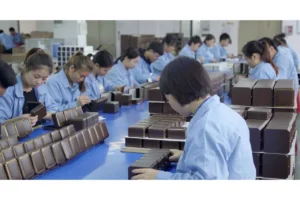
In a modern Jewelry Box Factory, the transition from artisanal prototype to bulk production involves multi-head CNC embroidery machines. These machines allow for the simultaneous production of 12 to 24 boxes with perfect pattern replication. This ensures consistency in B2B branding, where every box in a shipment must meet the exact geometric specifications of the client’s logo or pattern.
However, for “Heritage” collections, hand-guided embroidery is still utilized. This adds a “human element” that creates subtle variations in stitch tension, making each box unique. Professional retailers often market these variations as a sign of authenticity and luxury value.
Consumer Perception: “Hand-Crafted” Value Score
*Score based on consumer association with “Artisanship” and “Unique Character.”
Preservation and Global Sourcing FAQ
Q1: Does embroidery thread snag easily on jewelry?
A: When sourced from a reputable Jewelry Box manufacturer, the embroidery is finished with a high-pressure steam press and a protective sealant. This flattens the threads and ensures that prongs or necklace clasps do not catch on the needlework.
Q2: How do I clean dust out of intricate embroidery patterns?
A: Avoid abrasive scrubbing. Use a soft-bristle brush (like a goat-hair brush) or a low-suction hand vacuum. For light stains, a damp microfiber cloth with distilled water is recommended to avoid mineral spots on the fabric.
Q3: Are fabric boxes as durable as wooden ones for long-term storage?
A: Structurally, most fabric boxes utilize a reinforced wood or plastic frame beneath the textile. While the outer fabric is more prone to staining, the internal protection is identical to wooden alternatives, with the added benefit of passive air filtration through the fabric pores.
Q4: Can these boxes be customized with corporate logos?
A: Absolutely. Embroidery offers the most durable form of branding. Unlike screen printing or foil stamping which can peel, embroidered logos become part of the material¡¯s structure and will last for the entire lifespan of the box.
Q5: Will the fabric lining inside also be embroidered?
A: Usually, the interior is kept smooth (velvet or microfiber) to prevent friction with the jewelry. The embroidery is typically reserved for the outer lid and sides to provide visual impact without compromising the internal safety of the pieces.
Article References & Industry Data:
- Textile Engineering: Stitch Density and Material Strength – The New York Times Science
- Consumer Psychology: The Artisanal Value of Needlework – Business Insider Retail
- Technical Standards for Industrial Embroidery – Home Depot Professional Guide
- History of Decorative Packaging and Fabric Preservation – WOLF 1834 Engineering Blog