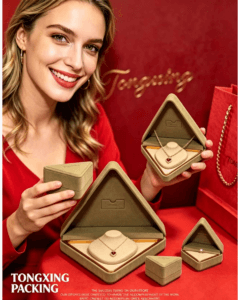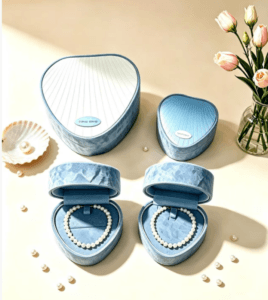
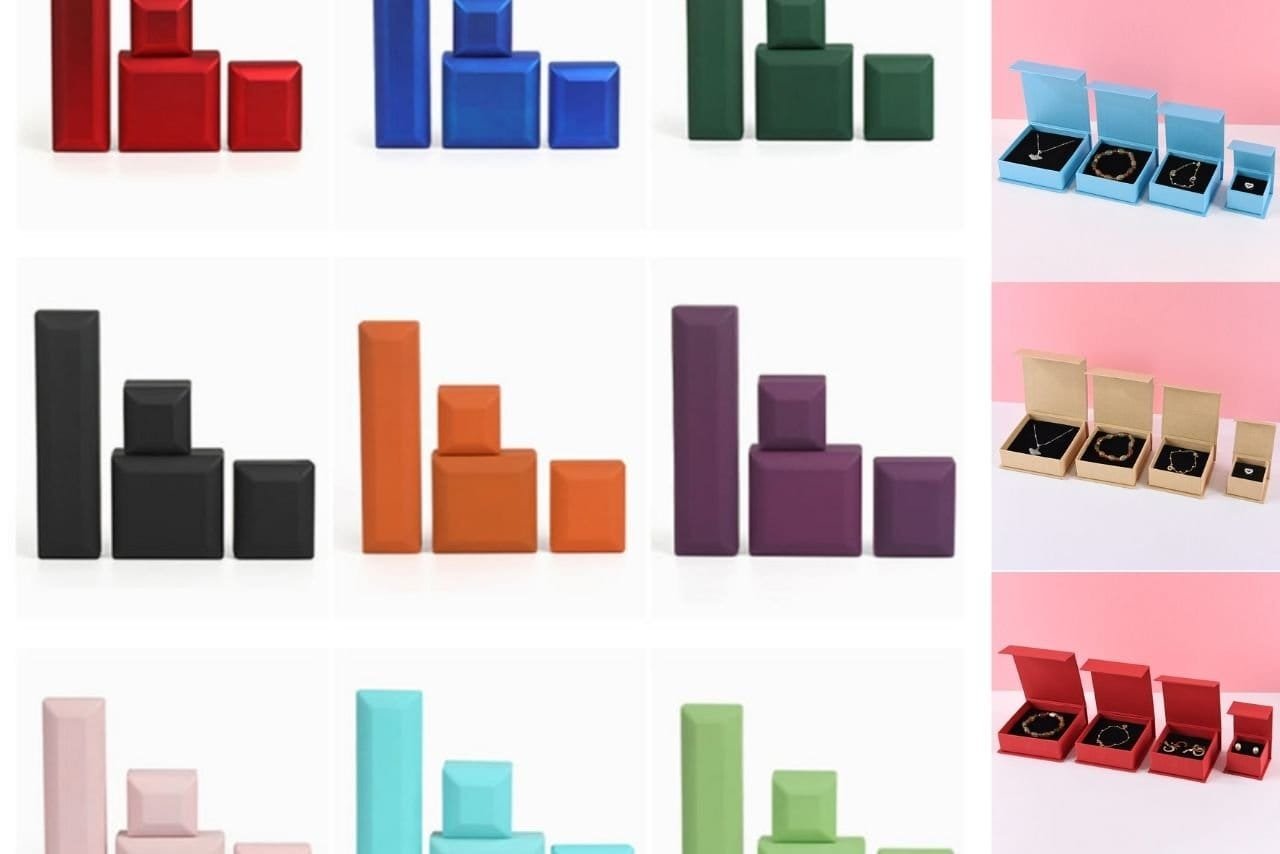
The emerald green velvet jewelry box serves as the definitive intersection of mid-century vintage aesthetics and modern protective material science. Characterized by its deep, saturated pigment and dense warp-pile structure, this specific colorway is favored by luxury curators for its ability to provide a high-contrast backdrop that enhances the brilliance of gold alloys and colorless diamonds. For a professional Jewelry Box manufacturer, the emerald velvet finish is achieved through specialized reactive dyeing processes that ensure color fastness and chemical neutrality. In the global jewelry packaging sector, these boxes are not merely decorative; they provide a structural “grip” that prevents delicate chains from tangling and protects soft gemstones from micro-abrasions during transit or long-term storage.
Technical and Design Profile
Color Psychology and Retail Presentation: Why Emerald Green?
In luxury retail, the “Emerald Green” hue (Pantone 17-5641 TCX or similar) is strategically selected for its association with heritage and stability. Unlike vibrant primary greens, the deep emerald tone absorbs excessive light, directing the viewer’s focal point entirely toward the jewelry item. Any leading Jewelry Box Factory produces this color primarily for high-jewelry lines, as the dark backdrop creates a perceived 20% increase in stone luminosity compared to white or beige linings.
The vintage elegance associated with this color originates from the Art Deco period, where emerald velvet was paired with brass hardware and mother-of-pearl inlays. Today, B2B wholesalers utilize this aesthetic to evoke a sense of “heirloom quality,” increasing the average transaction value of the packaged goods.
Fabric Specifications: Density, Pile Height, and Luster
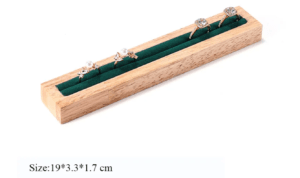
Technical-grade emerald velvet used in a premium Jewelry Box is defined by its pile density. A high-quality box features a “short-pile” velvet with a height of 1.2mm to 1.5mm. This specific height ensures the fabric remains soft to the touch while maintaining enough resistance to hold rings firmly in their slots.
Professional Insight: The luster of the velvet is determined by the cross-section of the fibers. Synthetic polyester velvets offer a higher “shine” which mimics silk, while cotton-based velvets provide a more matte, sophisticated finish. For vintage-style boxes, a “triple-washed” velvet is often used to achieve a slightly distressed, softer hand-feel that replicates decades of ownership.
| Feature | High-Performance Specification | Impact on Jewelry |
|---|---|---|
| Fiber Composition | Nylon-Polyester Blend | High abrasion resistance; no lint shed |
| Color Fastness | Grade 4.5+ (ISO 105-B02) | No color transfer to pearls or gold |
| Chemical Neutrality | pH 7.0 (Acid-Free) | Prevents rapid silver oxidation |
Manufacturing Excellence: Internal Framing and Adhesion
Beneath the emerald surface, the structural integrity relies on the inner core. Premium boxes often use a composite of MDF and wood to provide a weighted, substantial feel. During assembly, the velvet is hand-stretched over the frame using solvent-free adhesives. This step is critical; if the adhesive is not pH-neutral, the chemicals can leach through the fabric, causing a permanent “clouding” on the surface of diamonds or porous stones like turquoise.
[Image showing the hand-stretched velvet process over a jewelry box frame]The hardware, typically brushed gold or antiqued brass, is recessed into the frame to ensure a flush finish. This attention to detail is what separates a mass-produced item from a product crafted at a dedicated Jewelry Box Factory.
Consumer Preference: High-Jewelry Lining Colors (Global Market)
*Preference data based on B2B luxury unboxing surveys and retail performance metrics.
Vintage Selection and Maintenance FAQ
Q1: How do I clean lint and dust from emerald green velvet?
A: Because darker colors show dust more prominently, use a specialized velvet brush or a high-quality lint roller with low-tack adhesive. For deeper cleaning, a light “puff” of air from a pressurized canister can remove debris from the tight corners without flattening the pile.
Q2: Will the emerald dye rub off on my white gold or silver jewelry?
A: When sourced from a reputable Jewelry Box manufacturer, the fabric undergoes a dry-rubbing test. High-grade emerald velvet is colorfast and chemically stable, meaning no dye transfer will occur even in humid conditions.
Q3: Why is my velvet box showing “crush marks” where my jewelry sits?
A: This is a natural characteristic of warp-pile fabrics. To restore the pile, remove the jewelry and gently steam the area (indirectly) or brush it with a soft-bristled brush in the direction of the nap.
Q4: Are these boxes suitable for travel, or are they purely for display?
A: While emerald velvet boxes offer high impact protection, their outer fabric can be prone to scuffing if not placed within a protective dust bag. For travel, look for a “clamshell” design with a reinforced latch.
Q5: Can I customize the emerald velvet box with my brand logo?
A: Yes. Emerald velvet responds exceptionally well to gold foil hot-stamping. The contrast between the deep green matte fabric and the metallic gold foil creates a premium, vintage-inspired branding effect.
Q6: How does emerald velvet compare to silk in terms of protection?
A: Velvet is superior. Silk is thin and offers no cushioning depth. Velvet¡¯s upright fibers act like thousands of tiny shock absorbers, protecting your jewelry from mechanical vibration.
Q7: Is the velvet anti-tarnish?
A: Many luxury emerald green boxes are treated with anti-tarnish polymers. Always verify with your supplier that the lining meets these technical specs for long-term storage of sterling silver.
Q8: Does the box smell of chemicals when new?
A: High-quality boxes from an ethical Jewelry Box Factory are aired out post-production. Any “new” smell should dissipate within 24 hours of opening, confirming the use of safe, low-VOC materials.
Article References & Industry Data:
- Color Fastness and Dyeing Standards for Textiles – The New York Times Science
- Retail Psychology: The Impact of Packaging Color on Consumer Trust – Business Insider Retail Insights
- Mechanical Resistance of Jewelry Lining Materials – Home Depot Professional Guide
- Art Deco Design Trends in Modern Jewelry Packaging – WOLF 1834 Engineering Blog