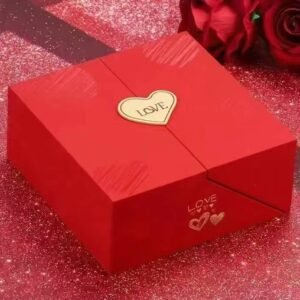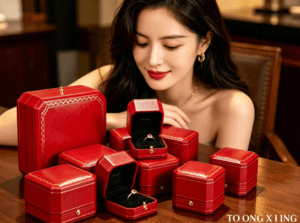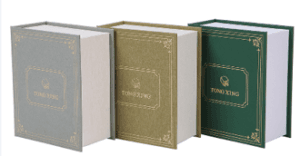
A women¡¯s luxury leather jewelry box should be selected the same way fine jewelry is evaluated: by materials, craftsmanship, protection performance, and long-term usability¡ªnot by appearance alone. The best option balances a premium exterior (genuine leather or high-grade PU), a rigid and square structure, a soft anti-scratch lining, and precision inserts that keep pieces centered during daily handling and shipping. For global buyers, the most reliable path is to shortlist by function (rings, earrings, necklaces, sets), confirm finishing and color consistency via sampling, and validate supplier quality control and lead times. In practice, **luxury jewelry storage**, **custom jewelry boxes**, and **branded unboxing** outcomes depend as much on inserts, closure design, and finishing accuracy as on the leather surface itself.
Brand & capability context (for sourcing decisions)
Shenzhen Tongxing Packaging Co., Ltd. designs and manufactures jewelry boxes, displays, pouches, and bags, emphasizing strict material selection, multi-step inspections, rapid sampling, and reliable lead times. The supplier states typical sample turnaround of 5¨C7 business days and mass production lead times of 15¨C30 days after approval, with MOQs commonly ranging from 500 to 3,000 units depending on material and complexity. These baseline procurement constraints are used in the recommendations below to support practical, E?E?A?T-aligned decision-making.
Define ¡°luxury leather¡± for jewelry boxes (materials that matter)
In jewelry packaging, ¡°leather jewelry box¡± typically refers to the exterior wrap material applied over a rigid structure (often paperboard or wood/MDF), not a fully leather-built case. Luxury performance is determined by the combined system: surface material + structure + lining + inserts + closure. Search results for premium jewelry storage also frequently associate luxury with **soft-touch finishes**, **anti-tarnish lining**, **microfiber interior**, and **scratch-resistant surfaces**¡ªfeatures that can exist with either genuine or faux leather.
Genuine leather vs. faux leather (PU/PVC): what to expect
| Factor | Genuine leather (real hide) | Faux leather (typically PU; sometimes PVC) | Buyer implication |
|---|---|---|---|
| Visual texture | Natural grain; slight variation is normal | Highly uniform grain and color | Uniformity helps brand consistency and product photography; natural variation supports heritage storytelling. |
| Feel & perceived value | Classic luxury signal; often preferred for heirloom positioning | Can feel premium at high grade; ranges widely in quality | Do not judge by ¡°PU¡± alone¡ªspecs and samples decide. |
| Aging | May develop patina; can scuff | Can remain consistent; low-grade PU may peel/crack in heat/humidity | Climate and storage conditions matter for global distribution. |
| Color matching | Achievable but may show batch variation | Generally easier for precise Pantone matching | For brand systems that require tight tolerances, PU often reduces risk. |
| Ethical positioning | Animal-origin; may conflict with vegan claims | Animal-free; sustainability still depends on chemistry and end-of-life | Avoid unsupported ¡°eco¡± language; use accurate, documentable claims. |
Practical sourcing tip: when comparing ¡°leather¡± options, request the exterior material¡¯s specification (composition, thickness, backing), plus a production sample that includes the final logo method and interior lining.
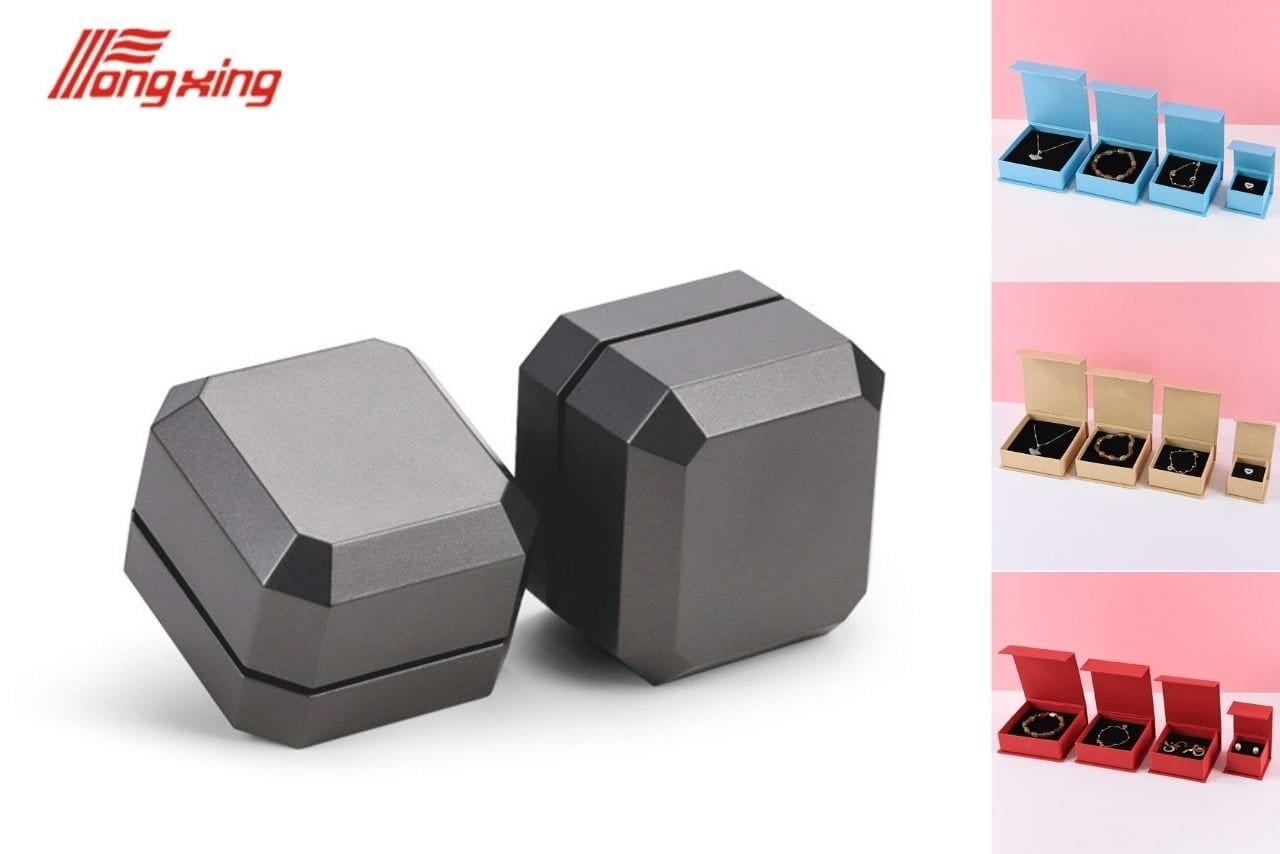
For brands exploring full category options (paper, plastic, velvet, wooden structures and more), product exploration should start with the supplier¡¯s Jewelry Box category page to identify structures and sizes that align with the jewelry assortment.
Women¡¯s use-cases: what the box must protect and organize
A women-focused luxury jewelry box should be selected by real-world routines: daily ring storage, earring changes, necklace detangling prevention, travel packing, and safe storage for gold, silver, gemstones, and plated pieces. In other words, **jewelry organization**, **tangle-free necklace storage**, and **ring holder inserts** are not optional add-ons; they are the functional reasons buyers upgrade to ¡°luxury.¡±
Core use-case profiles (and the packaging features they require)
| Profile | Typical jewelry mix | What ¡°luxury¡± means here | Recommended box features |
|---|---|---|---|
| Everyday minimalist | 1¨C3 rings, studs/hoops, one chain | Fast access + clean presentation | Ring rolls, small earring grid, microfiber lining, reliable magnetic/hinged closure |
| Accessory rotator | Multiple earrings + layered necklaces | Anti-tangle layout + compartment clarity | Necklace hooks or dedicated channels, removable tray, divider system |
| Fine jewelry owner | Gold/diamond pieces, heirlooms | Protection + premium feel + long-term durability | Rigid structure, high-quality lining, fitted insert, consistent finishing |
| Gift buyer | Single item gift | Unboxing + brand signal | Hot stamping logo, clean corners, protective outer carton, coordinated bag/pouch |
Feature priority model for women¡¯s luxury jewelry boxes (guidance score)
Scores below are a practical guide (0¨C100) reflecting how often each feature influences buyer satisfaction across common use cases. Exact needs should be validated with the brand¡¯s product assortment and customer feedback.
Method note: ¡°Guidance score¡± synthesizes common SERP themes (material/finish/organization), jewelry protection fundamentals (movement control), and buyer complaints observed in retail/e-commerce reviews (scratches, tangles, flimsy closures). It is not a lab test result and should be used to structure sampling priorities.
Construction quality checklist (what buyers should inspect)
Luxury should be measurable at inspection: squareness, clean wrap edges, consistent stitching, logo alignment, and insert tolerances. For global sourcing, the most dependable results come from suppliers that run incoming material inspection, in-process checks, and final audits¡ªthen produce bulk orders that match the approved sample. Tongxing Packing publicly states strict quality control steps and multi-step inspections aimed at consistent finishing across production batches.
Non-negotiables for a premium leather jewelry box
| Checkpoint | What ¡°good¡± looks like | Common defect | How to verify during sampling |
|---|---|---|---|
| Rigidity & squareness | Box sits flat; lid aligns; no twist | Warping, misaligned lid | Measure diagonals; open/close 30¨C50 cycles; check hinge/magnet seating |
| Leather wrap & corners | Tight wrap, crisp corners, no bubbles | Wrinkles, lifting edges, glue marks | Side-light inspection; gently press corners; check edge bonding |
| Interior lining | Even, soft, no shedding; color stable | Loose fabric, adhesive bleed | Rub test with clean cloth; inspect seams and folds |
| Insert fit | Jewelry centered; does not rattle | Loose cavities, excessive pressure | Test with actual product SKU; shake test; check clasp/stone clearance |
| Odor & cleanliness | Low odor; clean interior | Strong chemical smell, dust | Unpack and air 10 minutes; perform visual lint check |
Why inserts are the ¡°hidden luxury¡±
Buyers often focus on the exterior surface, but the insert controls movement and presentation. Well-designed **jewelry box inserts** (foam, velvet, sponge, paperboard) keep items centered and display-ready, improving perceived quality and reducing damage risk during delivery. Tongxing Packing highlights precision inserts as part of its offering to secure jewelry for display and shipping.
Sizing & layout: picking compartments, trays, and inserts
Layout should be dictated by the jewelry assortment and the sales channel. Retail gifting favors a strong first impression; DTC shipping favors secure holding and protective packing; travel scenarios favor compact formats and scratch prevention. As a practical rule, a luxury jewelry box should be ¡°right-sized¡±: large enough to prevent tangling and stacking, but not so large that jewelry slides or compartments become unusable.
Compartment planning by jewelry type
| Jewelry type | Recommended compartment | Key risks | Design features that prevent issues |
|---|---|---|---|
| Rings | Ring rolls (dense, evenly spaced) | Stone scratching; loose fit | Soft microfiber/velvet; correct roll spacing; stone clearance |
| Earrings | Grid with padded slots or holes | Lost backs; tangling | Dedicated earring panel; secure backing area |
| Necklaces | Hooks + channels / separate long compartment | Tangling; chain kinks | Anti-tangle necklace hooks; lined channels; separation |
| Bracelets/bangles | Long padded compartment / removable tray | Metal-on-metal scuffing | Dividers; soft lining; stable tray rails |
| Sets | Custom insert cutouts | Misalignment in presentation | Precision cavities; centered holding; consistent reveal angle |
Where buyers often save time
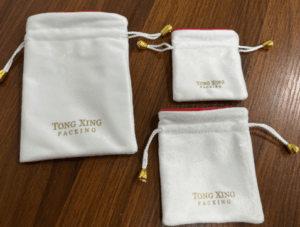
Brands that purchase a coordinated set (box + pouch + bag + display) reduce SKU complexity and improve visual consistency across retail and online channels. Tongxing Packing positions itself as a one-stop packaging partner offering boxes, displays, pouches, paper bags, and inserts with matched textures and logos.
Finishing & branding options that look premium in real life
Luxury perception is built through finishing accuracy: consistent logo placement, stable color, clean edges, and the right surface sheen. In many top-ranking retail listings, buyers associate premium value with **hot stamping**, **embossing/debossing**, **UV printing**, and a ¡°soft-touch¡± feel. A box can look premium under studio lights and still fail in-hand if wrap tension, corner bonding, or logo execution is inconsistent.
Common branding methods and when to choose them
| Branding method | Luxury effect | Best for | What to control in QC |
|---|---|---|---|
| Hot stamping (foil) | High contrast, premium shine | Gift-ready packaging; heritage brands | Foil adhesion; edge sharpness; consistent pressure |
| Emboss/deboss | Tactile, understated luxury | Minimalist marks; tone-on-tone logos | Depth consistency; no cracking in surface layer |
| UV printing | Modern, clean, precise | Fine lines; small logos; color details | Ink curing; abrasion resistance; color shift |
| Silk screen | Solid color mark; versatile | Simple marks; mid-range premium | Ink density; registration; rub resistance |
For buyers who need supplier-side design support (structure, materials, finishes, inserts, color matching), Tongxing Packing states it offers custom design with rapid sampling and can match Pantone references confirmed through samples.
Sustainability & compliance: making defensible claims globally
Sustainability claims should be precise and documentable. Genuine leather is durable but animal-origin; faux leather is animal-free but typically petroleum-based and can be challenging to recycle. Many brands improve the overall sustainability profile by specifying FSC-certified paper structures (where applicable), recyclable components, and eco-friendly inks¡ªthen avoiding broad claims that cannot be substantiated.
What a global buyer can responsibly claim
| If a brand wants to say¡ | It should verify¡ | Acceptable evidence | What to avoid |
|---|---|---|---|
| ¡°FSC-certified paper¡± | Paperboard is FSC-certified | Valid FSC certificate; chain-of-custody details | Using FSC logo without authorization or proof |
| ¡°Recyclable packaging¡± | Materials are recyclable in target market systems | Material composition details; clear consumer instructions | Claiming recyclability for mixed materials without guidance |
| ¡°Vegan leather¡± | Exterior is PU/PVC and contains no animal-derived layers | Material declaration from supplier | Claiming ¡°eco-friendly¡± solely because it is vegan |
| ¡°Eco-friendly inks¡± | Ink system meets relevant standards | Spec sheet / compliance statement | Unqualified ¡°non-toxic¡± claims without scope |
Tongxing Packing states it uses FSC-certified papers, recyclable materials, and eco-friendly inks to support sustainable development; buyers should request the exact documentation relevant to their destination market and claim language.
Procurement roadmap: sampling, QC, lead time, and MOQ
Luxury packaging procurement succeeds when the supplier is evaluated on repeatability, communication, and on-time performance¡ªnot only on a single sample¡¯s appearance. Buyers should establish a clear approval workflow and measurable criteria (color, logo placement, stitching, assembly, insert fit) before mass production begins.
What a reliable supplier process looks like
5¨C7
Business days for typical samples (supplier-stated)
15¨C30
Days for mass production after approval (supplier-stated)
500¨C3,000
Common MOQ range (supplier-stated)
3
Factories referenced (Shenzhen, Dongguan, Hubei)
Sampling checklist (recommended)
- Confirm the exterior material spec (genuine leather vs. PU; thickness; backing).
- Approve Pantone matching via a physical sample (not only photos).
- Run a logo test using the final method (hot stamping/emboss/UV/silk screen).
- Test insert fit with the real jewelry pieces (movement, clearance, pressure points).
- Verify closure alignment (magnet/hinge) and open-close cycle stability.
- Confirm protective packing for export cartons to reduce transit damage.
Buyers who need a capable partner across the full sourcing cycle can evaluate a supplier¡¯s positioning and service promises through its company overview page: Jewelry Box manufacturer. For production capacity and site inspection planning, use: Jewelry Box Factory.
Coordinated packaging systems reduce rework
When a brand sources boxes, pouches, bags, and displays from one supplier, it reduces the risk of mismatched textures, inconsistent logo execution, and staggered lead times. For an overview of coordinated solutions, visit: jewelry packaging.
Summary: how to choose with confidence
A women¡¯s luxury leather jewelry box should be chosen by matching the user¡¯s jewelry mix to a proven structure and interior system, then validating finishing consistency through sampling. Genuine leather can strengthen heritage luxury cues, while premium PU supports color precision and scalable consistency; in both cases, inserts, lining, and closure reliability usually determine long-term satisfaction. For global procurement, the most repeatable results come from suppliers that demonstrate strict quality control, clear documentation for materials and finishes, rapid sampling, and predictable delivery schedules.
FAQ
What makes a leather jewelry box ¡°luxury¡± rather than just expensive?
Luxury is defined by measurable build quality and usability: a rigid structure that stays square, clean wrap edges, consistent logo execution, and a soft interior that prevents scratches. The most important functional marker is insert engineering¡ªwell-fitted **jewelry box inserts** keep pieces centered and reduce movement during handling and shipping. Exterior leather (genuine or PU) contributes to the ¡°luxury signal,¡± but long-term satisfaction typically depends on lining, closure reliability, and finishing consistency.
Is genuine leather always better than PU leather for jewelry boxes?
Not always. Genuine leather offers natural grain and a classic luxury association, but it can show variation and may require tighter sampling approvals. High-grade PU can deliver excellent consistency, easier Pantone matching, and scalable cost control¡ªimportant for global brands and repeat reorders. The correct choice depends on positioning (heritage vs. modern), climate/storage conditions, and the supplier¡¯s ability to maintain consistent finishing across batches.
Which interior lining is best for protecting women¡¯s jewelry?
Soft, non-abrasive linings such as microfiber or velvet-like materials are commonly used for **scratch prevention** and premium feel. The best option depends on the jewelry: pieces with stones and polished metals benefit from a soft, low-shed lining, while delicate chains benefit from anti-tangle layouts and separated compartments. Buyers should validate lining performance with rub tests and by placing real products into inserts to check for snagging or discoloration risk.
How should a brand choose the right insert for rings, earrings, and necklaces?
Inserts should be selected by item geometry and movement control. Rings typically require evenly spaced ring rolls; earrings benefit from grids or panels that keep backs secure; necklaces require hooks/channels or dedicated long compartments to support **tangle-free storage**. The insert should hold jewelry firmly without excessive pressure, and it should keep the product centered for a consistent presentation during unboxing and retail display.
What lead time should global buyers expect for custom luxury jewelry boxes?
Lead time depends on material, finishing complexity, quantity, and season. Tongxing Packing states typical sample production takes 5¨C7 business days, while mass production commonly takes 15¨C30 days after sample approval and deposit, depending on order size and complexity. To protect schedules, buyers should lock specifications early, approve a final pre-production sample, and confirm packing methods for export to reduce delays from damage or rework.
What is a typical MOQ for luxury leather jewelry boxes?
MOQs vary by structure and material complexity. Tongxing Packing indicates that typical MOQs range from 500 to 3,000 units depending on the product¡¯s material and complexity, with paid samples and flexible solutions for smaller brands. Brands with uncertain demand can reduce risk by starting with fewer SKUs, standardizing sizes, and designing inserts that can accommodate close variants of the same jewelry category.
How can brands make sustainability claims responsibly for leather jewelry boxes?
Responsible claims require documentation and scope control. A brand can claim ¡°FSC-certified paper¡± only with valid certification for the paper components and appropriate usage rights. ¡°Vegan leather¡± should be used only when materials are confirmed animal-free, and it should not be treated as a synonym for eco-friendly. Buyers should request material declarations, certificates, and any relevant test reports before publishing sustainability statements.
What should be included in a luxury packaging set beyond the jewelry box?
A coherent set typically includes the box, an optional pouch for travel protection, a branded paper bag for retail carry-out, and coordinated displays or trays for merchandising. This ¡°system approach¡± improves brand consistency and reduces sour