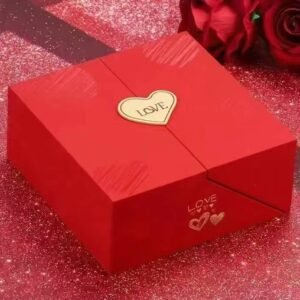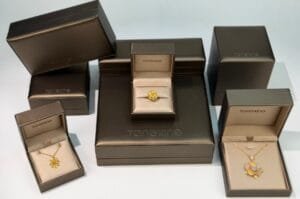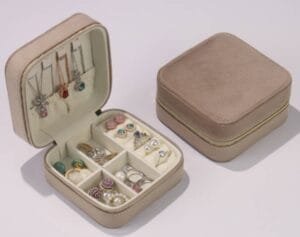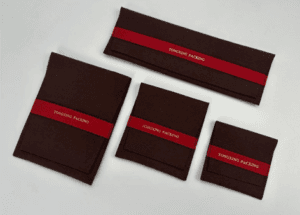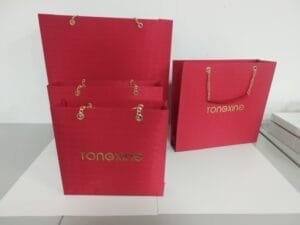
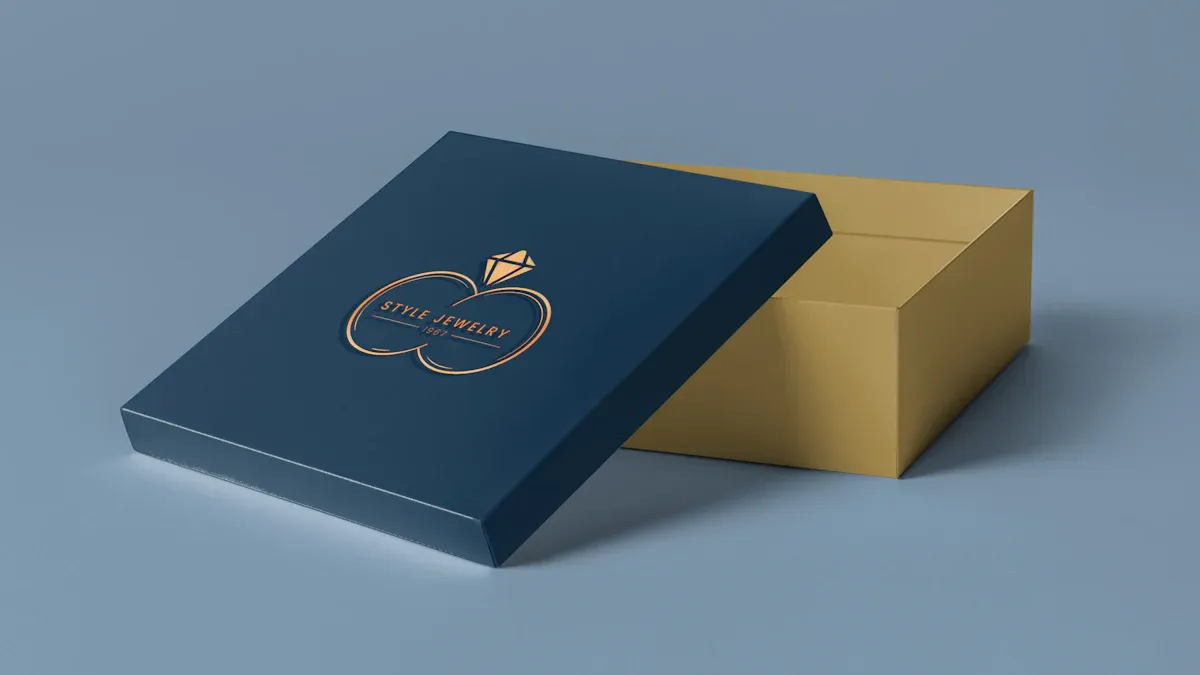
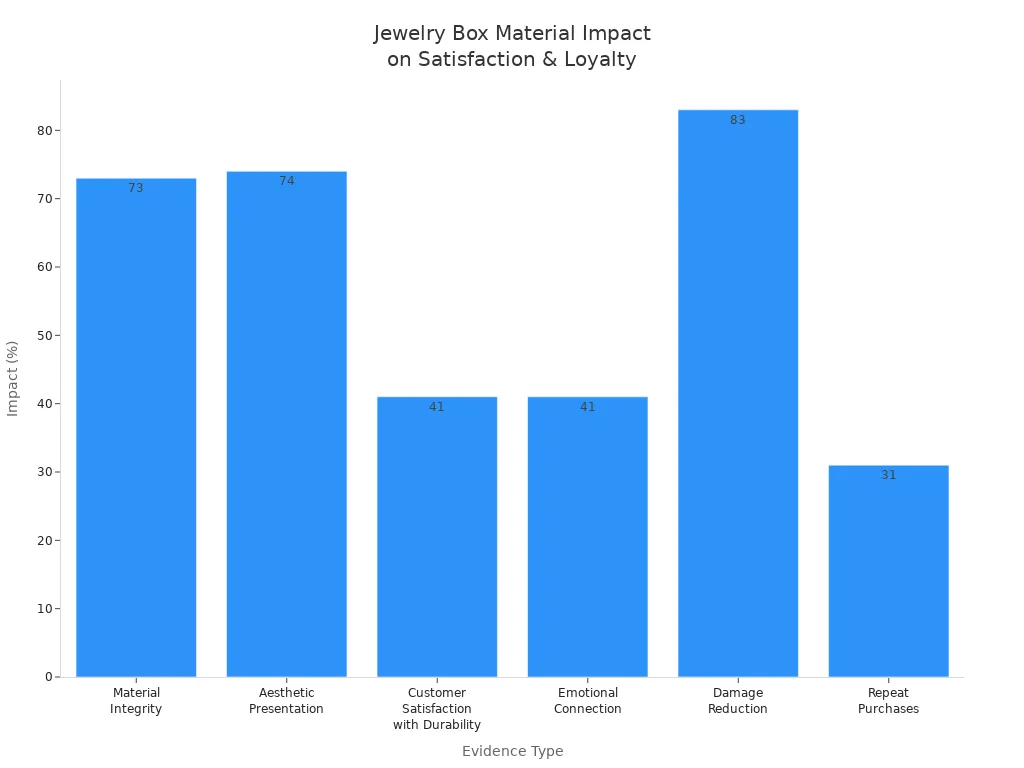
Selecting the right material for luxury jewelry boxes shapes the way customers perceive a brand. A jewelry packaging manufacturer understands that every detail, from Jewelry Display to Jewelry Pouch, influences identity and satisfaction. Brands that match jewelry box materials with their core values build brand identity and foster loyalty. High-end jewelry packaging creates a memorable experience, while custom jewelry boxes elevate the sense of luxury. Studies reveal that 74% of consumers value aesthetic presentation as much as product quality, and luxury buyers prioritize material integrity.
Why Match Jewelry Box Materials to Build Brand Identity
Influencing Brand Perception
First Impressions and Unboxing Experience
The first interaction a customer has with a jewelry brand often happens through packaging. The choice of material for luxury jewelry boxes shapes this initial impression. High-quality packaging signals exclusivity and care, while sustainable options appeal to eco-conscious buyers. The unboxing experience becomes memorable when brands use thoughtful design and premium materials. Customers associate the feel and look of the box with the value of the jewelry inside.
A well-designed jewelry box enhances the unboxing experience, making it special and memorable. Packaging shapes the customer’s initial connection with the brand and reflects the care invested in the product.
Emotional Connection with Customers
Packaging does more than protect jewelry; it creates an emotional bond. When brands match jewelry box materials to their identity, they communicate values such as luxury, sustainability, or creativity. Customers feel a deeper connection when the packaging aligns with their expectations and lifestyle. For example, a box made from recycled material signals environmental responsibility, while a high-end velvet box conveys sophistication.
- Packaging mirrors the brand’s personality, providing an enjoyable experience beyond the product.
- The materials used communicate what the brand stands for, such as luxury or eco-friendliness.
Differentiation in a Competitive Market
Standing Out with Unique Materials
In a crowded market, unique jewelry box materials help brands stand out. Customization, sustainability, and technological innovation all play a role in differentiation.
| Evidence Type | Description |
|---|---|
| Customization | Consumers seek tailor-made jewelry boxes that reflect personal tastes and preferences. |
| Sustainability | Manufacturers use recycled wood and biodegradable plastics to appeal to environmentally-conscious buyers. |
| Technological Innovation | Features like digital locks and automated cleaning systems add value for tech-focused customers. |
Reinforcing Brand Positioning
The right packaging reinforces a brand’s position in the market. High-quality packaging enhances perceived value and aligns with luxury expectations. Personalized packaging fosters a strong emotional relationship, increasing loyalty and memorability.
- Packaging not only protects jewelry but also enhances the brand’s image.
- High-quality packaging creates a memorable customer experience and aligns with luxury standards.
Enhancing Customer Experience
Sensory Appeal: Touch, Sight, and Sound
The sensory experience of opening a jewelry box matters. The texture, weight, and even the sound of the closure contribute to the overall impression. Heavy packaging increases perceived value by 22%, signaling quality and care. Unboxing videos featuring luxury jewelry boxes generate three times more engagement than traditional ads, highlighting the importance of sensory appeal.
Building Brand Loyalty
Brands that invest in thoughtful jewelry packaging see higher customer loyalty. For example, Pandora’s switch to 100% recycled boxes led to a 33% increase in loyalty. Customers remember brands that deliver a premium experience from the moment they receive their jewelry.
- Sustainable packaging attracts eco-conscious consumers.
- Memorable unboxing experiences foster repeat purchases and positive word-of-mouth.
Defining Your Brand to Match Jewelry Box Materials
Identifying Core Brand Values
Brands must first clarify their core values before they match jewelry box materials to their identity. This process helps identify the perfect material for packaging that communicates the right message. Different values require different approaches.
Luxury and Prestige
Luxury jewelry boxes often use high-end materials that signal exclusivity. Brands seeking prestige select options like rich leatherettes, solid wood bases, or classic foil stamping. These choices create a sense of opulence and elevate the customer experience.
Sustainability and Eco-Friendliness
Eco-conscious brands prioritize sustainable materials. They choose 100% recycled paperboard, FSC-certified papers, or soy-based inks. These selections appeal to buyers who value environmental responsibility and want their jewelry packaging to reflect their beliefs.
Modern and Minimalist
Modern brands favor clean lines and understated elegance. Rigid board with matte or soft-touch laminate, subtle debossed logos, and simple typography define this style. Minimalist packaging communicates sophistication without excess.
Classic and Timeless
Timeless materials for jewelry boxes include textured art papers and solid wood. Classic brands rely on these elements to evoke tradition and reliability. Customers associate these materials with enduring quality.
Artistic and Creative
Artistic brands experiment with innovative materials and bold designs. They use unique finishes, vibrant colors, and unexpected textures. This approach appeals to buyers seeking originality and creative expression.
Youthful and Trendy
Brands targeting younger audiences select playful colors and modern shapes. They incorporate trendy materials and patterns to attract attention. Youthful packaging stands out and resonates with style-conscious customers.
Tip: Brands can use the following table to identify the perfect material for their jewelry packaging based on their core values.
| Brand Type | Material Choices |
|---|---|
| Heritage Brand | Textured art papers, rich leatherettes, solid wood bases, classic foil stamping. |
| Modern Minimalist | Rigid board with matte or soft-touch laminate, subtle debossed logo, clean typography. |
| Eco-Conscious Innovator | 100% recycled paperboard, FSC-certified papers, soy-based inks, bagasse pulp. |
Understanding Your Target Audience
Brands must understand their target audience to select materials that match jewelry box preferences. Demographics and expectations influence packaging decisions.
Demographics and Preferences
Millennials drive demand for sustainable packaging. They prefer eco-friendly materials and clear messaging. This group supports brands that demonstrate social and environmental responsibility. Nostalgic design elements also resonate with millennials, who respond positively to authentic storytelling and emotional connections.
- Millennials prioritize sustainability in packaging, favoring eco-friendly materials and clear messaging.
- They are inclined to support brands that demonstrate social and environmental responsibility, with 81% wanting companies to commit to good corporate citizenship.
- Nostalgic design elements resonate with millennials, as they respond positively to authentic storytelling and emotional connections.
Customer Expectations for Packaging
Customers expect packaging to reflect the brand’s values and quality. High-end buyers demand luxury and attention to detail. Eco-conscious consumers seek sustainable solutions. Artistic shoppers look for creative designs. Brands must align packaging with these expectations to build loyalty and trust.
Best Materials for Jewelry Boxes: Exploring Options
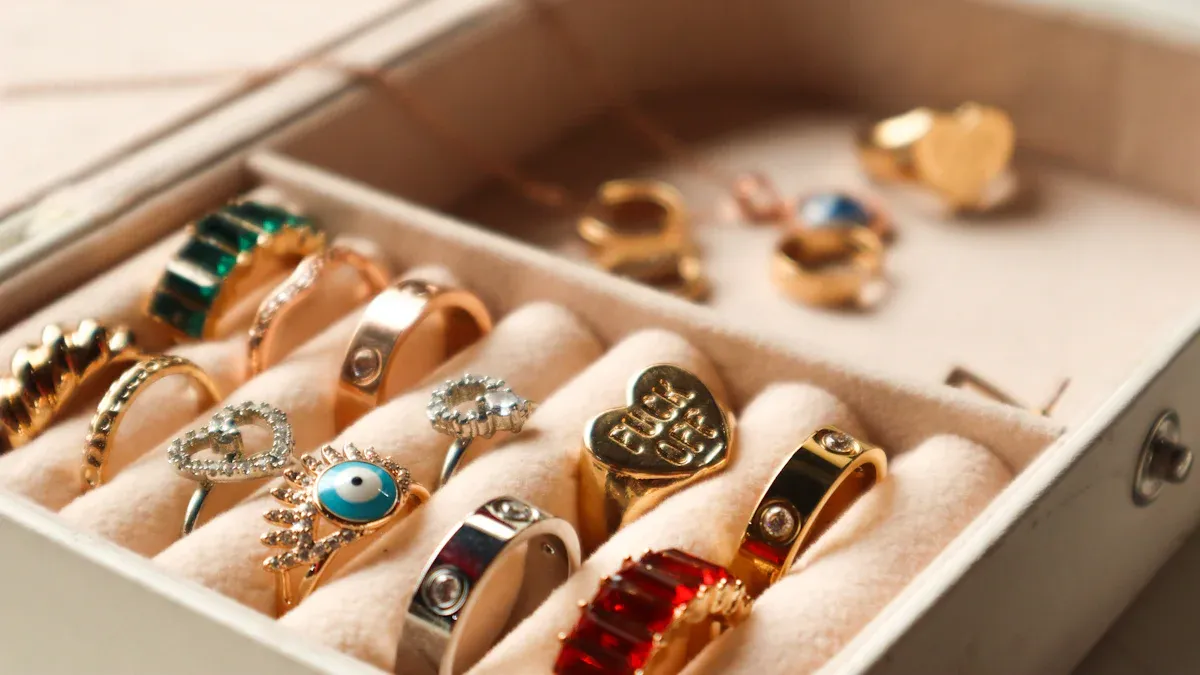
Wood
Types of Wood and Finishes
Wooden jewelry boxes remain a classic choice for brands seeking to convey tradition and quality. High-density hardwoods such as walnut, cherry, and mahogany dominate the market due to their durability and rich appearance. These woods accept a variety of finishes, from glossy lacquers to matte oils, allowing brands to tailor the look to their identity. Some brands opt for natural finishes that highlight the grain, while others prefer painted or stained surfaces for a more modern touch. Wood boxes hold the largest market share globally, accounting for 41.8% in 2025, which reflects their enduring popularity in jewelry packaging.
Brand Associations with Wood
Wood communicates a sense of permanence and value. The weight, texture, and even the scent of wood suggest that the jewelry inside is an investment worth protecting. Brands that use wooden jewelry boxes often position themselves as high-end or luxury. The following table summarizes key characteristics and associations:
| Characteristic/Association | Description |
|---|---|
| Aesthetic Appeal | High-density hardwoods like walnut, cherry, and mahogany enhance visual appeal. |
| Durability | These woods protect delicate items and ensure long-term preservation. |
| Luxury Branding | Wood signals high quality and luxury, influencing customer perceptions and willingness to pay a premium. |
Wooden jewelry boxes help brands match jewelry box materials to their desired image, especially when aiming for a premium or heritage feel.
Leather and Faux Leather
Real vs. Synthetic Leather
Leather and faux leather both offer a sophisticated look for luxury jewelry boxes. Real leather provides a tactile, high-end experience, but synthetic options have gained popularity for their durability and cost-effectiveness. Faux leather resists scratches and moisture, maintaining its shape over time. It also offers easy cleaning with a damp cloth, making it practical for daily use. Brands often choose between these materials based on their target audience and brand messaging.
Brand Messaging with Leather
Leather packaging signals exclusivity and tradition. Brands that want to evoke luxury or heritage often select real leather. Faux leather, on the other hand, appeals to modern consumers who value sustainability and innovation. The market for leather boxes is expected to grow rapidly, with a projected rate of 19.5% from 2026 to 2033, driven by demand in luxury and gifting markets. Custom printed jewelry boxes in leather finishes allow brands to reinforce their identity while offering a premium unboxing experience.
Note: A small luxury brand once chose velvet over faux leather for its moonstone necklaces after focus group feedback revealed that velvet created a stronger emotional connection, even though faux leather was more durable and modern.
Metal
Common Metals Used
Metal jewelry boxes offer a sleek and durable alternative to traditional materials. Brands often select metals such as gold, platinum, palladium, sterling silver, copper, and pewter. Each metal brings unique advantages:
| Metal | Advantages |
|---|---|
| Gold | Durable, available in various shades, appeals to individual styles. |
| Platinum | Extremely strong, hypoallergenic, maintains a bright white shine, very durable. |
| Palladium | Affordable alternative to platinum, bright white color, hypoallergenic, does not tarnish. |
| Sterling Silver | Affordable, malleable, durable for everyday use, can be polished to restore luster. |
| Copper | Tough, antibacterial, antifungal, unique reddish-brown hue. |
| Pewter | Versatile, lightweight, available in various finishes, lead- and nickel-free. |
When to Choose Metal Packaging
Brands choose metal packaging when they want to highlight innovation, durability, or a modern aesthetic. Metal boxes suit high-end collections and limited editions, offering both protection and a striking visual impact. These materials help brands stand out in the luxury market and appeal to customers seeking something unique among the best materials for jewelry boxes.
Acrylic and Plastic
Modern Appeal and Versatility
Acrylic and plastic jewelry boxes attract modern brands seeking a sleek, contemporary look. Acrylic stands out for its glass-like clarity, allowing jewelry to shine while offering a lighter and safer alternative to glass. Many brands choose acrylic for custom luxury jewelry boxes because it showcases products with minimal distraction. Plastic provides versatility in shape and color, making it suitable for custom luxury boxes that require unique designs. These materials support high-end collections that demand visual impact and durability.
Acrylic jewelry packaging delivers a striking display, enhancing the perceived value of luxury jewelry boxes. Brands appreciate the modern aesthetic and the ability to match jewelry box materials to their identity.
Cost and Durability Considerations
Plastic jewelry boxes offer cost-effective solutions for brands with broad product lines. Acrylic, although more expensive, provides a premium feel but can scratch easily. Brands must weigh the benefits of durability against the environmental impact of plastic. Some customers perceive acrylic as less luxurious than wood or metal, yet its clarity and safety make it a popular choice for custom jewelry boxes. The decision often depends on the brand’s target market and the desired balance between cost, appearance, and longevity.
Fabric and Velvet
Soft Touch and Luxury Feel
Fabric and velvet jewelry boxes create a sense of luxury and comfort. Velvet, microfiber, and satin provide a soft, anti-tarnish surface that protects delicate jewelry. High-quality materials convey exquisiteness and classiness, making them ideal for luxury jewelry boxes. Velvet stands out for its shock-proof and scratch-proof qualities, ensuring jewelry remains secure and pristine. Brands aiming for a high-end image often select velvet for custom luxury jewelry boxes.
- The choice of fabric or velvet impacts the first impression of the brand.
- Velvet enhances the aesthetic appeal and provides internal protection for jewelry.
Color and Texture Options
Fabric and velvet offer a wide range of colors and textures, allowing brands to customize jewelry packaging to match their identity. Rich hues and unique textures help brands stand out in the market. Custom luxury boxes with vibrant velvet interiors create memorable unboxing experiences. Brands can select materials that reflect their values, whether they prefer classic elegance or bold creativity.
Sustainable and Recycled Materials
Eco-Friendly Choices
Sustainable and recycled materials have become essential for brands committed to environmental responsibility. Kraft paper, recycled cardboard, organic cotton, and biodegradable plastics are widely used in jewelry packaging. These materials enhance brand image by demonstrating eco-friendliness and aligning with consumer values for sustainability.
| Material | Description | Impact on Brand Perception |
|---|---|---|
| Kraft Paper | Strong, versatile, made from 90–100% post-consumer waste. | Enhances brand image through eco-friendliness. |
| Recycled Cardboard | Durable and stylish, suitable for shipping and displays. | Aligns with consumer values for sustainability. |
| Organic Cotton | Biodegradable, ideal for holding jewelry, doubles as gift bags. | Adds value and promotes a sustainable image. |
| Biodegradable Plastics | Compostable options like PLA provide structure without environmental guilt. | Communicates responsibility and innovation. |
Communicating Sustainability
Brands use sustainable packaging to communicate their care for the environment. Packaging serves as the company’s first impression, conveying values and commitment to sustainability. Clear recycling symbols and recycled paper inserts demonstrate transparency and build trust. Customers view brands as thoughtful and responsible when they match jewelry box materials to eco-friendly standards. Sustainable packaging strengthens customer relationships and supports long-term loyalty.
Unique and Niche Materials
Brands seeking to match jewelry box materials with their identity often explore unique and niche options. These materials help jewelry packaging stand out in a crowded market and communicate values beyond traditional luxury. Designers select unconventional materials to create memorable experiences and reinforce brand differentiation.
Bamboo and Cork
Bamboo and cork have gained popularity among brands that value sustainability and innovation. Bamboo grows rapidly and offers a renewable resource for jewelry packaging. Its natural texture and light weight appeal to eco-conscious consumers. Cork, harvested from the bark of cork oak trees, provides a soft, flexible, and biodegradable option. Both materials support high-end packaging while minimizing environmental impact.
- Bamboo jewelry boxes convey a modern, earthy aesthetic. They suit brands that prioritize green practices and want to match jewelry box materials to their eco-friendly image.
- Cork offers a tactile experience and protects jewelry from moisture. Brands use cork for luxury jewelry boxes that require both style and function.
Tip: Bamboo and cork packaging can be customized with laser engraving or natural dyes, allowing brands to create distinctive designs that reflect their values.
Innovative and Emerging Trends
Emerging materials and techniques continue to shape the future of jewelry packaging. Brands experiment with new approaches to create emotional connections and enhance perceived value. The following table highlights several unique materials and their effects on brand differentiation:
| Material Type | Effect on Brand Differentiation |
|---|---|
| Foil Printing | Enhances perceived value and creates emotional connections through visual appeal and sensory experience. |
| High-energy Crystals | Attracts niche markets interested in wellness and spirituality, enhancing the emotional and psychological appeal. |
| Hand-Painted Ceramics | Provides personalized artistry that fosters emotional connections and increases perceived value for special occasions. |
Luxury jewelry boxes often feature foil printing, which adds shimmer and sophistication. High-energy crystals appeal to consumers interested in wellness, offering a unique selling proposition. Hand-painted ceramics provide personalized artistry, making each jewelry box a one-of-a-kind keepsake.
- Foil printing creates a sensory experience that elevates craftsmanship.
- High-energy crystals attract wellness-focused buyers and reinforce brand values.
- Hand-painted ceramics add emotional significance, especially for gifts and special occasions.
Brands that embrace innovative materials and techniques set themselves apart. They build stronger relationships with customers and increase loyalty by offering packaging that feels exclusive and meaningful. The use of niche materials allows brands to communicate their story and values through every detail of the jewelry packaging.
Match Jewelry Box Material Characteristics to Brand Attributes
Appearance and Aesthetics
Color, Texture, and Finish
The visual elements of jewelry box materials play a crucial role in shaping consumer perceptions. Brands select colors, textures, and finishes that reflect their identity and resonate with their target audience. For luxury jewelry boxes, deep hues and glossy finishes often signal exclusivity and sophistication. Matte surfaces and minimalist textures appeal to modern brands seeking understated elegance. Custom finishes, such as metallic foils or embossed patterns, enhance the perceived value of jewelry packaging.
Aesthetic choices influence purchasing decisions. Many consumers prefer packaging that aligns with their personal style and values. The following table highlights key factors that drive consumer preference:
| Evidence Type | Description |
|---|---|
| Consumer Preference | Increasing demand for personalized and customized products in jewelry boxes, especially among millennials and Gen Z. |
| Aesthetic Appeal | Consumers are drawn to aesthetically pleasing packaging that reflects personal style and values. |
| Sustainability | Eco-friendly materials are prioritized by consumers, influencing their purchasing decisions. |
- 61% of consumers are more likely to purchase jewelry in aesthetically pleasing packaging.
- Personalized packaging enhances customer satisfaction and brand loyalty.
- Unique packaging is perceived as having higher value.
Visual Consistency with Brand
Visual consistency strengthens branding and builds trust. Brands maintain coherence by matching jewelry box materials with their established color palette, logo placement, and design motifs. Consistent visuals reinforce the brand’s message and help customers recognize products instantly. High-end brands often use signature colors and finishes across all packaging, creating a unified look that distinguishes them from competitors. This approach ensures that every jewelry box supports the overall branding strategy and enhances the customer experience.
Feel and Sensory Qualities
Tactile Experience
The tactile qualities of jewelry box materials contribute to the emotional impact of unboxing. Customers notice the softness of velvet, the smoothness of leather, or the cool touch of metal. These sensations communicate luxury and craftsmanship. A well-designed jewelry box elevates the presentation and creates a memorable experience. Material selection affects not only protection but also the luxurious feel of the packaging.
- Tactile qualities in jewelry box materials significantly influence customer perception.
- The presentation of the jewelry box is integral to the overall customer experience.
- A well-designed jewelry box communicates luxury and craftsmanship.
Weight and Substance
Weight and substance affect how customers perceive value. Heavy materials, such as solid wood or metal, suggest durability and importance. Lightweight options, like recycled cardboard or bamboo, appeal to eco-conscious buyers and support sustainability goals. Brands must balance substance with practicality, ensuring that jewelry packaging feels substantial without compromising usability. Some materials enhance presentation but may reduce durability, so careful selection is essential for maintaining both quality and brand reputation.
- Material selection impacts not only protection but also the luxurious feel of the packaging.
- Some materials may enhance presentation but could compromise durability.
- Custom jewelry boxes enhance brand storytelling.
- Effective packaging can significantly boost brand value.
Sustainability and Ethics
Sourcing and Environmental Impact
Sustainability has become a central concern for brands and consumers alike. Responsible sourcing of jewelry box materials demonstrates a commitment to ethical practices and environmental stewardship. Brands choose materials with low environmental impact, such as recycled paper, organic textiles, or bamboo. These choices support sustainability and appeal to buyers who prioritize eco-friendly products. Transparent sourcing builds trust and strengthens the brand’s reputation.
Certifications and Transparency
Certifications provide assurance of ethical sourcing and sustainable practices. Brands display certification logos on jewelry packaging to communicate their commitment to quality and responsibility. The following table outlines key certifications relevant to jewelry box materials:
| Certification Name | Description | Importance |
|---|---|---|
| Fairtrade Gold Certification | Ensures gold is responsibly sourced from small-scale mining operations. | Highlights commitment to fair trade and sustainability, appealing to ethically conscious consumers. |
| Sedex Certification | Focuses on improving supply chain practices through ethical audits. | Assures customers of responsible business practices and ethical sourcing. |
| ISO 9001:2015 | Focuses on quality management systems. | Demonstrates commitment to high-quality products and customer satisfaction. |
| ISO 14001:2015 | Pertains to environmental management systems. | Highlights commitment to reducing environmental impact and sustainable practices. |
| Global Organic Textile Standard | Certification for manufacturers using organic materials. | Provides assurance of ethical sourcing and eco-friendly practices for jewelry made from organic materials. |
Brands that match jewelry box materials with certifications and transparent sourcing practices build consumer trust and reinforce their values. Customers view certified packaging as a sign of responsibility and quality, increasing loyalty and satisfaction.
Cost and Durability
Balancing Budget and Quality
Every brand faces the challenge of balancing cost with quality when selecting materials for jewelry packaging. The choice of material impacts not only the initial investment but also the long-term value delivered to customers. High-end brands often invest in luxury jewelry boxes that use premium substrates, such as rigid cardboard or solid wood, to ensure both visual appeal and structural integrity. These materials provide a sturdy foundation, supporting the weight of fine jewelry and maintaining their shape during shipping and handling.
A comparison of common material choices highlights the differences in cost and quality:
| Material Type | Jewelry Packaging | Other Packaging |
|---|---|---|
| Core Substrate | Rigid Cardboard or Wood | Thin Cardboard or Plastic |
| Internal Lining | Velvet or Suede | None or Bubble Wrap |
| Chemical Grade | Archival / pH-Neutral | Industrial / Standard |
Brands that prioritize quality often select archival or pH-neutral materials to protect jewelry from tarnish and environmental damage. These choices may increase production costs, but they reinforce the brand’s commitment to excellence and customer satisfaction. For brands with tighter budgets, thin cardboard or plastic may seem attractive due to lower costs. However, these options can compromise the perceived value of the jewelry and weaken branding efforts.
Tip: Investing in higher-quality materials for jewelry packaging can reduce replacement costs and enhance the overall customer experience, making it a strategic decision for long-term growth.
Longevity and Reusability
Durability plays a critical role in the effectiveness of jewelry packaging. Rigid cores and reinforced corners help luxury jewelry boxes withstand the rigors of shipping and daily use. These features ensure that the packaging maintains its shape and continues to protect the jewelry inside, even after repeated handling.
- Jewelry packaging is designed with rigid cores and reinforced corners for durability.
- It is built to withstand high-pressure shipping environments, ensuring that the packaging maintains its shape.
- The focus on high-quality materials leads to better protection and preservation of jewelry.
Reusable packaging adds value for both the brand and the customer. Many customers repurpose well-designed boxes for storage or display, extending the life of the packaging and reinforcing positive associations with the brand. This approach supports sustainability by reducing waste and encourages repeat purchases through memorable unboxing experiences.
Brands that match jewelry box materials to their values often see increased loyalty and positive word-of-mouth. When customers recognize the longevity and reusability of packaging, they view the brand as thoughtful and committed to quality. This perception strengthens branding and sets the company apart in a competitive market.
Note: Durable and reusable packaging not only protects jewelry but also serves as a lasting reminder of the brand’s attention to detail and commitment to sustainability.
Custom Jewelry Box Design and Finishing Touches
Branding Elements
Logo Placement and Printing Techniques
Logo placement stands as a critical factor in jewelry packaging customization. Brands often position their logo prominently on custom jewelry boxes to reinforce identity and create lasting impressions. Custom display boxes with visible logos serve as powerful branding tools. They not only hold jewelry but also elevate product presentation, whether customers shop in-store or online. Printing techniques such as screen printing, UV printing, and hot stamping allow brands to achieve crisp, professional results. Incorporating a logo into packaging enables businesses to control the customer experience from unboxing to daily use. This strategy builds trust and distinguishes the brand from generic competitors.
Custom Colors and Patterns
Custom colors and patterns help brands match jewelry box materials to their unique identity. Many luxury jewelry boxes feature signature hues or exclusive patterns that align with the brand’s visual language. Custom luxury boxes often use color palettes that evoke luxury, sophistication, or creativity. Patterns can range from minimalist geometric shapes to intricate motifs inspired by heritage or modern art. High-quality, professional packaging elevates product presentation and strengthens branding efforts.
Special Finishes
Embossing, Debossing, and Foil Stamping
Special finishes add depth and tactile appeal to custom jewelry box design. Embossing and debossing create raised or recessed effects, enhancing the sensory experience. Foil stamping introduces metallic accents that catch the eye and suggest luxury. These techniques make packaging memorable and imply confidence and exclusivity. Brands use special finishes to beautify the package and increase perceived value. The following table summarizes popular finishes and their impact:
| Special Finish | Impact on Perceived Value |
|---|---|
| Soft-touch materials | Enhances tactile experience and perceived quality |
| Textured surfaces | Conveys sophistication and intentionality |
| Monochromatic designs | Elevates overall perception of jewelry’s quality |
- Dry embossing and foil stamping make packaging eye-catching and memorable.
- Elegant details suggest higher value in the eyes of buyers.
Unique Closures and Hardware
Unique closures and hardware provide both functionality and style. Brands often select magnetic clasps, ribbon ties, or custom metal locks for high-end jewelry packaging. These features protect jewelry and add a distinctive touch to custom luxury jewelry boxes. Hardware choices can reflect brand values, such as sustainability or innovation, and enhance the overall design.
Personalization for Customer Experience
Monogramming and Custom Messages
Personalization transforms custom jewelry boxes into meaningful keepsakes. Brands offer monogramming, engraved initials, or custom messages to create emotional connections. Personalized packaging shows attention to detail and makes customers feel valued. According to the Institute of Packaging Professionals, half of consumers are more likely to order again if they had a good experience with packaging. Thoughtful personalization directly influences customer loyalty and repeat purchases.
Limited Edition Packaging
Limited edition packaging appeals to collectors and fans of exclusivity. Brands release custom luxury boxes in small batches, featuring unique designs, materials, or finishes. These packages often celebrate milestones, collaborations, or seasonal events. Limited editions reinforce the brand’s high-end positioning and encourage customers to cherish their jewelry packaging as part of the overall experience.
Tip: Brands that invest in custom jewelry box design and finishing touches create memorable experiences, strengthen branding, and foster lasting customer relationships.
Practical Considerations for Best Materials for Jewelry Boxes
Protection and Functionality
Safeguarding Jewelry Items
Brands must prioritize protection when selecting materials for jewelry packaging. The right material shields jewelry from dust, humidity, and physical damage. Wood offers high durability and excellent protection, making it ideal for luxury jewelry boxes. Metal provides top-tier defense against moisture and impact, while velvet cushions delicate items and prevents scratches. Cardboard and paperboard deliver basic protection for lightweight jewelry, and faux leather combines affordability with a soft interior lining. The following table summarizes key features:
| Material | Durability | Protection | Appearance | Cost |
|---|---|---|---|---|
| Wood | High | Excellent protection from dust, humidity, and physical damage | Natural elegance, unique grain and finish | Typically more expensive |
| Cardboard/Paperboard | Moderate | Basic protection for lightweight jewelry | Versatile, customizable colors and finishes | Affordable option |
| Velvet | Moderate | Cushions delicate jewelry, protects from scratches | High-end, elegant look | Mid-range price |
| Metal | High | Top-tier protection from moisture and impact | Sleek, modern look | Ranges from affordable to premium |
| Faux Leather | Moderate | Excellent protection with soft interior linings | Stylish, professional appearance | More affordable than genuine leather |
Ease of Use and Storage
Functionality extends beyond protection. Jewelry boxes must be easy to open, close, and store. High-end brands often select materials that support smooth hinges, secure closures, and stackable designs. Velvet and foam interiors help organize jewelry and prevent tangling. Lightweight options like cardboard allow for convenient storage and transport. Brands should match jewelry box features to customer needs, ensuring both safety and usability.
Budget and Supply Chain
Cost-Effectiveness
Budget constraints influence material selection. Brands often start with cost-effective solutions, such as cardboard or faux leather, to maximize impact while minimizing expenses. As revenue grows, they may upgrade to luxury materials like wood or metal. This approach allows brands to maintain operational efficiency and adapt packaging as their business evolves.
Tip: Brands can optimize their budget by choosing versatile materials that offer both protection and visual appeal.
Supplier Reliability and Lead Times
Selecting the right manufacturing partner is essential. Experienced suppliers in the jewelry sector provide consistent quality and support scalability. Reliable partners help brands manage supply chain challenges, ensuring timely delivery and maintaining high standards. Brands should evaluate supplier track records and lead times before committing to large orders.
Scalability and Flexibility
Adapting Materials for Product Lines
Scaling jewelry packaging across multiple product lines requires flexibility. Brands must choose materials that suit various types of jewelry, from rings to necklaces. Velvet, satin, suede, felt, and foam interiors each offer different levels of protection and luxury. The table below highlights best practices:
| Material | Feel | Appearance | Protection Level | Common Use Cases |
|---|---|---|---|---|
| Velvet | Very Soft | Rich, Deep Color | High | High-end jewelry, rings, necklaces |
| Satin | Smooth | Shiny, Elegant | Medium | Necklaces, bracelets |
| Suede | Soft, Napped | Matte, Luxurious | High | Watches, delicate items |
| Felt | Soft | Matte, Simple | Medium | More basic jewelry boxes |
| Foam (covered) | Firm but Soft | Varies with cover | High (holding) | Ring holders, specific item slots |
Brands must match jewelry box interiors to the product line, balancing aesthetics, protection, and cost.
Managing Inventory and Custom Orders
Efficient inventory management supports growth. Brands should select materials that allow for easy customization and quick turnaround. Flexible packaging options help brands respond to changing demand and offer personalized solutions. Managing inventory with scalable materials ensures consistent quality and supports expansion into new markets.
Note: Practical considerations help brands deliver luxury jewelry boxes that protect, impress, and adapt to evolving needs.
Real-World Examples: How Brands Match Jewelry Box Materials
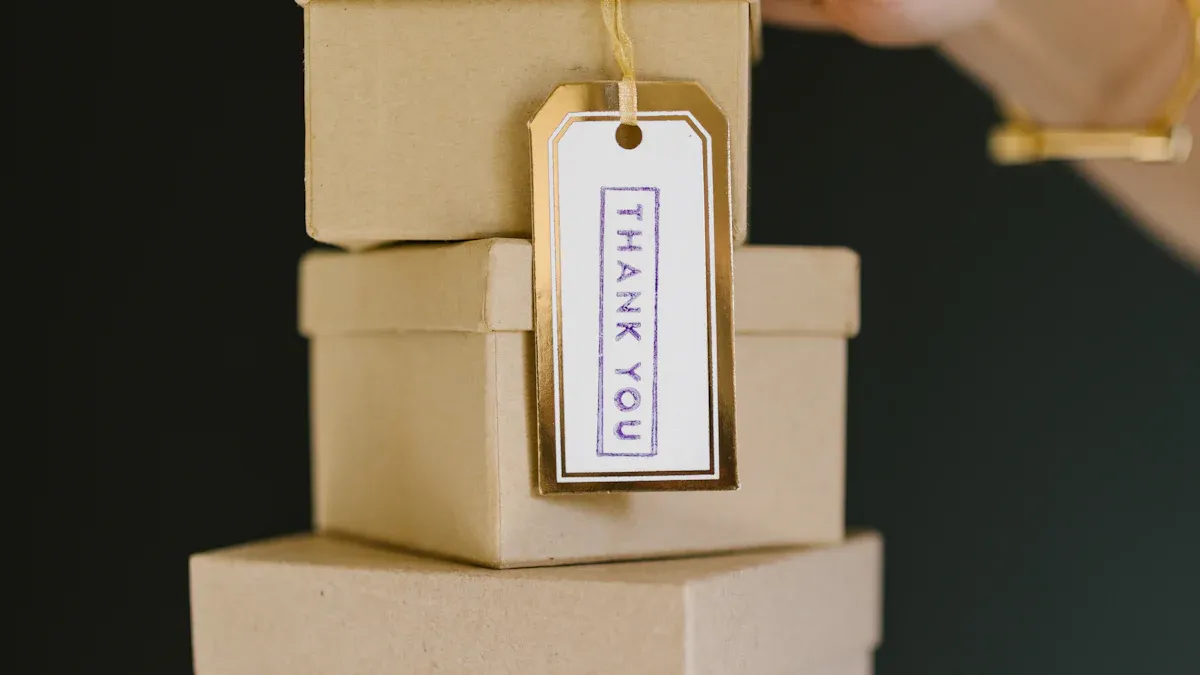
Luxury Brands and Premium Materials
Case Study: High-End Wood Boxes
Bvlgari demonstrates how a brand can match jewelry box materials to its identity by drawing inspiration from Roman architecture. The company uses sustainable materials such as wood fiber and silk to create luxury jewelry boxes that reflect both modern and classical aesthetics. Signature colors of gold and brown reinforce the brand’s heritage and commitment to elegance. The tactile experience of these high-end jewelry boxes elevates the unboxing moment, making each piece feel exclusive and valuable.
Case Study: Leather Packaging for Heritage Brands
Tiffany & Co. has built a reputation for luxury through its iconic blue box. This packaging, crafted from eco-friendly materials, showcases meticulous craftsmanship and attention to detail. The box protects the jewelry while symbolizing sophistication and status. Customers recognize the Tiffany blue box as a mark of quality, which strengthens the brand’s position in the luxury market.
- Bvlgari and Tiffany & Co. both use premium materials and thoughtful design to reinforce their brand values.
- Their packaging choices set a standard for high-end jewelry presentation.
Sustainable Brands and Eco-Friendly Choices
Case Study: Recycled Paper and Cardboard
Many sustainable brands have adopted recycled paper and cardboard for jewelry packaging. MUJI, for example, eliminates printing inks and surface treatments, creating minimalist packaging that appeals to environmentally conscious consumers. This approach reduces waste and highlights the beauty of simple, functional design. Bario Neal, a small jewelry company, uses handmade boxes crafted from reclaimed wood and fabric remnants. These choices show how brands can implement eco-friendly practices without sacrificing style or quality.
Case Study: Biodegradable Fabrics
Sony has introduced biodegradable packaging made from bamboo and sugarcane waste. This material degrades faster than conventional options and significantly reduces the company’s carbon footprint. The use of sustainable materials in jewelry packaging demonstrates a commitment to environmental responsibility and innovation.
Brands that prioritize recycled and biodegradable materials build trust with eco-conscious customers and set themselves apart in a competitive market.
Modern Brands and Innovative Materials
Case Study: Acrylic and Minimalist Design
Modern brands often choose acrylic for its clarity and contemporary appeal. Acrylic jewelry boxes allow the product to take center stage, supporting minimalist design trends. These boxes offer durability and a sleek look, making them popular among brands that value innovation and visual impact.
Case Study: Mixed-Material Approaches
Some brands experiment with mixed-material packaging to create unique experiences. They combine metal, velvet, and acrylic to balance protection, aesthetics, and cost. This strategy allows brands to tailor packaging for different product lines and customer preferences. The result is a flexible solution that adapts to changing trends in the jewelry market.
- Modern brands use innovative materials to enhance the customer experience and reinforce their identity.
- Mixed-material packaging supports both high-end and everyday collections.
Selecting the right materials helps brands match jewelry box design to their identity and values. Material choice shapes customer perception and sets brands apart in a crowded market. Companies should define their brand, research options, align material attributes, customize packaging, and weigh practical needs. Custom jewelry box packaging offers a strategic investment that builds loyalty and elevates the customer experience.
FAQ
What material best suits a luxury jewelry brand?
Luxury brands often select wood, leather, or velvet for jewelry boxes. These materials convey exclusivity and prestige. High-density hardwoods and rich leatherettes enhance perceived value and create a memorable unboxing experience.
How can a brand communicate sustainability through packaging?
Brands use recycled paper, organic cotton, or biodegradable plastics. Clear recycling symbols and certification logos build trust. Eco-friendly packaging demonstrates environmental responsibility and appeals to conscious consumers.
Are acrylic and plastic jewelry boxes durable?
Acrylic offers glass-like clarity and moderate durability. Plastic provides versatility and cost-effectiveness. Both materials resist moisture but may scratch easily. Brands choose these for modern appeal and lightweight protection.
Can jewelry box materials influence customer loyalty?
Yes. High-quality materials and thoughtful design create memorable experiences. Customers often reuse durable boxes, which reinforces positive associations. Brands that invest in premium packaging see increased loyalty and repeat purchases.
What factors should brands consider when choosing jewelry box materials?
Brands evaluate appearance, protection, cost, sustainability, and target audience preferences. Material choice must align with brand values and product requirements. Supplier reliability and scalability also impact decision-making.
Is it possible to customize jewelry box interiors?
Brands can customize interiors with velvet, satin, suede, felt, or foam. These materials protect jewelry and enhance presentation. Custom inserts and compartments organize items and support brand storytelling.
How do certifications affect jewelry packaging?
Certifications like Fairtrade Gold, Sedex, or ISO standards assure ethical sourcing and quality. Displaying certification logos on packaging builds consumer trust and strengthens brand reputation.
What is the benefit of limited edition packaging?
Limited edition packaging creates exclusivity and excitement. Brands release unique designs for special occasions or collaborations. Collectors and loyal customers value these boxes as keepsakes, increasing brand engagement.